Quarter Life Crisis Astrology: What Your Chart Says
In this Article
The quarter life crisis is real, and your chart has been pointing at it the whole time. Between roughly age 27 and 30, three separate astrological cycles peak at almost the same moment: your first Saturn return, your first progressed lunar return, and the nodal opposition. The career collapse, the relationship doubt, the 3 a.m. existential dread, the sudden grief over a life you thought you'd be living by now - that's not you falling apart. That's three cosmic clocks ringing at once. Try MyNitya free.
If you're reading this because you're 28 and nothing fits anymore, because you keep refreshing the same job board and feeling sick, because the relationship that worked at 24 doesn't work now, because you can't tell whether you want to quit your life or just sleep for a year - you're not broken. You're not behind. You're not the only one. There's a name for what you're walking through, and astrology had it before psychology did.
Your personal astrologer - Vedic + Western.
Reads all 10,000+ points of your birth chart to answer your question. First question free, no card needed.
Ask your question free →Key Takeaways: The quarter life crisis astrology signature is a cluster of transits between ages 27 and 30: Saturn return (29.5-year cycle), progressed lunar return (~27.3-year cycle), and the nodal opposition (~9 years after the first nodal return at 18.6). For people having their Saturn return right now, Saturn is moving through Pisces (March 7, 2023 to February 13, 2026) and Aries (May 24, 2025 through April 12, 2028), which colors how the wound shows up. The crisis ends. What's built on the other side is what your actual adulthood looks like.
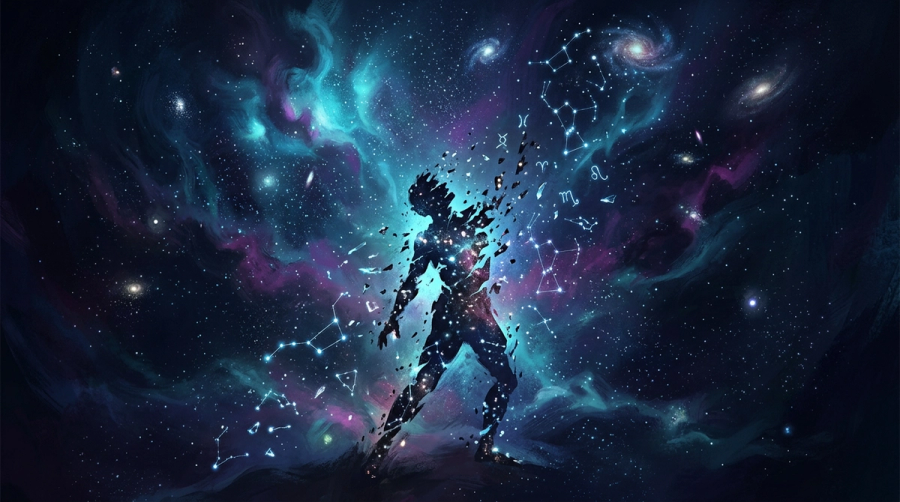
A young person sitting at the edge of a vast night sky representing the felt sense of being 28 and lost
Why You Feel Like Everything Is Falling Apart at 28
The quarter life crisis is the felt experience of three astrological cycles colliding in the same two- to three-year window. You're not failing at adulthood. You're moving through the most pressurized developmental passage between puberty and midlife, and your chart is the map of what's actually happening underneath the panic.
The term quarter-life crisis itself comes from psychology, not astrology - it was named in 2001 by Alexandra Robbins and Abby Wilner in their book Quarterlife Crisis: The Unique Challenges of Life in Your Twenties. They described the cohort of twentysomethings caught between the freedom of college and the structure of full adulthood, drowning in choice, comparing themselves to everyone, feeling unmoored. The book was a phenomenon because it named something that millions of people were feeling but couldn't articulate.
What Robbins and Wilner couldn't see - because they weren't looking at it - is that the crisis they described isn't random. It clusters at the same age across cultures, generations, and personality types. Astrology has known why for two thousand years. Saturn doesn't care whether you've heard of it. It returns on schedule.
Liz Greene, in Saturn: A New Look at an Old Devil, frames the late-20s passage as the moment the constructed self of your early twenties cracks open and the deeper self underneath demands recognition. Erin Sullivan's Saturn in Transit describes the same passage as "the threshold of full adulthood" - the developmental task being to take responsibility for who you actually are, not who you thought you'd be at this age. Howard Sasportas, in The Gods of Change, calls it the place where fate and choice meet for the first time as adults.
The pain you're in right now is real. The astrology isn't replacing therapy. It's giving you a frame for why this feels bigger than your circumstances suggest it should.
Chat with Nitya about your birth chart - try free.
The Astrological Signature: Saturn Return + Progressed Moon + Nodal Opposition
The astrological signature of the quarter life crisis is three overlapping transits that all peak between ages 27 and 30. Saturn returns to its natal position roughly every 29.5 years, the progressed Moon completes its cycle roughly every 27.3 years, and the lunar nodes reverse direction relative to your natal nodes roughly every 9 years from a baseline of 18.6 years per full cycle. All three of these meet, for the first time in your life, in a single tight window. Then they separate again and don't co-occur with anything like this density until your second Saturn return at 58.
Each cycle is doing something different. The Saturn return is about external structure - career, money, the realization that you've been performing a self that isn't sustainable. The progressed Moon return is about internal emotional life - the deep reset of your inner needs, the way old coping strategies suddenly stop working, the unfamiliar emotional weather. The nodal opposition is about direction - the soul-level question of whether the path you've been walking is yours, or whether you've been walking someone else's.
In Western astrology, these three transits are often discussed in isolation. The truth is they almost always pile up. That pile-up is what makes 28 feel apocalyptic in a way that 26 and 32 don't. Reading them as one combined event, instead of three separate "things happening," is the first piece of relief.
Saturn Return: The Reckoning at 27 to 30
The Saturn return is the moment, between roughly age 27 and 30, when transiting Saturn comes back to the exact degree of your natal Saturn. It's a roughly 29.5-year cycle. The first return is the developmental gate between extended adolescence and actual adulthood - the place where Saturn, the planet of structure, limits, and reality, walks into your life and asks the question you've been avoiding: is this real, or is this rehearsal?
You can read more about the structural mechanics in our deep dive on what a Saturn return actually is, but the short version is this. Saturn rules everything that takes time, work, and consequence. Career, money, commitment, parenthood, the body, the limits of what you can actually pull off in 24 hours. For your entire twenties up to this point, Saturn has been mostly theoretical - distant, somewhere else in the sky, easy to ignore. At the return, it lands.
What lands depends on your chart. The sign Saturn is in at your birth describes the kind of reality check. The house describes where in your life the check arrives. Saturn in the 7th house at the return often means a long-term relationship reveals what it actually is. Saturn in the 10th means the career structure you've built either holds or doesn't. Saturn in the 4th means the family of origin reckoning you've been postponing arrives.
Saturn return ages cluster in three classic phases:
- Phase one (roughly 27-28): Saturn first crosses back into the sign of your natal Saturn. The first wave of something is wrong here. Often shows up as creeping dissatisfaction with what previously felt fine.
- Phase two (roughly 28-29): the exact return. Often the most acute. Major structural breaks happen here - breakups, job changes, moves, health diagnoses, the death of a parent or grandparent.
- Phase three (roughly 29-30): the third pass and integration. Saturn is finishing the work. By 30, the rebuild has started.
Many people experience the return in three exact passes because Saturn retrogrades during the cycle. People often describe the second pass as the hardest - by then the avoidance strategies have failed and there's nowhere left to hide. For a precise breakdown of when each phase hits in your specific chart, the Saturn return calculator maps the dates.
Progressed Lunar Return: The Emotional Cycle Resetting at 27 to 28
The progressed lunar return is a less-discussed but equally important piece of the quarter life crisis signature. The progressed Moon - calculated by advancing your natal Moon roughly one degree per year of life - completes a full cycle through the zodiac in approximately 27.3 years. So somewhere between 27 and 28, your progressed Moon arrives back at the exact sign and degree it occupied when you were born. It's the first time in your life this has happened.
What that means in lived experience is harder to describe than the Saturn return because it's interior. The Moon governs the emotional body, the unconscious, the felt sense of safety, the inner sense of home. When your progressed Moon completes its first full cycle and returns home, you're not just an adult finishing a developmental task - you're a person whose entire emotional architecture is resetting.
The classic markers of a progressed lunar return:
- A wave of unfamiliar emotional material - old grief that doesn't trace back to anything obvious, longing for places or people you'd thought you were over, dreams that keep surfacing childhood memories
- Coping strategies that worked for years suddenly failing. The way you used to manage anxiety doesn't work. The friends who used to be enough aren't. The relationship to alcohol or food or work that was sustainable isn't.
- A new set of emotional needs you don't yet have language for. I need something - I don't know what. Often a quieter, slower, more interior kind of life than the externally-pointed twenties allowed.
- Sometimes a profound shift in what feels like home - geographically, relationally, or internally. Many people change cities, end long friendships, or leave inherited religious or family roles around this transit.
When the progressed Moon return overlaps the Saturn return - which happens in almost every chart - the result is a double signal: external structure demands you grow up, while internal emotional life demands you finally feel everything you've been compartmentalizing since you were 19. Both at once. No wonder it feels insane.
Nodal Opposition at 27 to 28: The Soul-Level Reversal
The nodal opposition, sometimes called the nodal reversal, happens at roughly 27 to 28 - the exact years the Saturn return and progressed lunar return are both peaking. It's a third, separate transit pointing at the same age window. The lunar nodes - the two mathematical points where the Moon's orbit crosses the ecliptic - move backward through the zodiac and complete a full cycle in approximately 18.6 years. Their first return to your natal position happened around age 18 to 19, often the moment you left home or your family of origin. The first opposition - when transiting North Node sits on your natal South Node, and vice versa - happens around 27 to 28.
According to Little Moon Wellness's nodal cycle framework, the nodal opposition at 27-28 is described as a "soul-level pivot" - a moment when the path you've been walking out of inertia starts to misalign with the path your North Node is asking for. It's the chart's way of asking: are you actually growing toward your North Node, or are you stuck in your South Node comfort zone?
In Western astrology, the South Node represents what you came in already knowing - the inherited gifts, the easy patterns, the path of least resistance. The North Node represents what you're here to grow toward - the unfamiliar, the demanding, the developmental edge. For your entire life up to age 27, you've mostly been operating from your South Node because it's easier. The nodal opposition is the first major life event that requires you to step into your North Node territory.
This is why the quarter life crisis often feels less like a circumstantial problem and more like a direction problem. You can't always articulate it. The job pays well. The relationship is fine. Your friends are good. And yet something at the soul level is wrong. That something is usually the nodal opposition saying you've been walking in the South Node direction long enough - turn around.
The "Cosmic Pile-Up": Why 27 to 30 Feels Like Everything Hits at Once
When you stack the Saturn return (27-30), the progressed lunar return (27-28), and the nodal opposition (27-28) on the same timeline, the result is a roughly two- to three-year window in which three independent cosmic cycles all crest simultaneously. This is the cosmic pile-up - and it's specifically why the late twenties feel categorically different from the early twenties or the early thirties.
Here's what's actually happening in the body and the chart:
Age | Saturn return | Progressed Moon | Nodal cycle | Lived experience
- 26: Approaching - Approaching - Building - "Something's off but I can't name it"
- 27: Phase 1 / first hit - At exact return - Opposition exact - The crisis breaks open
- 28: Building toward exact - Just past return - Releasing - Peak intensity
- 29: Exact / second pass - Reorganizing - Integrating - The reckoning year
- 30: Third pass / clearing - New cycle starts - Settling - Rebuilding begins
Add to this list the Uranus square at roughly age 21 - the first major Uranus transit, when you broke from your family of origin's expectations - and the Saturn opposition at roughly age 14 to 15, which laid down the adolescent identity that's now being questioned. The 27-30 passage isn't just one crisis. It's the moment all the half-formed identity work of your teens and twenties finally has to integrate or fall apart.
This is also why advice from older people often feels useless during this window. Someone at 35 has come through it. Someone at 22 hasn't entered it. Both will tell you it'll be fine. They're not lying. But neither of them is currently living inside three simultaneous return cycles. You are.
Common Symptoms: How the Quarter Life Crisis Actually Shows Up
Meet Nitya, your AI astrologer
She reads your birth chart to answer anything about your life - and she can go deep on any relationship you care about and guide your day ahead. First question free, no card needed.
Some questions our users ask Nitya
Tap any one below - or just write your own question in the form ↓
Nitya isn't a one-time horoscope. She's with you for the whole journey.
Understand yourself
Career, love, money, timing - any decision you are weighing. Answers read straight from your birth chart.
Understand any relationship
Add your partner, a parent, a friend, even a colleague. Nitya reads both charts together to explain the bond, the friction, and how to work through it.
Guidance for every day
Start each morning knowing what the day favors, what to watch for, and the best moments to act.
No card needed. Nitya just needs your birth details to read your chart.
Ask Nitya your first question - free →The quarter life crisis astrology signature manifests through specific, recognizable symptoms - and naming them, individually, makes the experience less frightening. Most people experience some, not all, of the symptoms below in waves rather than constantly.
Career collapse or revelation. The job that you got because it seemed reasonable at 23 reveals itself as not actually yours. Or the career path you've been climbing turns out to lead somewhere you don't want to go. Some people quit. Some people get fired during the Saturn return - Saturn doesn't always wait for you to make the move yourself. Some people discover the work they're actually here to do but can't yet make it pay the rent.
Relationship questioning. The partnership that worked at 25 stops working at 28. Often nothing dramatic happens. The two of you slowly reveal yourselves to be different people than you were when you got together, and the question of whether you can grow together or whether you have to grow apart sits in the kitchen every night.
Identity dissolution. The version of yourself you constructed in college and early career suddenly feels like a costume. People describe a sense of I don't know who I am anymore, which is terrifying the first time but is the actual signature opening move of adulthood. Liz Greene called this the "death of the false self" - and it's necessary. The false self has to go before the real one can land.
Financial pressure. Saturn rules money in the structural sense. The student debt, the rent, the lack of savings, the comparison to peers who somehow seem to own homes - all of it surfaces with new sharpness. The financial anxiety isn't separate from the existential one. It's the same thing wearing different clothes.
Body changes. Sleep changes. The way alcohol metabolizes changes. Stress that you used to bounce back from doesn't bounce. Many people develop their first chronic something - anxiety, IBS, migraines, autoimmune flare - during this window. The body is asking to be lived in differently.
Friendship realignment. Some friendships from college can't make the transition. Other people are suddenly distant. New, deeper friendships appear in unexpected places. Many people experience a friendship breakup as painful as a romantic one during this passage.
The 3 a.m. wake-up. This is so common it's almost diagnostic. You go to sleep fine. You wake at 3:14 with a wide-open chest and a list of every choice you've ever made playing on a loop. The Saturn return uses the quiet hours.
A grief you can't trace. Not specific grief. A larger, older grief that seems to come from underneath your life. You cry at songs. At nothing. At the realization that you're not the person at 22 you thought you'd still be at 28.
Astrology offers a framework for understanding - it doesn't replace professional mental health support. The quarter life crisis can produce genuine depression, anxiety, and crisis-level distress. If you're having thoughts of harming yourself, if you can't function, or if you're in pain that won't lift, please reach out to a licensed therapist or counselor. The 988 Suicide and Crisis Lifeline in the US is available 24/7. The right professional support, alongside the astrology, makes the difference between integration and damage.
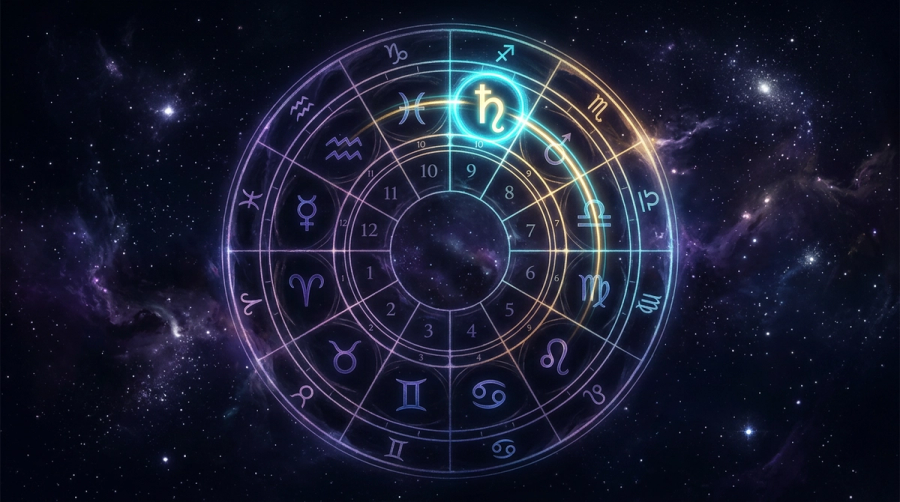
Three planetary cycles converging at a single point on a starlit chart wheel representing the cosmic pile-up at age 28
Why This Generation's Quarter Life Crisis Is Different
The quarter life crisis astrology has been ringing on the same schedule for centuries, but the circumstances it lands into are very different for this generation than for any previous one. If you're 28 in 2026, you're walking through a Saturn return in conditions your parents and grandparents didn't face - and pretending the externals don't matter is its own kind of gaslighting.
Saturn rules concrete reality. The concrete reality of being 28 right now includes:
Housing that's structurally inaccessible. The house your parents bought at 28 costs three times their income now and seven to ten times yours. The Saturn return classically involves a question about home - and the entire generational answer to that question has been dismantled. According to Wondermind's reporting on Saturn returns, this housing-and-stability dimension is a defining feature of how millennial and Gen Z Saturn returns are actually unfolding, not an abstraction.
Social media that turns the comparison wound into a 24-hour broadcast. Everyone you went to high school with is performing their best week of the year, every week. The Saturn return at 28 has always involved comparing yourself to your peers. It has not always involved having a continuous live feed of their highlight reels piped directly into your bed at midnight.
Delayed life milestones that are now treated as failures. Marriage at 28 was once the late side. Now it's the early side. First home, first child, financial independence - all the markers that used to signal "you've made it through Saturn return" have been pushed back five to ten years for this cohort. The internal pressure of the transit collides with an external timeline that doesn't match.
Work that no longer holds the contract it used to. Saturn rules work. The implicit contract - work hard, get stable, retire - broke before you got to it. Your work is more flexible, more precarious, less meaningful, and harder to leave than it was for prior generations. The Saturn return is asking you to commit to a structure of work, and the structures available are shaky.
A planet on fire. Your Saturn return is happening inside a climate crisis that wasn't part of any prior generation's developmental task. The existential layer of what's the point hits differently when the literal physical world is destabilizing in real time.
None of this is your fault. None of it makes the astrological transit any less real. Both things are true at the same time - the cosmic clock is ringing on schedule, and it's ringing into a world your grandmother never had to contend with.
Saturn Return by Sign: Pisces and Aries for the Current Cohort
The Saturn return is colored by the sign Saturn was in at your birth. For people having their Saturn return right now in 2026, Saturn is moving through Pisces and Aries. According to authoritative astrological tracking, Saturn entered Pisces on March 7, 2023, exited Pisces for Aries on May 24, 2025, retrograded back into Pisces on September 1, 2025, and finally left Pisces for good on February 13, 2026. Saturn then settles in Aries from February 13, 2026 through approximately April 12, 2028. So the people having their Saturn return right now have it in Pisces, in Aries, or - for those born on the Pisces/Aries cusp - in both, with two distinct waves.
Saturn return in Pisces (born roughly Feb 1994 to April 1996, plus some late 1993): the wound being asked about is meaning, dissolution, and the inherited spiritual or psychological weight you've been carrying. Pisces rules the unconscious, the dissolved boundaries, the longing for something larger. Saturn here turns that longing into a structural question: what do you actually believe? What practice holds you? How do you handle the part of you that wants to escape? Many people in this cohort hit a wall with substances, fantasy, or bypass strategies during this return. The work is grounding the soul without abandoning it.
Saturn return in Aries (born roughly April 1996 onward, return active 2025-2028): the wound being asked about is identity, leadership, and the right to take up space. Aries is the first sign - the one of I am. Saturn here lands on the question of whether you've been waiting for permission to lead your own life. Many people in this cohort discover they've been deferring to other people's expectations for so long that they don't know what they actually want. The work is taking the uncomfortable initiative - making the move, picking the path, refusing to outsource the decision.
For a deeper look at the Aries leg specifically, our dedicated piece on Saturn return in Aries 2025-2028 breaks down what to expect month by month. And if you're not yet sure which sign your Saturn falls in, the Saturn return ages timeline maps which generation gets which Saturn flavor.
The house Saturn occupies in your chart matters as much as the sign. What house your Saturn is in determines where the reckoning concentrates - career, partnership, family, body, money, or one of the more interior houses.
How to Walk Through It Consciously
The quarter life crisis can't be avoided, but it can be walked through with eyes open. The conscious passage doesn't make it smaller. It makes it meaningful - and meaningful is what gets metabolized instead of just survived.
Stop trying to make it stop. The reflex when grief or identity-collapse hits is to medicate, distract, or restructure your life immediately. The Saturn return wants the opposite. It wants you to not make it stop. The crisis is doing the work the easy version of your twenties never asked of you.
Get a therapist for this passage. Not optional. Someone who understands depth work, attachment, and life-stage transitions - Internal Family Systems, somatic experiencing, attachment-focused, or Jungian. The Saturn return is not a problem to solve; it's a passage to walk with a witness. According to Larkspur Therapy's framing of the Saturn return, many clinicians explicitly use the Saturn return as a developmental metaphor with their late-twenties clients, even when the therapist doesn't take the astrology literally.
Slow down enough to actually feel it. The schedule that worked at 24 doesn't work at 28. Build in unstructured space where the interior can come up. Many people reduce their hours, take a sabbatical, or strip back commitments during this passage. That's not failure. That's the work.
Don't burn the house down unless it's actually time. The temptation is to act on every impulse the surfacing wound creates. Sometimes the moves are right - leave the job, leave the relationship, leave the city. Sometimes they're the wound trying to escape itself. A useful rule: don't make any irreversible decision in the first six months after a major surfacing. Sit with it. Talk to people who've been through it. Then move.
Name what's actually happening. The conscious passage requires saying the real thing in plain language. I'm not happy in this relationship. I don't want this career. I'm scared I've wasted my twenties. I don't know what I want. Naming cuts through the fog of indirection.
Body work. The Saturn return lives in the body. Talk therapy alone often can't reach it. Somatic practices - breathwork, weighted blankets, swimming, slow yoga, regular long walks, therapeutic touch - give the wound another way out.
Find the people who are also in it. The Saturn return is brutal alone. Other people in your cohort are walking through the same fog. They aren't on Instagram about it. They're up at 3 a.m. too. Find them. The peer-level witnessing of late-twenties peers is one of the things this passage is for.
Do the boring real-world work. Saturn rules concrete structure. Some of the work is unglamorous. Look at your finances honestly. Open the retirement account. Have the difficult conversation. Pay the bill. Saturn rewards adulting in the literal sense, and small structural wins add up.
Get personalized guidance based on your birth chart on MyNitya.
When Will It End? The Timeline of Saturn Return Resolution
The quarter life crisis ends. The Saturn return clears between 30 and 31, the progressed Moon enters its second cycle, the nodal opposition releases, and the cosmic pile-up disperses. But "ends" doesn't mean back to normal - it means into a new normal you actually built.
Here's the rough timeline:
29 to 30 - Last passes. Saturn finishes its third pass over your natal Saturn. The acute intensity drops. The structural decisions you made in the peak start showing whether they hold. Some marriages that survived the peak rebuild on better ground. Some careers that pivoted start gaining traction. Some friendships that dropped away stay dropped, and you stop missing them.
30 to 31 - First post-Saturn-return year. Saturn moves on. The new cycle begins. People often describe a quieter, sturdier feeling - not happy exactly, but settled. The 3 a.m. wake-ups slow down. The body reorganizes. You start to recognize the person you became during the crisis as actually you, not a temporary stranger.
31 to 35 - The post-Saturn build. What you decided during the return now gets practiced. The career pivot becomes the career. The new relationship - or the rebuilt old one - becomes a structure. The financial habits start compounding. Many people describe their early thirties as the first time they felt like adults instead of people performing adulthood.
Then a long stretch of relative calm, until the Pluto opposition / second nodal return / Uranus opposition cluster between 37 and 42, which is its own midlife passage. But that one's far enough away that you don't need to think about it now.
For people born between 1994 and 1998, the post-Saturn-return integration period roughly maps to the years 2027 through 2031. That's the window where the rebuild stabilizes. If you're in the peak of it now, in 2026, the sturdier ground is closer than it feels.
The Vedic View: Mars Dasha and the Quarter Life Crisis
MyNitya supports both Western and Vedic astrology, and Vedic astrology has its own framework for the quarter life crisis. The Vedic system uses a 120-year predictive cycle called the Vimshottari Dasha - long planetary periods that color decades of life. The dasha that often hits during the quarter life crisis years is the Mars mahadasha (a 7-year period of Mars) or the start of the Rahu mahadasha (an 18-year Rahu period that often begins in the late twenties or thirties).
The Mars mahadasha at 28 has a similar archetypal flavor to the Saturn return - pressure, conflict, the demand to take action, the surfacing of suppressed anger or ambition. Rahu, the north lunar node in Vedic astrology, when starting its mahadasha during this window, often produces a soul-level direction shift that mirrors the Western nodal opposition described above.
If you have your full birth chart, both systems can be read together. Western astrology excels at the psychological depth - Saturn, Moon, and the nodes give a rich vocabulary for the interior texture of the quarter life crisis. Vedic astrology excels at the timing - the dasha system pinpoints exactly when each phase of the crisis activates and when it begins to release. Looking at both gives you the psychological language and the precise timing.
On MyNitya, you enter your birth details and chat with Nitya - an AI astrologer who deeply understands your Western natal chart. Nitya analyzes planetary positions, house placements, aspects, and transits to give you personalized guidance on career, relationships, timing, and life patterns. For the quarter life crisis specifically, Nitya can pinpoint exactly where Saturn is hitting in your chart, when the progressed Moon return falls for you, and what your nodal axis is asking for in this particular cycle.
The Gift on the Other Side
The quarter life crisis is brutal. It's also, in retrospect, the most important thing that happens to you in your twenties. The person who walks into 27 and the person who walks out of 30 are not the same person. What gets built in between is your actual adulthood - the one you choose, not the one you inherited.
People who walk the Saturn return consciously describe the integration period - roughly 30 to 33 - in surprisingly specific ways. They sleep better. They have less patience for small lies. They forgive faster, including themselves. They tolerate disappointment without making it mean something about their worth. They have language for what they want. They stop performing competence they don't feel and start actually being competent in the smaller domain where they actually are. They get clearer.
The career that emerges on the other side is usually narrower and more honest. The relationships are usually fewer and deeper. The geography is usually more deliberate - you stopped drifting and chose. The financial habits start compounding because Saturn rewarded the boring work. The body finally gets attended to. The grief that surfaced has been metabolized, not buried again.
According to Vice's reporting on the astrological quarter life crisis, the late-twenties Saturn return is repeatedly described by those who've come through it as the moment they stopped being who they were trained to be and started being who they actually are. That sounds clichéd until you live it. Then it sounds like the only thing that mattered.
Among birth charts analyzed on MyNitya, users between ages 27 and 30 are the single largest age cohort, and the questions they ask cluster tightly around three themes: career direction, relationship reality-testing, and the question am I behind? The fact that the question is so universal at this age - across cultures, across charts, across life circumstances - is the strongest possible evidence that something developmental, not personal, is happening. The pile-up is real. The pain is real. So is the gift.
You can also explore how astrology helps you find your life purpose once the immediate crisis releases enough room for the bigger question, or read about Chiron's role in the wounding-and-healing structure that often shows up alongside the Saturn return.
Ask your first question free on MyNitya.
FAQ
What is quarter life crisis astrology?
Quarter life crisis astrology refers to the cluster of major astrological transits between roughly age 27 and 30 that explain why so many people experience an identity crisis in their late twenties. The three main signatures are the Saturn return (29.5-year cycle), the progressed lunar return (~27.3-year cycle), and the nodal opposition (~9 years after the first nodal return at 18.6). All three peak in the same window.
Why is 28 such a hard age astrologically?
28 is hard astrologically because three independent cycles all peak around this age: the Saturn return (typically exact between 28 and 30), the first progressed lunar return (around 27.3), and the nodal opposition (around 27 to 28). It's the only point in your life before age 58 when this many major transits stack up at once, which is why the late-twenties feel categorically different from the early twenties or early thirties.
What sign is Saturn in for current Saturn returns?
Saturn is currently transiting Pisces and Aries. Saturn was in Pisces from March 7, 2023 to February 13, 2026 (with a brief retrograde back from May to September 2025), and it's in Aries from May 24, 2025 through approximately April 12, 2028. People having their Saturn return right now have it in Pisces, in Aries, or in both for those born on the cusp.
How long does the quarter life crisis last?
The quarter life crisis typically lasts two to three years, peaking between 27 and 30. The Saturn return alone runs roughly two years and three exact passes due to retrograde motion. The acute phase clears between 30 and 31, with the integration period running through about age 33. Most people describe their early thirties as the first time they feel settled in their adult life.
Can therapy help with a Saturn return?
Therapy is one of the most effective ways to walk through a Saturn return. The transit asks for the developmental work that the early twenties allowed you to skip - facing limits, integrating the family of origin, taking responsibility for who you actually are. Modalities like Internal Family Systems, somatic experiencing, attachment-focused therapy, and depth psychology are particularly suited to this passage.
What's the difference between a Saturn return and a quarter life crisis?
The Saturn return is the astrological transit; the quarter life crisis is the lived psychological experience. The term quarter-life crisis was coined in 2001 by Alexandra Robbins and Abby Wilner to describe the late-twenties identity crisis. Astrologers had been describing the same phenomenon as the Saturn return for centuries. They're two names for the same developmental window - one psychological, one cosmic.
When does my Saturn return actually start?
Your Saturn return starts when transiting Saturn first enters the sign of your natal Saturn - usually about a year before the exact return. The peak intensity hits when transiting Saturn conjuncts your natal Saturn degree, which happens in two or three exact passes due to retrograde motion. To find the precise dates for your chart, use the Saturn return calculator or the when-is-my-Saturn-return guide.
Will the quarter life crisis end?
Yes, the quarter life crisis ends. The Saturn return clears between 30 and 31, the progressed Moon starts its second cycle, and the nodal opposition releases. Most people describe a quieter, sturdier feeling beginning around age 30 to 31 - not the same as before, but a new baseline that feels actually theirs. The next major life-stage passage isn't until the late thirties to early forties.