How Astrology Can Guide Your Love Life Decisions
In this Article
How astrology can guide your love life is, at its most useful, a question about timing - not fate. The chart is a real toolkit for love decisions: when to have the "what are we" talk, when to wait, when to commit, when to leave, when to date intentionally, and when an old relationship resurfacing means something. This article gives you the actual transits to watch, the 2026 windows that matter, and a practical framework for using your own birth chart to make better calls. Ask your first question free on MyNitya.
If you've ever made a relationship decision in a panic and regretted it three weeks later, you already know what bad timing in love feels like. The chart can't tell you who to love. But it can tell you when your judgment is steady, when your nervous system is too activated to commit cleanly, and when an "ending" is actually just Mercury retrograde making you misread a text. That's not woo. That's the same kind of pattern recognition therapists use when they say "don't make big decisions during a depressive episode." Astrology gives you a more granular version of that wisdom.
Your personal astrologer - Vedic + Western.
Reads all 10,000+ points of your birth chart to answer your question. First question free, no card needed.
Ask your question free →Key Takeaways: Astrology's most reliable use in love is decision timing. Have the DTR talk during Venus-Mercury harmonious aspects with Mercury direct. Avoid major commitments during Mercury retrograde, eclipses (Feb 5, Feb 20, Mar 3, Aug 12, Aug 28, 2026), and Venus retrograde (Oct 3 - Nov 13, 2026). Read your Venus sign for your love language, your progressed Moon for your emotional season, and the upcoming Saturn-in-Aries cycle (from Feb 13, 2026) for where commitment is being tested. The chart doesn't pick the partner. It tells you when your judgment is clear enough to pick well.

Single figure pausing at a celestial doorway with Venus and Mars symbols hovering as guides for love decisions
Why Timing Matters in Love
Timing matters in love because most "wrong person" stories are actually "right decision, wrong moment" stories. The same conversation that lands as honest at one moment lands as an attack at another. The same "I love you" that feels brave on Tuesday feels reckless on Thursday. Astrology gives you a calendar for that variance.
You already know this in other domains. You don't have a hard money conversation right after a fight. You don't quit a job during a depressive week. You don't text your ex at 2 a.m. You wait until your nervous system is regulated. That's timing. Astrology just adds another layer - the planetary one - to a skill you already use. The skill becomes more precise when you can name what's happening overhead and what it's likely doing to you.
The reason most pop-astrology articles miss this is they treat astrology as prediction. "Will I find love in 2026?" "Is my Cancer compatible with my Capricorn?" Those are the wrong questions for decision-making. The right questions are: Is now a good moment to commit? Is now a good moment to leave? Is the urgency I'm feeling real or manufactured by a transit? Those questions have answers the chart can actually give you.
This is the Vedic tradition's longest-standing application of astrology, by the way. In Vedic astrology, muhurta - the science of choosing auspicious moments - has been used for thousands of years to time weddings, engagements, and major commitments. Western astrology arrived at the same insight through electional astrology. Both systems agree on the underlying point: when you do something matters almost as much as what you do.
The Five Most Important Astrological Tools for Love Decisions
The five tools you actually need are Venus transits, Mars transits, Mercury retrograde, your progressed Moon, and eclipse seasons. Each one tells you a different thing about what's available emotionally - what kind of conversation will land, what kind of decision will hold, and where the planetary weather is steady enough to make a clean call.
Most people try to learn all of astrology before they use any of it. You don't need to. These five tools cover roughly 80% of the timing decisions that come up in real love lives. Master them and you'll have more accuracy about your own emotional weather than most therapists can give you in a session.
1. Venus Transits - The Romantic Weather
Venus transits tell you what kind of relating is available. When Venus is in earth signs (Taurus, Virgo, Capricorn), connections feel grounded and practical. In fire signs (Aries, Leo, Sagittarius), they feel passionate and direct. In water signs (Cancer, Scorpio, Pisces), emotional. In air (Gemini, Libra, Aquarius), conversational and intellectual. Venus changes signs roughly every 3-4 weeks, so the romantic weather changes about that often.
Here's what to actually do with that. If you're trying to have a tender, vulnerable conversation, Venus in water gives you better odds. If you're trying to get a clear, practical commitment ("are we exclusive?"), Venus in earth or air is better - earth for "yes, this is real," air for "let's name what we're doing." If you want to ignite something new, Venus in fire is your best window.
In 2026, Venus enters Aquarius on January 17, then Pisces on February 10, then moves through Aries (March), Taurus (April), and continues onward into the rest of the year, including the Venus-Jupiter conjunction in Leo around mid-2026 - historically a strong window for new connections and emotional generosity. The October 3 - November 13 Venus retrograde in Scorpio/Libra is the year's biggest love-timing event. We'll come back to it.
2. Mars Transits - Sexual Chemistry and Pursuit
Mars transits tell you when desire and pursuit are activated. Mars rules sex drive, the willingness to fight for what you want, and the timing of "going after" something. Robert Hand's Planets in Transit describes Mars transits as the moments when you're "willing to take initiative on the matters the transit aspects" - which in love translates directly to who texts first, who initiates the date, who pushes for the next level.
Mars in your 5th house lights up flirtation and dating energy. Mars in your 7th house activates partnership conflict or partnership pursuit, depending on the aspect. Mars conjunct your natal Venus, by transit, is one of the most reliable "chemistry alert" windows in the whole astrological calendar - it's the week you'll either fall hard or get back into your situationship. (Both happen.) Mars retrograde, by contrast, is when initiative goes inward. Bad time to chase. Good time to figure out what you actually want.
3. Mercury Retrograde - When NOT to Define the Relationship
Mercury retrograde is the single most important timing rule for love decisions: don't lock in long-term agreements during it. Mercury rules thinking, words, and contracts. When it's retrograde - three times a year, for about three weeks each - communication gets murky, signals get crossed, people revise what they said, and decisions made under it tend to get re-litigated within a month.
In 2026, Mercury is retrograde February 26 - March 20 (in Pisces), June 29 - July 23 (in Cancer), and October 24 - November 13 (in Scorpio). The pre-shadow phase begins about two weeks before the station retrograde (Feb 11, June 14, Oct 9 approximately), and most astrologers count the post-shadow another two weeks after the station direct. Treat the "core" three-week window as the one where new commitment talks should be postponed if possible, and the shadow weeks as a heads-up to slow down communication.
This is the strongest practical takeaway in this article. If you're tempted to define the relationship during one of those windows, wait. Use the time to talk about what you might want, but don't make labels official. Especially the October 24 - November 13 retrograde in Scorpio, which overlaps Venus retrograde - a once-in-a-decade "do not commit during this" combination.
4. Your Progressed Moon - Your Emotional Season
The progressed Moon is your inner emotional weather, and it changes signs every 2.5 years. Stephen Arroyo's Relationships and Life Cycles maps the progressed Moon as a 27-28-year cycle of emotional development that determines what you can actually receive in love at a given life phase. It tells you what kind of intimacy is available to you, regardless of who you're with.
When your progressed Moon is in a water sign, you're emotionally porous and capable of deep merging - but also more easily overwhelmed. Earth-sign progressed Moon: you crave stability, will tolerate routine, want a partner who shows up consistently. Air-sign: you want conversation, intellectual partnership, and you may pull back from heavy emotional content. Fire-sign: you want passion, novelty, the feeling of being chosen.
This matters because most "I don't know what I want" confusion is actually progressed-Moon confusion. You haven't changed your values. Your emotional weather has shifted, and what you wanted at 26 isn't what you want at 29. The chart names that. It also tells you when the next shift is coming, which is hugely useful for not making a permanent decision in a temporary mood.
5. Eclipse Seasons - When Relationships Transform Fast
Eclipses are the planetary equivalent of plot twists. They activate the axis of the chart they fall on, and they tend to surface what's been hidden - including in relationships. Decisions made within two weeks on either side of an eclipse often feel certain at the time and look different in three months. Liz Greene, in Relating, describes eclipses as "evolutionary pressure points," which is a polite way of saying they bring the truth up whether you wanted it or not.
In 2026, the eclipse dates are: annular solar eclipse February 5, penumbral lunar eclipse February 20, partial lunar eclipse March 3, total solar eclipse August 12, and total lunar eclipse August 28. The February-March cluster is unusually intense. Treat the two weeks before and after each eclipse as "high-revelation, low-decision" time. Listen, observe, take notes. Don't sign anything emotional that you can't unsign.
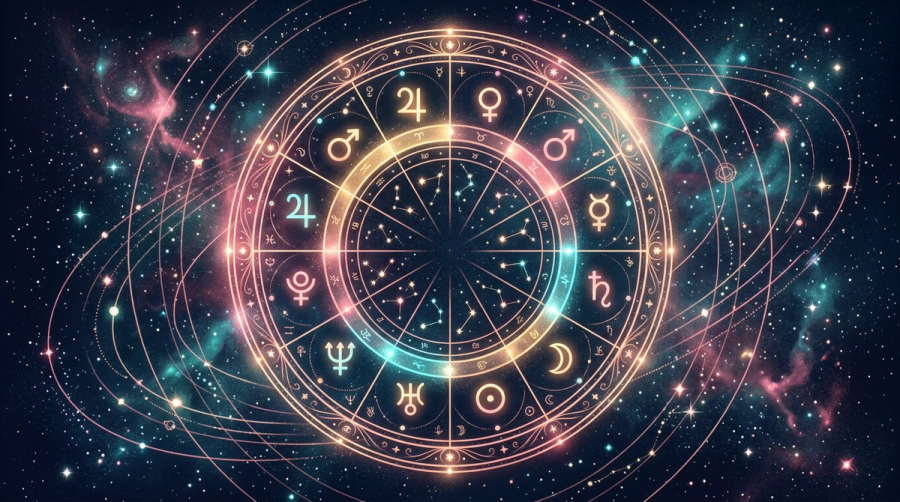
Calendar wheel with planetary symbols marking key 2026 transit windows for love life timing
Decision Timing Guide: When to Do What
What follows is the most concrete part of this article. Each subsection gives you a specific kind of love decision and the planetary signature that supports - or sabotages - it. Save this. Bookmark it. Come back when you need it.
When to Have the DTR / "What Are We" Talk
Have the DTR talk when Mercury is direct, Venus is in an earth or fire sign (for grounded clarity or warm directness), and there's a Venus-Mercury harmonious aspect (conjunction, trine, or sextile) within a few days. Avoid Mercury retrograde, the day of an eclipse, and any moment when transiting Mars is square or opposite your natal Venus - that aspect makes the conversation more combative than connective.
The cleanest DTR windows in 2026 fall outside the three Mercury retrograde periods and outside the eclipse weeks. Strong windows include late January (when Mercury and Venus are both in Aquarius, supporting honest, future-focused relationship conversations), May (Saturn newly in Aries, Mercury and Venus both moving cleanly), and December (post-retrograde Mercury, recovered Venus). Pick a day where Mercury is direct, the Moon is in an air sign or your own Moon sign, and you've slept properly for three nights. That last one is not astrological. It still matters.
The conversation itself: state what you're feeling, ask what they're feeling, name what you'd want a definition to mean, and listen to what they actually say rather than what you hoped they'd say. The chart helps you choose the moment. It doesn't write the script.
When to Make a Commitment Decision (Move In, Get Engaged, Marry)
Avoid making major commitment decisions during eclipses, Venus retrograde, Mercury retrograde, and during a hard transit from Saturn or Pluto to your natal Venus or 7th house ruler. Do them, instead, when Saturn is in a supportive aspect to your Venus (sextile or trine), Jupiter is transiting your 7th house or your Venus, and Mercury is direct. Saturn says "this is real." Jupiter says "this can grow." Mercury direct says "you understand what you're agreeing to."
In 2026, Saturn enters Aries on February 13, 2026 for a long stay through April 2028. If your natal Venus is in Aries, Leo, Sagittarius, Gemini, Libra, or Aquarius, Saturn will form some aspect to it during this period - making this a years-long window where commitment decisions are being structurally tested. That's not bad. It just means decisions made now will be required to stand up to weight. Erin Sullivan, in Saturn in Transit, describes Saturn's contact with Venus as a "reality-test of love" - what survives the transit is real; what doesn't was always more fragile than it looked.
The single worst window for commitment in 2026 is October 3 - November 13 (Venus retrograde overlapping Mercury retrograde). Don't propose. Don't sign a lease. Don't get engaged. If you're tempted to, you're under a transit, not making a decision.
When to Break Up
Knowing when to break up is the reverse of knowing when to commit, but with a critical addition: distinguish actual endings from Mercury-retrograde regret. Mercury retrograde causes breakups that get reversed within a month. Real endings happen on transits like Pluto square Venus, Saturn opposite Venus, transiting Saturn through your 7th house, or progressed Moon ingressing into a sign incompatible with your relationship's foundation.
Real endings have a specific signature in the chart. They're usually preceded by months of escalating dissatisfaction, often coincide with a major outer-planet transit (Saturn, Uranus, Pluto) to a personal planet, and tend to land after an eclipse rather than during one. The eclipse reveals; the post-eclipse weeks decide. If you're considering ending things during one of the 2026 retrograde or eclipse windows - Feb 26 - Mar 20, Jun 29 - Jul 23, Oct 24 - Nov 13, plus the eclipse dates above - wait two weeks past the station direct or eclipse before making it final.
A note on safety: if you're in a relationship that's unsafe - physical violence, coercion, emotional abuse - astrology does not apply here. Leave when it's safe to leave. Don't wait for a transit. Astrology's timing rules are for ordinary, hard, painful, but not dangerous decisions. The minute safety enters the picture, the chart steps aside.
When to Date Intentionally vs. Casually
Date intentionally during Venus transits through your 5th house (romance, dating) or 7th house (partnership), and during Jupiter transits through either of those houses. Date casually - or take a break - during Saturn transits through your 7th house (partnership reset) or during Venus retrograde (review, not initiation). The chart names the season.
A specific 2026 window worth marking: when Venus moves through Leo and conjuncts Jupiter mid-year, this is one of the year's most generous windows for new connections - high social heat, expansive feelings, easier first-date energy. People with Sun, Venus, or Moon in fire signs will feel this strongest. People with heavy water-sign placements may find it superficial. Match the window to your chart.
When to Revisit an Old Relationship (the "Ex Returns" Window)
Venus retrograde is the classic "ex returns" window - and 2026's runs October 3 - November 13 in Scorpio and Libra. During Venus retrograde, exes resurface, old patterns reactivate, and unfinished emotional business demands attention. Some of these returns are real second chances. Most are pattern-recognition tests that the chart is asking you to pass differently this time.
The cautions are simple. Don't make permanent decisions during a retrograde. Use the contact to understand what unfinished thing you have with this person - what got missed, what got projected, what needed closure. Then wait. If, after Venus stations direct on November 13 and Mercury stations direct on November 13 (both end on the same day in 2026, which is unusually clean), you still want this person, the chart has co-signed something real. Until then, it's research.
Meet Nitya, your AI astrologer
She reads your birth chart to answer anything about your life - and she can go deep on any relationship you care about and guide your day ahead. First question free, no card needed.
Some questions our users ask Nitya
Tap any one below - or just write your own question in the form ↓
Nitya isn't a one-time horoscope. She's with you for the whole journey.
Understand yourself
Career, love, money, timing - any decision you are weighing. Answers read straight from your birth chart.
Understand any relationship
Add your partner, a parent, a friend, even a colleague. Nitya reads both charts together to explain the bond, the friction, and how to work through it.
Guidance for every day
Start each morning knowing what the day favors, what to watch for, and the best moments to act.
No card needed. Nitya just needs your birth details to read your chart.
Ask Nitya your first question - free →A practical rule: if your ex returns during Venus retrograde and disappears the moment Venus stations direct, you have your answer. The transit was running them. The transit is over. So is the question.
Reading Your Own Love-Life Decisions: How to Use Your Birth Chart Practically
Your birth chart's love-decision toolkit is mostly four placements: your Venus sign (love language), your Moon sign (emotional needs), your 7th house ruler (partnership pattern), and your Mars sign (desire pattern). Plus the major outer-planet transits to those four points. Most of the practical timing work in love uses just these.
Here's how to use them. First, locate your Venus sign - the sign Venus was in when you were born. This tells you your love language, your default flirting style, and what you find genuinely attractive. Second, your Moon sign tells you what you need to feel safe - the kind of presence, consistency, or emotional environment that lets you actually drop into a relationship. Third, your 7th house ruler (the planet that rules the sign on your 7th house cusp) describes your unconscious model of "partner." Fourth, Mars tells you how you pursue, fight, and want.
Then check the major transits. Look up where Saturn, Jupiter, Uranus, Neptune, and Pluto are in 2026 relative to those four points. Saturn aspects = structural pressure on commitment. Jupiter aspects = expansion, optimism, sometimes overcommitment. Uranus = surprise, disruption. Neptune = idealization, confusion, also genuine spiritual connection. Pluto = depth, transformation, sometimes obsession. The combination of which planet is hitting which natal placement is your timing read for the year.
Among birth charts analyzed on MyNitya, users who time their love-life decisions around their Venus, Moon, and 7th-house transits - rather than reacting to the partner's behavior alone - report markedly fewer "why did I do that" regrets in the months that follow. They're not making different decisions. They're making the same decisions on better days.
Your Love Language Through Your Chart: Venus Sign + 5th House Ruler
Your Venus sign tells you what you actually need to feel loved - the specific emotional and behavioral language that lands as love for you. The 5th house ruler adds detail about what makes you feel chosen and adored. Together, they're more accurate than the popular "five love languages" framework, because they account for your specific psychology.
A quick run through all twelve Venus signs:
Venus in Aries - direct pursuit. You feel loved when someone clearly wants you and acts on it. Slow-burn, ambivalent partners feel unsafe. You'd rather be told "I want you" than guess.
Venus in Taurus - physical presence and consistency. You feel loved through touch, food, steady showing-up, and tangible care. Words alone don't satisfy. Sue Tompkins in The Contemporary Astrologer's Handbook describes Venus in Taurus as needing love that can be measured in calendar entries - does this person actually do the thing they said they'd do, on the day they said?
Venus in Gemini - words and conversation. You feel loved when someone wants to talk to you, asks questions, remembers what you said, and texts back. Silence feels like absence.
Venus in Cancer - emotional safety and care. You feel loved when someone notices your mood without asking, makes you food, holds you when you're sad, and lets you regress without judgment.
Venus in Leo - being adored and chosen. You feel loved when someone makes you the main character of their day. Public affection, clear preference, generous compliments. You're not vain. Your love language requires specifics.
Venus in Virgo - practical care and being known. You feel loved through small acts that show someone is paying attention - they remember the brand of your tea, they notice you're getting sick before you do.
Venus in Libra - partnership and harmony. You feel loved when there's mutuality, beauty, and a sense of being a team. Discord lands as un-love, even when nothing's wrong.
Venus in Scorpio - emotional honesty and depth. You feel loved when someone tells you the truth about what they feel, including the hard things. Surface-level relating feels lonely.
Venus in Sagittarius - freedom and shared adventure. You feel loved when a partner expands your world rather than constrains it. Possessiveness reads as suffocation, not care.
Venus in Capricorn - long-term commitment and reliability. You feel loved when someone stays. Big gestures matter less than the year-three behavior.
Venus in Aquarius - friendship and intellectual partnership. You feel loved when someone treats you as an equal mind first, partner second. The romance grows out of that.
Venus in Pisces - devotion and merging. You feel loved when someone is willing to dissolve a little - to be soft, romantic, almost spiritually present with you. Practicality alone feels cold.
The hard part of love is that your Venus sign and your partner's may not match. That's not incompatibility - it's translation. Knowing your own Venus tells you what you actually need to ask for, in language a partner can act on.
Common Love-Life Decisions and the Charts to Look At
When facing a specific decision, look at the specific placement that governs it. "Should I commit?" → Venus, Saturn, 7th house. "Is this person right for me?" → synastry chart between you. "Should I leave?" → Moon, 7th house, current outer-planet transits. "Should I take them back?" → Venus retrograde history, what's actually changed. "Should I pursue?" → Mars, 5th house. Different decisions, different planets.
This is where a synastry reading or composite chart becomes useful - not to pass judgment on the relationship, but to clarify the structural dynamic. Synastry shows what the two charts do to each other. Composite shows what the relationship itself is like as an entity. Both are useful for different decisions.
For deeper synastry work, our synastry chart relationship reading walks through how to actually read aspects between two charts. For long-term entity-of-the-relationship analysis, the composite chart calculator and relationship astrology guide explains the difference. For meeting-someone questions, our breakdown of love transits in 2026 and when you'll meet someone special maps the year's most romantic windows. For the slower foundational work, the natal chart love compatibility guide covers Venus, Mars, and Moon synastry in detail.
Chat with Nitya about your birth chart - try free.
When to Trust Your Gut Over the Astrology
Trust your gut over the astrology when the chart says one thing and your body says another. Astrology is a framework, not an override. If the transits look great but you feel sick walking into your partner's apartment, the transits are not the data. Your body is.
This is the most important caveat in this entire article. The chart is one input among many. Your nervous system, your therapist, your closest friends, and the actual track record of the relationship over the past six months are all also data. If they conflict, the chart loses. The chart is best used for timing - for choosing the day, the week, the season - not for overriding lived evidence.
The other place to trust your gut: when leaving feels obvious. People often delay leaving for "astrological reasons" when really they're afraid. Don't use the chart as a stalling tactic. The chart can name a window. It cannot decide what you've already decided.
Astrology offers a framework for understanding - it doesn't replace professional mental health support. If you're in crisis or in an unsafe relationship, please reach out to a licensed therapist, counselor, or relevant support hotline. The chart's timing rules don't apply to safety decisions.
2026: The Best and Worst Windows for Love Decisions
The best windows for love decisions in 2026 fall between retrogrades and eclipses, when Venus and Mercury are direct and supportive aspects line up. The worst windows are the three Mercury retrogrades, the five eclipses, and the Venus retrograde - most of which cluster into specific, avoidable months.
The dates worth marking on your calendar for 2026:
Avoid major love decisions:
- February 5 - annular solar eclipse (high-revelation, low-decision)
- February 20 - penumbral lunar eclipse
- February 26 - March 20 - Mercury retrograde in Pisces
- March 3 - partial lunar eclipse
- June 29 - July 23 - Mercury retrograde in Cancer
- August 12 - total solar eclipse (a major one - sit with it, don't act on it)
- August 28 - total lunar eclipse
- October 3 - November 13 - Venus retrograde in Scorpio/Libra
- October 24 - November 13 - Mercury retrograde in Scorpio (overlapping Venus retrograde - the year's worst commitment window)
Strong windows for clear love decisions:
- Late January - Mercury and Venus in Aquarius, supporting honest future-focused relationship conversations
- Mid-April through May - Saturn newly settled in Aries (from February 13), Venus and Mercury moving cleanly, eclipses past
- Mid-July through August 11 - between Mercury retrograde and the August eclipses, a clear window
- December - both Mercury and Venus direct after the October-November retrograde mess, end-of-year clarity
The single most important date is November 13, 2026 - Mercury and Venus both station direct on roughly the same day, which closes the year's biggest love-confusion window. The two weeks after are exceptionally clean for commitment talks, definition conversations, and decisions that have been on hold.
For a deeper read on the year's romantic timing, see our love transits 2026 guide, which maps Venus and Jupiter ingresses to specific compatibility windows. For the broader Mercury retrograde context, our Mercury retrograde 2026 dates, meaning and effects guide covers each station's distinct emotional flavor.
How MyNitya Personalizes Love-Life Timing
Generic transit calendars are useful, but they can't tell you which of the 2026 transits actually hits your chart hardest. That's the personalization gap. MyNitya - an AI-powered astrology platform where you chat with Nitya, a personal AI astrologer who analyzes your full Western natal chart including houses, aspects, and transits - closes that gap by reading your birth data against the year's planetary movements and surfacing the windows that matter for you.
On MyNitya, you enter your birth details and chat with Nitya about whatever's on your mind. "Should I have the DTR talk this month?" "Is this Mercury retrograde activating my 7th house?" "When does this Saturn-Venus square actually end?" Nitya looks at your chart and gives you the specific answer for your specific placements, not a generic horoscope. The platform supports both Vedic and Western astrology - Western astrology excels at psychological depth and relationship dynamics, while Vedic astrology shines at long-arc timing through dashas and traditional muhurta. You can ask in either system, or both.
Get personalized guidance based on your birth chart on MyNitya.
FAQ
How do I know if astrology is real enough to base love decisions on?
Use astrology the way you'd use any framework - as one input alongside your gut, your therapist, your friends, and the actual facts of the relationship. The most defensible use is timing. Many people find that avoiding Mercury retrograde for major commitment talks reduces "why did I say that" regret regardless of belief.
Can I have a DTR conversation during Mercury retrograde if I really need to?
Yes, but treat it as an exploratory conversation rather than a final decision. State what you're feeling, ask what they're feeling, and explicitly say "let's revisit this when Mercury goes direct on [date]" before locking anything in. Mercury retrograde is for review, not for signing relationship contracts.
What's the worst astrological window for getting engaged in 2026?
October 3 - November 13, 2026 - Venus retrograde in Scorpio/Libra overlapping with Mercury retrograde in Scorpio (October 24 - November 13). This is a once-a-year combination where commitment decisions tend to look very different by January. Wait until at least mid-November when both station direct.
Does Venus retrograde always mean my ex will come back?
It often correlates with old relationships resurfacing - people, patterns, or feelings you thought were resolved. But "the ex returns" doesn't mean "the ex is the answer." Use Venus retrograde to understand what was unfinished, not to make the same commitment again. If they're still around after Venus stations direct, that's data.
How do I find my Venus sign without a full birth chart?
Your Venus sign depends on your birth date and is usually within one or two signs of your Sun sign. Free Venus sign lookups exist online, but for love-life work, your full chart is more useful - Venus interacts with your Moon, your 7th house, and your Mars in ways a sign-only lookup misses. Chat with Nitya about your birth chart - try free.
What if my chart's worst commitment window is when my partner wants to commit?
The chart is information, not a veto. If your partner is ready and you're hesitant, that hesitation has some source - astrological, emotional, or both. Use the timing rules as a frame for the conversation: "I want to say yes, and I'd rather wait three weeks past Mercury direct so my answer feels solid." A partner who can hold that is showing you something. A partner who can't is also showing you something.
Is it true that progressed Moon changes everything I want in love?
Your progressed Moon doesn't change your core values - it changes your emotional season. What you can receive shifts roughly every 2.5 years as the progressed Moon moves through signs. Knowing where it is helps you recognize when your "I don't know what I want" is real values confusion versus normal seasonal fluctuation.
What's the one rule I should follow if I remember nothing else from this article?
Don't make permanent love decisions during Mercury retrograde, eclipses, or Venus retrograde. In 2026, that's roughly Feb 11 - Mar 24, June 14 - Aug 6, and Oct 3 - Nov 27 (including shadow periods). Outside those windows, your judgment is statistically clearer. Pick the day, then have the conversation.
A Closing Note
How astrology can guide your love life is, finally, this: the chart helps you choose the moment to do the brave thing. It doesn't make the brave thing safe. It doesn't tell you who to love or whether they'll love you back. It tells you when your own clarity is highest - when the planetary weather supports steady decisions over reactive ones - and when to wait.
You'll still have to risk being wrong. Astrology's gift is just that you can stop being wrong about the timing, which is more than most people figure out without it. Pick the window. Make the call. Trust that the version of you on a Mercury-direct, Venus-supported, eclipse-free Tuesday is more reliable than the version of you at 2 a.m. during a station retrograde.
The chart's been keeping that record for thousands of years. It just needs you to read it before you act.