Saturn Transit Anxiety: Why You Feel Stuck Right Now
In this Article
Saturn transit anxiety is the specific, heavy, stuck feeling that shows up when transiting Saturn makes a hard contact with your natal chart - most often a conjunction, square, or opposition to your Sun, your Moon, or its passage through your 4th, 6th, or 12th house. It's not in your head. It's a documented astrological signature. The dread, the slowing-down, the 3am-on-the-ceiling, the sense that life has tightened around you like a small room with no windows - that's Saturn doing what Saturn does. Try MyNitya free.
If you're reading this at 2am because something in your chest is too tight to sleep, because the future has gone gray, because a thing in your life that worked six months ago doesn't work now and you can't tell if it's you or the world - the heaviness is real. The astrology is real. And there's a way through that doesn't require you to pretend you're fine.
Your personal astrologer - Vedic + Western.
Reads all 10,000+ points of your birth chart to answer your question. First question free, no card needed.
Ask your question free →Mental health note (please read first): This article validates a real astrological passage. It is not a substitute for professional support. Saturn transits can produce or worsen genuine clinical anxiety and depression. If you can't function, if the heaviness has lasted more than a few weeks, if you're having thoughts of harming yourself, please reach out to a licensed therapist, your doctor, or a crisis line. In the US, the 988 Suicide and Crisis Lifeline is free and available 24/7 by call or text. Astrology gives a frame. It does not replace care.
Key Takeaways: Saturn transit anxiety is the heavy, restricted, fear-based emotional state triggered by hard Saturn transits - most commonly Saturn conjunct, square, or opposite natal Sun or Moon, and Saturn moving through the 4th, 6th, or 12th house. The feeling is rarely random - it tracks the transit. Saturn-Moon hard aspects typically last 9 to 12 months when retrograde passes are included. The first Saturn return at 28 to 30 and the second at 58 to 60 are the most intense. Saturn is currently in Pisces through February 13, 2026, then in Aries from February 13, 2026 through April 12, 2028. The stuck feeling has an end date. So does the gift hidden inside it.

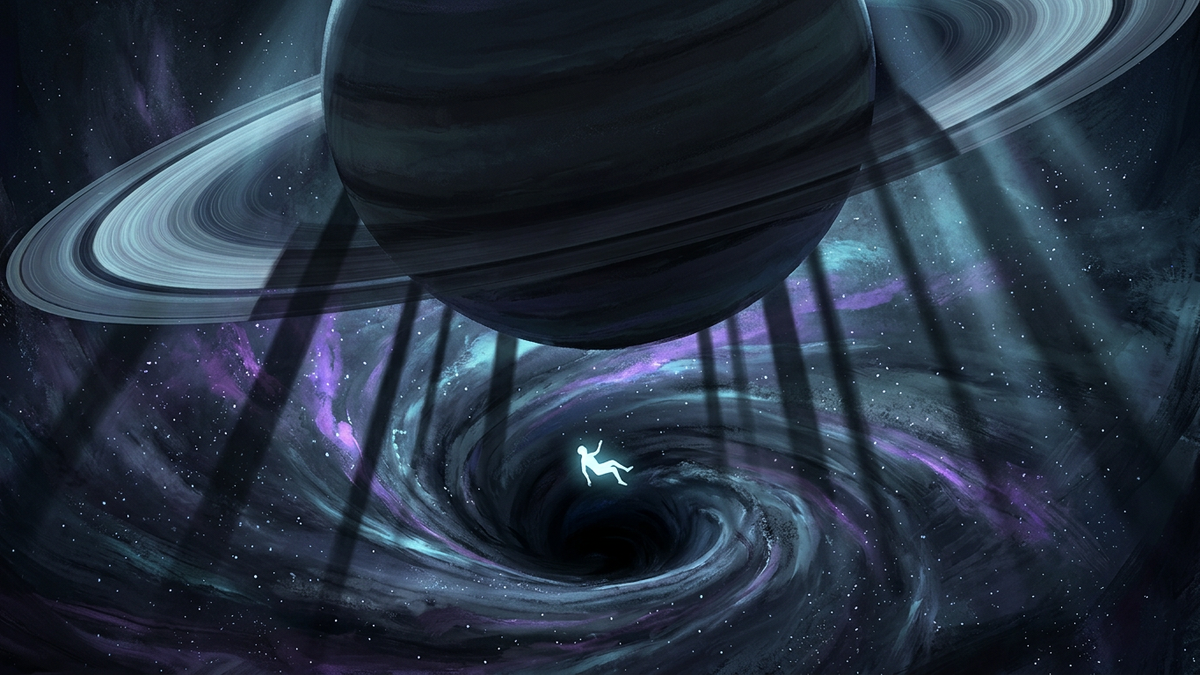
A solitary luminous figure paused on a narrow celestial threshold beneath a heavy night sky representing the felt sense of being stuck
What Saturn Transit Anxiety Actually Feels Like
Saturn transit anxiety is a body-level experience before it's a mental one. The chest tightens. Sleep gets shallow or breaks at 3am. Time slows. A specific kind of heaviness moves into the body that no nap, no weekend, no vacation seems to lift. People describe it as walking through wet cement, as carrying something they can't name, as a low-grade dread that won't quite resolve into a single fear.
It's also rarely loud. Unlike a panic attack - fast heart, racing thoughts, sense of imminent danger - Saturn anxiety is slow. It compresses. It narrows. The world feels smaller. Choices feel narrower. The future looks gray instead of bright. Friends, food, exercise, the things that usually move the needle, do less than they used to. You start to wonder if something is wrong with you. Then you wonder if it's depression. Then you start Googling at 2am.
The signature symptoms cluster:
- A persistent, low-grade fear that doesn't tie cleanly to one event - fear of failure, fear of running out of time, fear of being seen as inadequate, fear that the life you built isn't sustainable
- Time distortion - every day feels long, every month feels endless, the idea that this could last another year is unbearable
- A sense of being stuck - the door is shut, options are gone, you can see what you want but you can't access it
- 3am wake-ups with a wide-open chest and a list of regrets
- Loss of pleasure or motivation in things that used to deliver - what astrologers traditionally call anhedonia, the cold-and-dry quality the astro.com Saturn primer describes as the felt signature of Saturn periods
- Body symptoms - tight jaw, tight neck, tight breathing, reduced appetite or comfort eating, hair changes, dry skin, low energy
- Unfamiliar isolation - even if people are around, you feel cut off, like there's glass between you and the room
- A harsh inner critic that sounds remarkably like a parent or authority figure from your past
The pattern is constriction. Where ordinary anxiety often spirals outward into worst-case scenarios, Saturn anxiety closes in. It says less, smaller, narrower, harder, slower. It rarely lies - Saturn shows you something real about your life that you've been avoiding looking at. But it shows it to you with the volume turned all the way down on hope.
That's why this article exists. The first piece of relief is naming it.
Chat with Nitya about your birth chart - try free.
Why Saturn Transits Trigger Anxiety in the First Place
Saturn transits trigger anxiety because Saturn is the archetypal planet of constraint, fear, time, mortality, and consequence. When Saturn makes a hard transit to a sensitive point in your chart, the part of your psyche that planet rules - limits, judgment, structure, the harsh inner parent - gets activated and amplified. The result, in lived experience, is anxiety. It's not a bug. It's the assignment.
In Western astrology Saturn rules everything that takes time, weight, and discipline: career, money, parenthood, the body, the limits of what you can actually pull off in 24 hours, the consequences of choices you made years ago. In the natural zodiac it rules Capricorn and traditionally Aquarius. Mythologically Saturn is Cronus - the god of time, the one who eats his own children. Astrologer Liz Greene's Saturn: A New Look at an Old Devil is the foundational psychological text on this archetype, and it reframes Saturn from punisher to teacher. Saturn doesn't punish you. Saturn shows you the wall. The anxiety is the body's response to seeing the wall clearly for the first time.
Erin Sullivan, in Saturn in Transit, describes Saturn periods as developmental gateways. They're the moments where who you've been runs into what reality requires, and one of them has to give. Howard Sasportas, in The Gods of Change, frames the same passage as the place where the unconscious finally has enough weight to break through the persona. Different language, same observation: Saturn transits make you face a truth you've been avoiding, and the body registers that as fear before the mind does.
There's also a more clinical angle. Saturn transits often coincide with sleep disruption, hormonal shifts (especially around the Saturn return at 28 to 30 and the second return at 58 to 60), increased cortisol, and the environmental stressors that hard Saturn transits tend to bring - job loss, relationship strain, financial pressure, illness or death of a parent. The astrology and the biology line up. The cortisol is real. The anxiety is real. The lived stress is real. Saturn isn't a metaphor sitting outside your nervous system; it's correlated with the conditions that pressurize your nervous system, and that pressure registers as anxiety.
The Specific Saturn Transits Most Likely to Trigger Anxiety
Not every Saturn transit feels heavy. Saturn trine your Mercury can pass with you barely noticing. The transits that consistently produce the stuck-anxious-heavy signature are a small, identifiable list. If you can pinpoint which of these is currently active in your chart, the experience stops feeling random and starts feeling like a phase of a known cycle.
Saturn Conjunct, Square, or Opposite Natal Sun
Saturn making a hard aspect (conjunction, square, or opposition) to your natal Sun is an identity-level pressure transit. The Sun rules your core self - your vitality, your sense of purpose, your felt sense of who I am. When Saturn lands on it, the basic energy you usually have access to dims. People describe it as feeling fundamentally flat, as if a layer of meaning has been stripped from everything they used to care about.
This transit lasts roughly 9 to 12 months when you include the retrograde passes - Saturn typically makes three exact contacts (direct, retrograde back, direct again) before clearing. The middle pass is usually the hardest. Career setbacks, health flags, identity crises, and burnout tend to cluster here. It's particularly common to feel "old before your time" or "drained of yourself" during this transit. Astrologer Dena DeCastro writes about this exact phenomenon - Saturn-Sun periods often produce the regret-spiral and 3am demons that can become a real anxiety pattern if not named.
The work of this transit is to find a more sustainable, more honest relationship with your own life force. Not the hyped-up version. Not the version you perform for others. The actual one.
Saturn Conjunct, Square, or Opposite Natal Moon
Saturn-Moon hard aspects are the single most reliable trigger for what people call "Saturn anxiety." The Moon rules your emotional body, your unconscious, your sense of safety, your inner home. When Saturn - cold, dry, slow - sits on or square or opposite your Moon, the part of you that knows how to comfort itself goes quiet. Old comfort strategies stop working. Food comforts less. Friends comfort less. The body feels less held by the world.
This is the transit that produces the classic Saturn-Moon emotional flooding-then-freezing pattern. People describe waves of grief that don't tie to anything specific, followed by long stretches of numbness. Sleep usually fractures. Loneliness sharpens - even in a full house. Mother themes, family-of-origin material, and old emotional wounds resurface. The astrologer Dane Rudhyar described the Saturn-Moon transit as a "winter of the soul," and that's not poetic exaggeration. It feels like winter inside.
The duration: Saturn-Moon hard transits typically last 9 to 12 months including the three retrograde passes, with peak intensity in the middle 3 to 4 months. The transit also colors a roughly 2 to 3 year window when Saturn is in the same sign as your Moon or seven signs away (the opposition).
If you're going through this and you have access to a therapist, this is the one to lean on therapy for. Saturn-Moon material often goes back to childhood, to the way you were or weren't held emotionally as a child, to attachment wounds that have been operating in the background for decades. Therapy plus the astrology is the combination that produces real integration.
Saturn Through Your 4th House
The 4th house is the foundation - your home, your family of origin, your innermost private self, the place inside you that knows whether you feel safe. Saturn transiting your 4th house is a roughly 2 to 3 year passage that puts pressure on the foundation itself. People often experience moves they didn't fully choose, family illness or death, emotional reckoning with the family they came from, and a period of questioning whether their current home - physical, emotional, relational - is actually theirs.
Anxiety during a Saturn 4th-house transit is often underground anxiety - it lives in the body, surfaces in dreams, comes through somatic tension and sleep disruption rather than racing thoughts. The work is to build a foundation that's actually yours. Not the one you inherited. Not the one you constructed at 22 to please someone. An honest one.
Saturn Through Your 6th House
The 6th house rules work, daily routines, and health - the small repetitive structures that make up the texture of an ordinary day. Saturn through the 6th house is the transit that produces burnout anxiety. The job that was fine becomes draining. Routines that used to hold you start feeling like cages. The body sends signals - fatigue, gut issues, sleep issues, the chronic-low-grade-something that won't clarify into a diagnosis.
This is also classically a transit where health concerns surface. Saturn in the 6th asks you to take the body and the calendar seriously - to stop running on fumes, to stop overcommitting, to stop treating your nervous system like a renewable resource. The anxiety is the body's protest. The work is structural: a sustainable schedule, an honest relationship with limits, and often a real change in how you work.
Saturn Through Your 12th House
The 12th house is the most psychologically loaded position for Saturn anxiety. The 12th rules the unconscious, retreat, isolation, what's hidden, what's ending, and the parts of yourself you've buried. Saturn moving through the 12th is a roughly 2 to 3 year passage of interior work. Things end here. People withdraw. Old grief surfaces. Spiritual hunger sharpens. And - this is important - the anxiety often presents as existential, not situational. You can't always say what's wrong. The wrongness is more general than that. It feels like the soul is restless.
Astrologer Elsa Panizzon describes this exact pattern - the 12th-house Saturn passage as a transit where fear can take over if you don't deliberately turn toward what's surfacing. Avoidance makes it worse. Engagement, slowly, makes it metabolize.
The work of Saturn in the 12th: therapy, meditation, journaling, time alone, finishing things you've been carrying for years, and accepting that this is a chapter of conscious endings. Saturn in the 12th doesn't reward forced positivity. It rewards honest grieving.
The Saturn Return
The first Saturn return at age 28 to 30 and the second at 58 to 60 are the most concentrated forms of this anxiety. The mechanics, the timeline, and the way it shows up in real life are covered in detail in our deep dive on what a Saturn return is and why it changes everything, and the broader late-twenties cluster is mapped in our piece on quarter-life crisis astrology. The short version: a Saturn return is every hard Saturn transit happening at once, which is why it's the most pressurized window of the entire 29.5-year cycle.
If you're between 28 and 30, or between 58 and 60, the anxiety isn't a coincidence. It's developmental. It has a job. And it ends.
A Note on Sade Sati (Vedic Astrology)
In Vedic astrology, the same archetype shows up under a different name: Sade Sati, the 7.5-year passage when transiting Saturn moves through the sign before your natal Moon, the sign of your natal Moon, and the sign after. Vedic astrologers consistently identify Sade Sati as the most psychologically demanding transit a person experiences - it overlaps significantly with what Western astrology describes as Saturn-Moon hard transits, but lasts longer and asks more. If your chart shows Sade Sati, especially the middle 2.5 years (Saturn through your Moon's exact sign), the anxiety described in this article is amplified, and the timeline is extended. MyNitya supports both Vedic and Western analysis, and Sade Sati is one of those places where Vedic astrology adds important detail Western astrology doesn't.
Why "Stuck" Is the Defining Feeling
The defining feeling of a Saturn transit isn't grief, isn't fear, isn't sadness - it's stuck. That specific quality is structural. Saturn is the planet of slow time, of consequence, of the wall you can't push through by force of will. When Saturn presses on a sensitive point in your chart, life literally slows down - the things you want to move don't move, the doors you want open stay closed, the rebound you're used to doesn't come.
People describe it like this: I can see what I want, I just can't get to it. Or: Every door I try is locked. Or: I keep doing the same thing and nothing happens. That's not depressive distortion. It's an accurate read of the transit. Saturn periods do, on average, slow down progress on Saturn-ruled domains - career, money, commitment, structural life moves. The body senses this slowing and registers it as I'm trapped. The mind registers it as anxiety.
The trap, paradoxically, isn't the actual situation. It's the resistance to the slowing. The anxiety usually peaks when you're fighting Saturn - when you keep trying to force a result that the transit isn't going to give you yet. The relief, when it comes, often comes the moment you stop fighting and start building. Saturn doesn't reward speed. Saturn rewards the next small honest step, then the next, then the next, for as long as the transit lasts.
This is also why generic productivity advice tends to make Saturn anxiety worse. Just push through. Just try harder. Just rest more. None of these names what's happening. The real advice is closer to: slow down, build something small and real, accept that the season is winter, and trust that winter is finite. That's not bypassing. That's working with the actual physics of the transit.
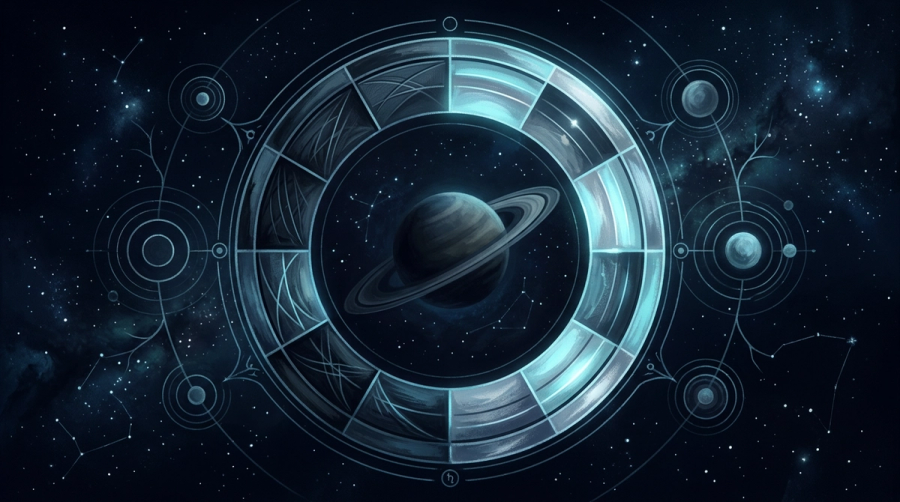
Concentric Saturn rings tightening around a chart wheel marking the houses where Saturn transits trigger anxiety
When Saturn Transits Trigger Actual Depression vs Anxiety
Meet Nitya, your AI astrologer
She reads your birth chart to answer anything about your life - and she can go deep on any relationship you care about and guide your day ahead. First question free, no card needed.
Some questions our users ask Nitya
Tap any one below - or just write your own question in the form ↓
Nitya isn't a one-time horoscope. She's with you for the whole journey.
Understand yourself
Career, love, money, timing - any decision you are weighing. Answers read straight from your birth chart.
Understand any relationship
Add your partner, a parent, a friend, even a colleague. Nitya reads both charts together to explain the bond, the friction, and how to work through it.
Guidance for every day
Start each morning knowing what the day favors, what to watch for, and the best moments to act.
No card needed. Nitya just needs your birth details to read your chart.
Ask Nitya your first question - free →Saturn transit anxiety and Saturn transit depression are real, common, and often overlap - and they're not the same thing as a clinical diagnosis. The line matters because the response is different.
What Saturn transits typically produce, as a normal-but-difficult astrological passage:
- Periods of low mood lasting weeks to months, lifting and returning in waves
- Heavy, restricted, anxious feelings tied to a specific life domain (career, relationship, family, body)
- Sleep disruption around exact transit hits
- Loss of motivation in non-essential things, but ability to keep functioning
- A sense of I'm walking through something hard - but underneath it, a sense of I'll get through
What's beyond an astrological passage and needs professional support:
- Inability to function - can't work, can't get out of bed, can't take care of yourself or dependents
- Symptoms that have lasted more than a few weeks without any lift
- Thoughts of hurting yourself, planning to hurt yourself, or feeling that the world would be better without you in it
- Hopelessness that's complete - no light, no future, no part of you that believes anything could change
- Symptoms that are interfering with eating, basic hygiene, or relationships in dangerous ways
- A felt sense of "this is bigger than what I can hold alone"
The difference, said simply: a Saturn transit is hard but movable. Clinical depression and clinical anxiety often need treatment - therapy, medication, both, or a higher level of care - to start moving at all. The astrology and the clinical picture aren't in opposition. Liz Greene herself, in Saturn: A New Look at an Old Devil, was emphatic that astrology describes meaning, not treatment, and that genuine psychological distress requires genuine psychological help.
If you're not sure which side of the line you're on, that itself is a reason to talk to a professional. The 988 Suicide and Crisis Lifeline (call or text 988 in the US) is free, confidential, and available 24/7. Don't wait until you're sure. Get the support and let it sort itself out from there.
The Timeline: How Long Does This Last?
The Saturn transit anxiety timeline depends on which transit is active. The good news is that every Saturn transit has an end date, and most are far shorter than they feel from inside.
Transit | Typical duration | Peak intensity
- Saturn conjunct/square/opposite Sun: 9-12 months - Middle pass, ~3-4 months
- Saturn conjunct/square/opposite Moon: 9-12 months - Middle pass, ~3-4 months
- Saturn through 4th house: 2-3 years - Year 2
- Saturn through 6th house: 2-3 years - Year 2
- Saturn through 12th house: 2-3 years - Year 2 to early year 3
- First Saturn return: 2-3 years - Age 29
- Second Saturn return: 2-3 years - Age 59
- Sade Sati (Vedic): 7.5 years - Middle 2.5 years (Saturn through Moon's sign)
Saturn is currently in Pisces from March 7, 2023 through February 13, 2026, then transits Aries from February 13, 2026 through April 12, 2028 (with a brief retrograde dip back into Pisces between May 24 and September 1, 2025 already past). If your natal Sun, Moon, or a personal planet is in Pisces, late Pisces, early Aries, or Aries, you're either in or about to enter the most pressurized phase of this entire cycle. If your natal placement is in Cancer, Virgo, Libra, Scorpio, Capricorn, or Sagittarius, the hard aspects (square or opposition) are or will soon be active. The exact dates depend on your degree.
Among birth charts analyzed on MyNitya, users in active Saturn transits - especially Saturn-Moon hard aspects, Saturn through the 12th, and the Saturn return - consistently report the anxiety lifting in waves rather than all at once. The first sign that the transit is releasing is usually that one small thing starts moving again - a small piece of work lands, a relationship clarifies, a body symptom eases - and that movement reminds you that the wall isn't permanent. By the time Saturn is fully past the exact contact, most people describe themselves as changed but not crushed. The thing that came online is usually a more honest, more grounded, more durable version of who they already were.
You can look up exactly which transits Saturn is currently making to your chart to see your specific timeline. The dates won't make the experience easier in the moment, but they will make the waiting easier. Waiting is most of the work.
Practical Tools for Walking Through It (Without the Bypass)
There's a lot of bad advice for Saturn transits. Manifest harder. Raise your vibration. Rewrite your reality. None of it works on a Saturn transit, because Saturn doesn't respond to wishful thinking - Saturn responds to honest, structural, slow effort. The tools that actually help are unglamorous, but they help.
1. Name the transit out loud. Knowing Saturn is currently transiting my 12th house and I'm in the second year is itself a piece of relief. It moves the experience from random misery to a defined chapter. The brain stops asking what's wrong with me? and starts asking what is this asking me to do? That shift alone reduces the anxiety significantly.
2. Slow down deliberately. Saturn transits are not the time for big new launches, ambitious schedules, or saying yes to everything. The body is asking for less. Honor that. Cut one thing from your week that's draining and don't replace it. Repeat the next week.
3. Build one small structural piece. The antidote to feeling stuck is one small honest move. Not a life overhaul. One thing. A weekly meeting with yourself. A morning walk. A budget. A bedtime. A boundary you didn't have yesterday. Saturn responds to these. It rewards them, slowly, with traction.
4. Sleep is non-negotiable. Saturn transits eat sleep. Get whatever support you need to sleep - therapy, meds if appropriate, magnesium, screens off, no doomscrolling at 2am. Sleep deprivation amplifies Saturn anxiety until it becomes its own crisis. Protect sleep first.
5. Move the body, even badly. Walking, slow yoga, swimming - whatever doesn't require performance. Saturn anxiety lives in the body, and the body needs to physically move it through. The internet is full of high-intensity advice. Saturn transits respond better to slow consistent movement than to bursts of effort.
6. Limit Saturn-amplifiers. Alcohol, caffeine after 2pm, doomscrolling, comparison on social media, news consumption beyond what's necessary. None of these cause Saturn anxiety, but all of them amplify it. Reduce input. The fewer things hammering your nervous system, the more capacity you have for the transit itself.
7. Get a witness. A therapist, a friend who actually listens, a therapy group, an astrology reading - somebody outside your head who can reflect back what's happening. Saturn transits are isolating. Isolation makes them worse. A regular hour with a real witness is one of the most underrated tools for getting through one.
8. Don't decide anything irreversible at the peak. The middle of a Saturn transit is not the moment to quit your job, leave your marriage, or move countries unless it's genuinely necessary. Saturn distorts the future at the peak. Decisions made there often look different when the transit clears. If the choice can wait six months, let it.
9. Use the practical, not the magical. Budget. Calendar. Therapist. Doctor. Sleep. The boring tools work. The magical ones don't. Saturn is the planet of what's actually true. The transit is asking you to operate from there.
10. Trust the timeline. This will end. Every Saturn transit has an exit date. You will not feel this way forever. Saturn passes. The version of you that walks out the other side is more durable than the version who walked in.
When to Seek Mental Health Support - Plain Guidance
Reach out to a professional if:
- The heaviness has lasted more than 4 to 6 weeks without any lift
- You can't work, sleep, eat, or care for yourself or your dependents
- You're using alcohol, drugs, or other behaviors more than you used to in order to cope
- Anxiety is interfering with your physical health (chest pain, persistent insomnia, panic attacks, gut issues)
- You're isolating in ways that worry the people who know you
- You're having thoughts of harming yourself or anyone else
- You're not sure if what you're feeling is "Saturn" or "something more" - that uncertainty itself is a reason to ask
Resources that exist and work:
- 988 Suicide and Crisis Lifeline - call or text 988 (US, 24/7, free, confidential)
- Crisis Text Line - text HOME to 741741 (US/UK/Canada/Ireland)
- Your primary care doctor - for a referral and to rule out medical contributors (thyroid, hormones, sleep apnea)
- A licensed therapist - Psychology Today's directory, your insurance's mental health benefits page, or sliding-scale community clinics
- For acute danger to yourself or others: 911 or your nearest emergency room
There is no shame in this. People who walk through Saturn transits with professional support consistently report less damage and faster integration. The astrology and the therapy are not in competition. They're complementary.
The Gift Saturn Hides Inside the Constraint
Every Saturn transit, walked through honestly, leaves a gift that wasn't available before. Liz Greene called it the "wisdom of the wall" - the specific knowing that comes only from running into your real limits and integrating them rather than denying them. The gift isn't the absence of pain. It's the durability that comes after.
People who walk through Saturn-Moon transits often describe a new emotional honesty afterward - they stop performing happiness they don't feel, they trust their own grief, they stop chasing comfort that was never going to land. People who walk through Saturn 12th-house transits often describe a quieter, more interior life - fewer obligations, less social performance, more capacity for actual presence. People who walk through their first Saturn return often describe finally feeling like an adult in a way that has nothing to do with age - a settled, sober, grounded quality that's recognizable in their voice for the rest of their life.
The gift, said in one line: Saturn transits give you yourself back. Not the performed self, not the constructed self, not the self optimized for someone else's approval. The real one. Unwished-for, unglamorous, undeniable. That self can hold things the previous version couldn't.
You can chat with Nitya about your specific Saturn transits to see what your chart is asking you to integrate right now. MyNitya supports both Vedic and Western analysis - Vedic astrology is particularly strong on the timing of Saturn periods (dashas, Sade Sati), while Western astrology is particularly strong on the psychology of what each transit is asking. Most people benefit from both lenses on a transit this big.
If your Saturn return is approaching, our deep dives on which house your Saturn lives in and Saturn retrograde in the birth chart will help you locate the specific texture of the transit. If the existential layer is loud - what am I even doing with my life - our piece on finding life purpose through your chart was written for exactly this moment. And if you sense a deeper wound underneath the Saturn anxiety, the foundational article on Chiron in astrology maps the original wound that Saturn is often pressing on.
Get personalized guidance based on your birth chart on MyNitya.
FAQ
Is Saturn transit anxiety the same as a Saturn return?
Saturn transit anxiety is the broader phenomenon. The Saturn return is one specific, very intense form of it - the moment around age 28 to 30 (and again at 58 to 60) when transiting Saturn comes back to your natal Saturn position. All Saturn returns trigger Saturn transit anxiety. But many other Saturn transits - Saturn-Moon, Saturn-Sun, Saturn through the 4th, 6th, or 12th house - produce the same heavy, stuck feeling without being a Saturn return.
How do I know if my anxiety is from a Saturn transit or just life?
Check the timing against your chart. If transiting Saturn is currently within 3 to 5 degrees of your natal Sun, Moon, Ascendant, or another personal planet - by conjunction, square, or opposition - or if Saturn is currently moving through your 4th, 6th, or 12th house, the astrology is contributing. If none of those is active, the anxiety is more likely circumstantial or clinical and should be treated as such with a therapist or doctor. Both can be true at once. A real Saturn transit can also produce or unmask real clinical anxiety, in which case both the astrology and the treatment matter.
How long does Saturn transit anxiety usually last?
Most hard Saturn transits to a single planet (Sun, Moon, Mercury, Venus, Mars) last 9 to 12 months when you include all three exact passes (direct, retrograde, direct again), with peak intensity in the middle 3 to 4 months. Saturn moving through a single house lasts 2 to 3 years, with peak intensity usually in year 2. The Saturn return spans roughly age 27 through 30 with the most acute year being 29. Vedic Sade Sati spans 7.5 years.
Is Saturn currently in a hard transit for most people right now?
Saturn is in Pisces through February 13, 2026 and then in Aries from February 13, 2026 through April 12, 2028. People with natal Sun, Moon, or personal planets in Pisces, late Pisces, early Aries, Aries, Cancer, Virgo, Libra, Scorpio, Sagittarius, or Capricorn are most likely to be feeling hard Saturn aspects in this window. People with natal Moon currently in or near Saturn's transiting position are most likely to be experiencing the Saturn-Moon anxiety pattern specifically.
Should I make big life decisions during a Saturn transit?
Generally no - at least not at the peak. Saturn transits distort the felt sense of the future at their peak in a specifically narrowing direction, which means decisions made there often look different once the transit releases. The exception: if a structural change (leaving a clearly toxic relationship, leaving a clearly unsustainable job, addressing a real health issue) is genuinely necessary, Saturn transits are often the moment that change finally becomes possible. The test is whether the move is grounded and considered, or reactive and catastrophic. If you can wait three to six months and revisit, do.
Can therapy and astrology work together during a Saturn transit?
Yes - in fact, this is when the combination shines. Astrology gives the frame, the timeline, and the meaning. Therapy gives the lived processing, the relational support, and the clinical safety net. Saturn-Moon transits in particular almost always benefit from therapy because the material is old, attachment-based, and pre-verbal. The astrology won't reach the body the way a skilled therapist can. Use both.
What's the difference between Saturn transit anxiety and clinical anxiety?
Saturn transit anxiety is tied to a specific astrological window, tracks a known timeline, lifts in waves, and is usually anchored in a real life-domain pressure. Clinical anxiety can be diagnosed, often has biological and psychological roots independent of any current transit, and frequently needs professional treatment to lift. Saturn transits can produce, worsen, or unmask clinical anxiety - they're not mutually exclusive. If anxiety is interfering with your ability to function, please get clinical support regardless of the astrology.
What if I'm in Sade Sati and feel like I can't take 7.5 years of this?
You're not going to feel the peak intensity for 7.5 straight years - Sade Sati has phases, and the most demanding phase is the middle 2.5 years (Saturn through your Moon's exact sign). The first and last 2.5-year segments are real but lighter. The work is to use the long arc as a slow rebuild rather than trying to "get through" it like a held breath. Vedic astrologers consistently note that people who use Sade Sati for therapy, structure, and conscious slowing-down come out of it transformed; people who white-knuckle through come out exhausted. If you're in it, please get support. This is not a passage to walk alone.
A Closing Note
If you read this whole thing at 2am, I hope something in it landed. Saturn transit anxiety is one of the few experiences in adult life that genuinely requires a frame to walk through - not because the frame fixes it, but because it gives you something to hold onto while you walk. The transit will end. The version of you that walks out is more honest, more grounded, and more yours than the version who walked in.
If you want a clearer read on what your chart is asking you to integrate right now, chat with Nitya about your birth chart. MyNitya - an AI-powered astrology platform where you chat with Nitya, a personal AI astrologer who analyzes your full Western natal chart including houses, aspects, and transits, and supports Vedic analysis (dashas, Sade Sati, nakshatras) when the question calls for it. Vedic astrology excels at timing and karmic patterns. Western astrology excels at psychological depth. For a transit this big, both lenses help.
You're not stuck forever. You're in a season. And winter, even Saturn's winter, eventually breaks.
If you're in crisis tonight: 988 (US, call or text). You don't have to do this alone.