Understanding Transits in Your Natal Chart: How Planetary Movements Shape Your Life
In this Article
Transits are the single most powerful timing tool in astrology. They answer the question every person eventually asks: Why is this happening to me right now?
Your personal astrologer - Vedic + Western.
Reads all 10,000+ points of your birth chart to answer your question. First question free, no card needed.
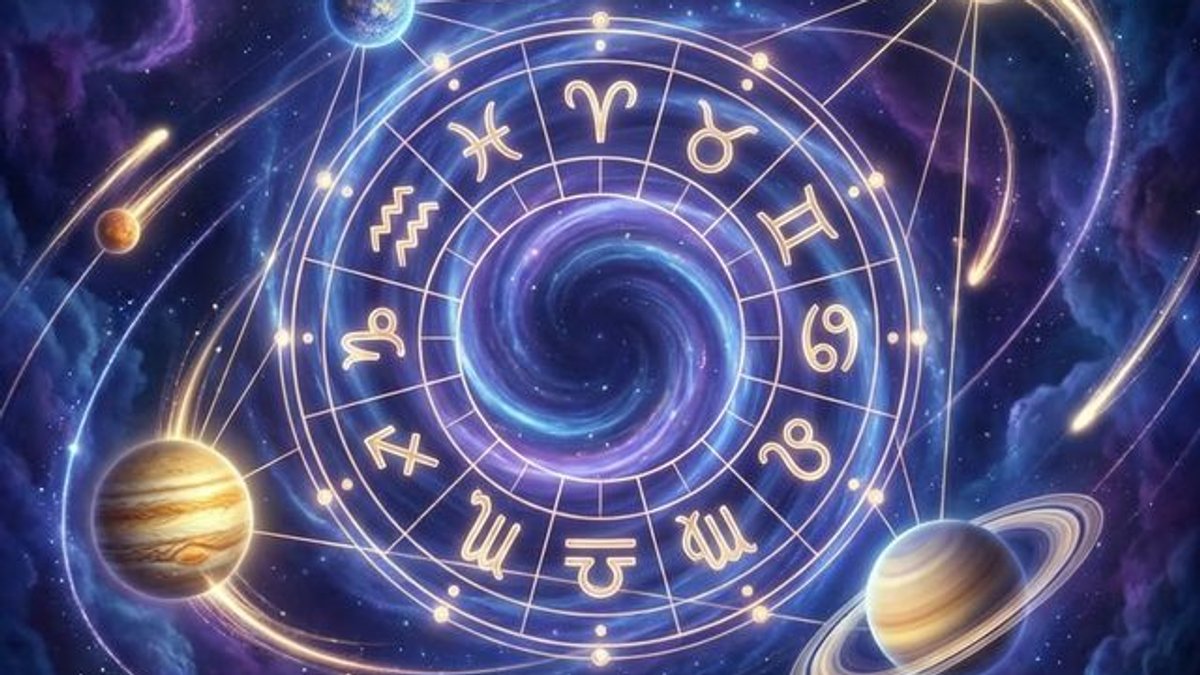
Ask your question free →Your natal chart is a fixed snapshot of the sky at the moment you were born. It maps your personality, your tendencies, your potential. But it doesn't move. The planets, however, never stop. They keep orbiting, and as they travel through the zodiac, they form angles-called aspects-to the planets in your birth chart. These interactions are transits, and they activate dormant energies in your chart like a key turning a lock.
Think of your natal chart as a house with many rooms. Transiting planets are visitors who knock on different doors at different times. Some visitors bring gifts. Others bring lessons. A few rearrange your furniture entirely. Understanding transits means understanding when and why life shifts happen-and what to do about them.
What Are Transits in Astrology?
A transit occurs whenever a moving planet in the current sky forms a significant angle to a planet or point in your natal chart. The transiting planet activates the natal planet's energy, creating noticeable effects in the area of life (house) where that natal planet sits.
Here's the crucial distinction: transits don't create energy from nothing. They stimulate what's already in your chart. If you have natal Venus in your 7th house of partnerships, a transit from Jupiter to that Venus amplifies relationship opportunities that were always part of your blueprint. Without that natal placement, the same Jupiter transit would affect you differently.
This is why two people born under the same Sun sign can experience the same planetary transit in completely different ways. Their natal charts are different, so the same "visitor" knocks on different "doors."
Key principle: Transits work on the natal chart like weather works on a landscape. The landscape (natal chart) determines what grows. The weather (transits) determines when it grows, blooms, or faces storms.
Your Natal Chart vs. Transits: The Key Difference
Your natal chart is static. It was calculated for one specific moment-your birth-and it never changes. It's your cosmic DNA, encoding your personality, strengths, blind spots, and life themes.
Transits are dynamic. They represent the actual, real-time movements of planets through the zodiac. Every single day, the planetary positions shift. The Moon moves through a new sign roughly every 2.5 days. Mercury changes signs every 2-3 weeks. Saturn takes about 2.5 years per sign. Pluto takes 12-20 years.
When astrologers "read your transits," they overlay the current planetary positions onto your natal chart and look for significant geometric relationships (aspects) between the moving planets and your fixed natal placements.
Here's an analogy: Your natal chart is the musical score of your life-every note, every rest, every crescendo already written. Transits are the conductor, deciding which sections play loudly and which soften, moment by moment, year by year. The music itself doesn't change, but how it sounds at any given time depends on which passages the conductor brings forward.
The Five Major Aspects: How Transiting Planets Talk to Your Chart
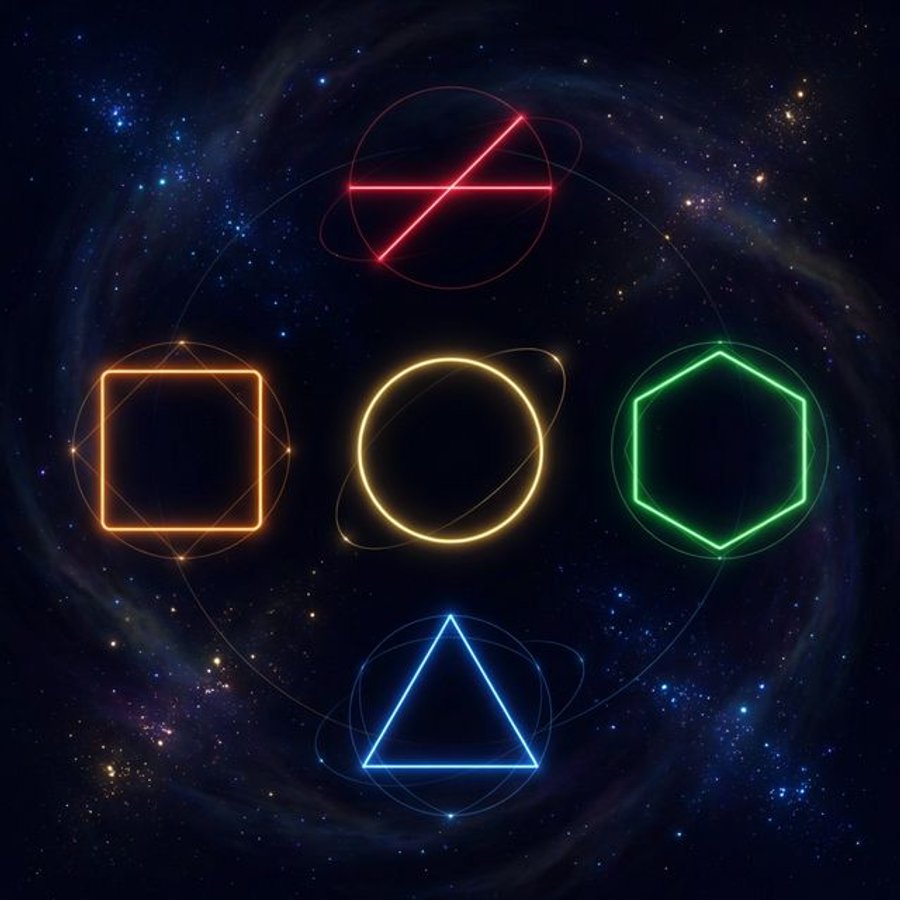
Planetary aspects in astrology infographic showing conjunction opposition square trine and sextile geometric patterns
Aspects are the angular relationships between transiting and natal planets. Each angle carries a distinct quality of interaction. Understanding these five aspects gives you the vocabulary to read any transit.
Conjunction (0 degrees) - Intensification
When a transiting planet occupies the same zodiacal degree as a natal planet, their energies merge. This is the most powerful aspect. The transiting planet's energy pours directly into the natal planet's function.
Effect: New beginnings, intensified focus, and heightened awareness in the areas governed by both planets. Like a spotlight illuminating one part of your life.
Example: Transiting Jupiter conjunct your natal Sun often correlates with a year of expanded confidence, new opportunities, and personal growth. You feel larger, more visible, more optimistic. Major life doors tend to open under this transit.
Opposition (180 degrees) - Awareness Through Tension
The transiting planet sits directly across the zodiac from the natal planet. This creates polarity-you become acutely aware of something through external pressure, often through relationships or confrontations with others.
Effect: Tension that demands resolution. You see things clearly because you're forced to confront what you've been avoiding. Others often mirror back what you need to address internally.
Example: Transiting Saturn opposing your natal Moon can feel like emotional restriction-external obligations clash with your emotional needs. Relationships may test your capacity for responsibility versus emotional freedom. The lesson is integration, not choosing one over the other.
Square (90 degrees) - Friction and Growth
The transiting planet forms a 90-degree angle to the natal planet, creating internal friction. Squares are often described as "difficult" transits, but they're better understood as the aspects that force you to act. Without squares, nothing would ever change.
Effect: Challenges, frustration, and motivation. Something isn't working, and the discomfort pushes you to adjust. Growth happens through friction, not ease.
Example: Transiting Uranus square your natal Venus might destabilize relationships or financial patterns that have grown stale. The discomfort pushes you toward more authentic expressions of love and value, even if the process feels disruptive.
Trine (120 degrees) - Flow and Support
The transiting planet forms a harmonious 120-degree angle. Trines feel easy-energy flows naturally between the transiting and natal planets. Opportunities present themselves without much effort.
Effect: Ease, talent amplification, and natural progress. The danger of trines is complacency-things come so easily that you might not push yourself.
Example: Transiting Jupiter trine your natal Mercury creates a period where communication, learning, and intellectual pursuits flow beautifully. It's an excellent time for writing, studying, teaching, or starting educational ventures. Ideas come easily.
Sextile (60 degrees) - Gentle Opportunities
Sextiles work like softer trines-they present opportunities, but they require you to take action. Unlike trines, sextiles won't hand you results passively. They open doors; you still have to walk through them.
Effect: Opportunities that respond well to initiative. Collaborative energy. Creative possibilities.
Example: Transiting Venus sextile your natal Mars creates a window for romantic initiatives, creative projects, or collaborative ventures. The energy supports action but doesn't force it. You'll benefit most if you actively pursue what interests you during this window.
Fast vs. Slow Planets: Why It Matters
Not all transits carry equal weight. The planet's speed determines how long its influence lasts and how deep its effects run.
Personal (Fast) Planets
Sun, Moon, Mercury, Venus, Mars move quickly through the zodiac. Their transits last hours to weeks. They influence your daily moods, interactions, short-term decisions, and energy levels.
- The Moon transits each natal planet roughly once a month. These create brief emotional shifts-a few hours of intensity, then it passes.
- Mercury transits affect communication, thinking, and short trips. Each transit lasts a few days (longer during retrograde).
- Venus transits influence love, money, aesthetics, and social interactions. They last about a week per aspect.
- Mars transits bring energy, motivation, drive, and sometimes conflict. They last roughly two weeks per aspect.
These transits are the daily weather of your astrological life. Important for planning, but not life-changing on their own.
Social Planets
Jupiter and Saturn bridge the personal and transpersonal. Their transits shape medium-term life chapters.
- Jupiter spends about 1 year in each sign, making each major aspect to a natal planet last roughly 2-4 weeks. Jupiter transits mark periods of growth, luck, expansion, and occasionally excess.
- Saturn spends about 2.5 years in each sign, making each major aspect last 1-3 months. Saturn transits are the "adult responsibilities" of astrology-they test your structures, demand maturity, and reward discipline.
Outer (Slow) Planets
Uranus, Neptune, and Pluto move so slowly that their transits reshape entire life chapters. These are the transits astrologers pay the most attention to, because their effects are profound and lasting.
- Uranus takes 84 years to orbit the zodiac. When it aspects a natal planet, the transit lasts 1-2 years. Expect sudden disruptions, breakthroughs, and liberation from outdated patterns.
- Neptune takes 165 years. Its transits last 2-3 years and dissolve boundaries, inspire creativity, but can also create confusion and idealization.
- Pluto takes 248 years. Its transits last 2-4 years and bring deep transformation-death and rebirth experiences in the areas they touch. Nothing touched by Pluto remains the same.
Saturn Return: The Most Famous Transit
Saturn return astrology illustration showing Saturn completing its orbital cycle on the zodiac wheel
The Saturn Return is the most widely known transit in astrology, and for good reason. It marks a genuine turning point that almost everyone recognizes in their own experience.
What Happens
Saturn takes approximately 29.5 years to complete one orbit around the zodiac. When it returns to the exact position it held at your birth, you experience your first Saturn Return (around age 28-30). The second arrives around 57-59, and the third around 86-88.
Why It Matters
Saturn represents structure, responsibility, discipline, and consequences. When transiting Saturn conjuncts your natal Saturn, everything you've built-and everything you've avoided building-gets tested.
At your first Saturn Return (age 28-30):
- Careers solidify or collapse based on how authentic they are to your purpose
- Relationships that lack real foundation often end
Meet Nitya, your AI astrologer
She reads your birth chart to answer anything about your life - and she can go deep on any relationship you care about and guide your day ahead. First question free, no card needed.
Some questions our users ask Nitya
Tap any one below - or just write your own question in the form ↓
Nitya isn't a one-time horoscope. She's with you for the whole journey.
Understand yourself
Career, love, money, timing - any decision you are weighing. Answers read straight from your birth chart.
Understand any relationship
Add your partner, a parent, a friend, even a colleague. Nitya reads both charts together to explain the bond, the friction, and how to work through it.
Guidance for every day
Start each morning knowing what the day favors, what to watch for, and the best moments to act.
No card needed. Nitya just needs your birth details to read your chart.
Ask Nitya your first question - free →- You're pushed (sometimes painfully) from young adulthood into mature self-authorship
- Questions of "who do I want to be?" become impossible to ignore
- Financial habits, health patterns, and lifestyle choices demand restructuring
At your second Saturn Return (age 57-59):
- Life reassessment around legacy, wisdom, and what truly matters
- Releasing roles, identities, or responsibilities that no longer serve you
- A second maturation that refines wisdom over ambition
- Health becomes a priority, demanding honest attention
The house where your natal Saturn sits determines which life area gets tested most intensely. Saturn in the 7th house? Relationships face their ultimate test. Saturn in the 10th? Career and public role undergo scrutiny.
How to Work With It
The Saturn Return isn't punishment. It's a graduation ceremony-but only if you've done the work. Those who've made authentic choices in the preceding years often find their Saturn Return empowering, a time when effort finally crystallizes into results. Those who've been avoiding growth find it more difficult, as Saturn forces confrontation with deferred responsibilities.
Jupiter Transits: Expansion and Opportunity
Where Saturn contracts and tests, Jupiter expands and blesses. Jupiter transits are the traditional "good luck" transits, though they're more nuanced than simple fortune.
Jupiter Conjunct Natal Sun/Moon
This transit (occurring roughly every 12 years) marks a period of personal expansion, increased confidence, and opportunities for growth. People often start new ventures, travel, or experience breakthroughs in self-understanding during this transit.
Jupiter Conjunct Natal Venus
Love, money, and pleasure all get amplified. New relationships may begin easily. Financial opportunities increase. Creative projects flourish. The risk is overindulgence-Jupiter doesn't know when to stop.
Jupiter Through Your Houses
As Jupiter transits through each house of your chart (spending about 1 year per house), it brings growth and opportunity to that life area:
- 1st House: Personal reinvention, increased visibility
- 2nd House: Financial growth, clarified values
- 4th House: Family expansion, home improvements, emotional security
- 7th House: Relationship opportunities, partnerships, collaborations
- 10th House: Career advancement, public recognition, professional growth
The Shadow of Jupiter
Jupiter isn't always positive. Its expansive nature can amplify problems too. Jupiter conjunct a natal planet involved in a challenging pattern can expand the difficulty. And Jupiter's optimism can lead to overcommitment, overspending, or taking on more than you can realistically handle.
Outer Planet Transits: Uranus, Neptune, and Pluto
These slow-moving planets create the deepest, most transformative transits in astrology. When an outer planet aspects your natal chart, you're in for a multi-year experience that reshapes that area of your life.
Uranus Transits - Awakening and Liberation
Uranus breaks what's stagnant. Its transits arrive like lightning-sudden, disruptive, and ultimately liberating.
Uranus conjunct natal Moon: Emotional upheaval, sudden changes in home or family life, liberation from emotional patterns you've outgrown. You may feel restless, rebellious, needing freedom you can't quite name.
Uranus square natal Sun (around age 21 and 63): Identity crises that push you toward greater authenticity. The "quarter-life crisis" at 21 and a corresponding awakening at 63 both stem from this transit.
Uranus opposition natal Uranus (around age 42): The classic "midlife crisis" transit. Everything conventional gets questioned. The urge to break free from routines, relationships, or career paths that feel confining becomes overwhelming.
Neptune Transits - Dissolution and Inspiration
Neptune dissolves boundaries. Its transits blur the line between reality and imagination, sometimes beautifully and sometimes confusingly.
Neptune conjunct natal Venus: Romance becomes idealized-you may fall in love with someone's potential rather than their reality. Creative inspiration peaks. Aesthetic sensitivity heightens. But discernment in relationships and finances may weaken.
Neptune square natal Sun: Identity becomes foggy. Who you are feels uncertain. This transit can bring spiritual awakening or existential confusion, sometimes both. Boundaries dissolve, making you more empathetic but also more vulnerable to manipulation.
Pluto Transits - Death and Rebirth
Pluto transforms through elimination. Whatever it touches, it strips down to essentials and rebuilds from the foundation.
Pluto conjunct natal Sun: A multi-year identity transformation. The person you were before this transit isn't the person you'll be after. Power struggles may surface. Control issues become impossible to ignore. The ego is dismantled and reconstructed.
Pluto conjunct natal Moon: Deep emotional transformation. Subconscious patterns-especially those inherited from your family-surface for processing. Relationships with women or maternal figures may transform dramatically. Psychological depth increases profoundly.
How to Read Transits in Your Chart: Step by Step
You don't need to be a professional astrologer to begin understanding your own transits. Here's a practical approach:
Step 1: Know Your Natal Chart
Before you can read transits, you need a clear picture of your natal chart. Know where each planet sits by sign, house, and the major aspects it makes. This is your foundation.
At MyNitya, you can get a detailed natal chart breakdown that explains each placement in practical terms-not just abstract symbolism, but how these energies show up in your actual life.
Step 2: Identify Current Slow-Planet Positions
Focus on the outer planets first. As of 2026, here are the key positions:
- Saturn entered Aries in February 2026
- Jupiter is transiting through Cancer
- Uranus is in Gemini
- Neptune has moved into Aries
- Pluto continues through Aquarius
Step 3: Check Aspects to Your Natal Planets
Look for conjunctions, oppositions, squares, trines, and sextiles between the current slow planets and your natal planets. Allow an orb of about 2-3 degrees for slow planets.
Step 4: Note the Houses Involved
The house the transiting planet occupies tells you where the energy manifests. The natal planet being aspected tells you what energy is being activated.
Step 5: Consider the Full Picture
No transit operates in isolation. Multiple transits happen simultaneously, creating layered effects. A challenging Saturn square might be softened by a supportive Jupiter trine happening at the same time.
Common Transit Misconceptions
"Bad" Transits vs. Growth Transits
There are no inherently bad transits. Squares and oppositions create friction, yes-but friction is what generates change. Without these "difficult" aspects, growth stagnates. The most successful, fulfilled people often have active transit histories full of challenging aspects that forced them to evolve.
Transits Don't Override Free Will
Transits describe energy available to you, not events predetermined for you. A Venus-Jupiter trine doesn't guarantee you'll fall in love. It creates conditions where love is more possible, more supported, more likely. But you still have to show up, say yes, and do the work.
Not Every Transit Is Life-Changing
Most transits from fast-moving planets are barely noticeable. A Mercury trine to your natal Mars might give you a particularly productive Tuesday. It doesn't reshape your existence. Save your attention for the slow-planet transits-those are the ones that sculpt life chapters.
Sun Sign Horoscopes Are Transit Approximations
The daily horoscopes you read in magazines are simplified transit interpretations based only on your Sun sign. They're not wrong, exactly-but they're working with roughly 8% of your chart. Full transit analysis considers all your natal placements, creating a far more accurate and personal picture.
Using Transit Knowledge Practically
Planning Major Decisions
Understanding your transits helps with timing. Starting a business during a Jupiter transit through your 10th house gives you tailwind. Launching during a Saturn square to your natal Mars means you'll face more resistance and need more patience.
This isn't superstition-it's using an additional data point for decision-making. Successful timing combines practical considerations with cosmic awareness.
Understanding Difficult Periods
When life gets hard, knowing your transits provides context. "I'm going through a Pluto square to my Moon" explains the emotional intensity in a way that helps you stop blaming yourself and start working with the energy instead of against it.
Tracking Recurring Themes
As planets cycle through your chart, they activate the same points repeatedly. Saturn returns to each natal planet roughly every 29 years. Jupiter revisits every 12 years. Tracking these cycles reveals patterns in your life-recurring themes that deepen your self-understanding with each repetition.
Working With MyNitya for Transit Insights
Rather than learning the entire system from scratch, you can ask MyNitya about your specific transits. Questions like "What major transits am I experiencing right now?" or "What does Jupiter in my 7th house mean for relationships?" give you personalized answers based on your complete birth chart-not generic Sun sign interpretations.
Key Takeaway
Transits in your natal chart are the living, breathing rhythm of astrology. Your birth chart shows who you are. Transits show what's being activated, when. Understanding this relationship gives you a powerful framework for navigating life's cycles-knowing when to push forward (Jupiter and trines), when to restructure (Saturn and squares), and when to surrender to transformation (Pluto). You don't need to become an astrologer to use transits. You need to know your chart, track the slow planets, and recognize which doors they're knocking on in your life.
Frequently Asked Questions
What is a transit in astrology?
A transit occurs when a currently moving planet forms a significant angle (aspect) to a planet or point in your natal birth chart. Transits activate the energies described in your natal chart, creating periods of growth, challenge, opportunity, or transformation depending on the planets and aspects involved.
How do transits affect my natal chart?
Transiting planets stimulate embedded energies in your natal chart. They don't create new energy-they activate what's already there. The aspect formed (conjunction, opposition, square, trine, sextile) determines whether the activation feels supportive or challenging, while the houses involved show which area of life is affected.
What is a Saturn Return and when does it happen?
A Saturn Return occurs when transiting Saturn returns to the exact zodiacal position it occupied at your birth-approximately every 29.5 years (ages 28-30, 57-59, and 86-88). It's a major life checkpoint that tests your structures, demands maturity, and often triggers significant career, relationship, and identity shifts.
How long do planetary transits last?
Transit duration depends on the planet's speed. Moon transits last hours. Mercury, Venus, and Mars transits last days to weeks. Jupiter transits last 2-4 weeks per aspect. Saturn transits last 1-3 months. Uranus, Neptune, and Pluto transits can last 1-4 years, creating deep, lasting life changes.
Are some transits bad?
No transit is inherently bad. Challenging aspects like squares and oppositions create friction that drives growth-without them, we'd stagnate. Even the most difficult Pluto transit serves transformation. The key is understanding what each transit asks of you and working with its energy rather than resisting it.
How can I check my current transits?
You need your exact natal chart (calculated from birth date, time, and location) and the current planetary positions. Then you compare the two, looking for aspects between them. You can ask MyNitya about your specific transits for personalized interpretation based on your complete chart, not just your Sun sign.