Astrological Houses: What the 12 Life Areas in Your Chart Really Mean
In this Article
Astrological houses divide your birth chart into 12 distinct life areas - each one governing a specific domain of experience, from how you present yourself to the world to the hidden depths of your unconscious. Where signs describe the how of planetary energy and planets represent the what, astrological houses answer the most important question of all: where in your actual life does any of this show up? Two people born on the same day can have completely different charts - and different lives - because their birth times place the same planets in different houses. Ask your first question free on MyNitya.
Key Takeaways: There are 12 houses in a birth chart, calculated from your exact birth time and location. The 1st house cusp is always the Ascendant - the zodiac degree rising on the eastern horizon at your birth moment. Houses group into three types: Angular (1st, 4th, 7th, 10th - most powerful), Succedent (2nd, 5th, 8th, 11th - resources and stability), and Cadent (3rd, 6th, 9th, 12th - mind and service). Different house systems (Placidus, Whole Sign, Koch) produce different cusp degrees, but don't change which signs your planets occupy. Empty houses are still active - read the sign on the cusp and trace its ruling planet. A 4-minute error in birth time shifts every house cusp by roughly 1°.
Your personal astrologer - Vedic + Western.
Reads all 10,000+ points of your birth chart to answer your question. First question free, no card needed.

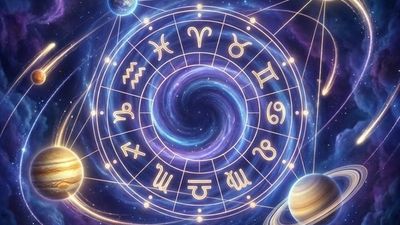
Astrological house system — chart wheel mapped onto the globe showing how houses divide the sky at birth
What Are Astrological Houses? (The Core Concept)
Astrological houses are 12 divisions of the birth chart, each representing a specific life area - from identity and money to relationships and the unconscious. Every planet in your chart falls in a house, and that placement shows where its energy operates in your daily reality.
The clearest way to understand the three-part language of astrology: planets are the actors, zodiac signs are the costumes they wear, and houses are the stages where the performance actually happens. You might have Venus in Aries - passionate, direct, impulsive energy - but whether that plays out in your finances (2nd house), your romantic partnerships (7th house), your career trajectory (10th house), or your hidden inner life (12th house) depends entirely on which house Venus occupies. Same energy, radically different territory.
This is what makes two people born on the same day with the same Sun and Moon signs live completely different lives. Birth time and location determine the house cusps - the starting degrees of each house - and a shift of even a few hours moves planets from one house into another, rewriting the chart's entire story.
Howard Sasportas, in his foundational work The Twelve Houses, describes houses as "the fields of experience" through which planetary energy gets expressed in concrete life circumstances. Ptolemy's Tetrabiblos, the foundational text of Western astrological doctrine written in the 2nd century AD, establishes the house framework as governing "the matters of life" - each house ruling a distinct domain of human experience. The houses aren't decorative. They're the structural layer of the chart that answers the question astrology users most want answered: where does this actually show up for me?
Among charts analyzed on MyNitya, users who discover they have stelliums (3+ planets) in their 7th or 12th house consistently name relationships and the unconscious - respectively - as the central preoccupation of their life. The houses tell you where the weight falls before you ever look at the signs.
How the 12 Houses Are Calculated (Why Birth Time Matters)
Houses are calculated from your exact birth time and location. The Ascendant - the zodiac degree rising on the eastern horizon at your birth moment - becomes the 1st house cusp, and the remaining 11 house cusps are derived from there using a chosen house system. This is why birth time is the single most critical piece of data in a natal chart.
The 1st house cusp is always the Ascendant. At the exact moment you were born, a specific degree of the zodiac was rising above the eastern horizon at your birthplace. That degree is your Rising sign, and it marks the beginning of the 1st house. Every other house cusp in the chart is calculated relative to that anchor point.
The Ascendant and all house cusps rotate approximately 1° every 4 minutes. A 4-minute error in birth time produces a 1° shift in every house cusp. Over just one hour, that's 15° - easily enough to push a planet from one house into an adjacent one entirely, changing its entire interpretive context. This is not a small difference. Mars in the 12th house (hidden drive, unconscious anger) reads very differently from Mars in the 1st house (assertive, physically prominent, direct action).
If your exact birth time is unknown, the Moon sign can usually still be determined with reasonable accuracy (the Moon changes signs every 2.5 days). But your Ascendant, Midheaven, and precise house placements require a reliable birth time. Find your birth chart details on MyNitya to see your full house structure with all placements.
The four angular house cusps - the 1st (Ascendant), 4th (IC/Imum Coeli), 7th (Descendant), and 10th (Midheaven/MC) - are considered structurally primary. They mark the chart's four cardinal points: east, nadir, west, and zenith. Planets near these cusps are "angular" and carry a heightened, more outwardly visible quality in the person's life.
The 12 Astrological Houses: What Each One Governs
Each of the 12 astrological houses governs a distinct life area. The first three cover the personal self; the middle three cover private and daily life; the next three cover relationships and expansion; the final three cover public life and what lies beneath the surface.
As AstroStyle's comprehensive house guide describes it: at the moment you were born, the planets were all in specific signs and houses. When an astrologer interprets your chart, they blend the meaning of each planet, the house it's in, and the sign it's in to map the gifts and challenges you'll encounter in this lifetime. Here's what each house rules:
1st House - Identity, Appearance, and First Impressions
The 1st house is the house of self. The sign on this cusp is your Rising sign - the face you present to the world, your physical appearance, and your instinctive approach to new situations. Planets in the 1st house are especially prominent because they color the entire personality. Mars in the 1st makes someone direct and kinetic; Neptune in the 1st adds an elusive, impressionable quality to the persona.
2nd House - Money, Values, and Self-Worth
The 2nd house governs your personal resources: earned income, moveable possessions, and - at the psychological root - how you value yourself. The sign on this cusp and any planets in it describe how you earn, spend, and relate to material security. Venus in the 2nd house often brings an easy relationship with money and a strong appreciation for quality and beauty.
3rd House - Communication, Learning, and the Local World
This is the house of everyday mind - how you think, speak, write, and navigate your immediate environment. Siblings, neighbors, short trips, early education, and daily communication all fall here. Mercury in the 3rd house is in its natural territory and produces sharp, quick-moving intelligence.
4th House - Home, Family, and Emotional Roots
The 4th house, anchored by the IC at the chart's lowest point, governs home, family of origin, ancestry, and the emotional foundation of the personality. It describes both where you come from and where you retreat to. Saturn in the 4th often describes a home environment that felt heavy or demanding - and an adult who works hard to create the stability they lacked as a child.
5th House - Creativity, Pleasure, and Romance
The 5th house is the house of self-expression and joy: creative projects, romantic courtship (distinct from committed partnership), children, play, and speculation. This is what you do for the love of doing it. For a deeper look at how the 5th house shapes creative and romantic life, the 5th house guide covers every placement in detail.
6th House - Work, Health, and Daily Habits
The 6th house governs the everyday mechanics of life: daily work routines, health practices, diet, exercise, and service to others. It's the house of the ordinary - which is precisely why it matters so much. Virgo is the natural sign of the 6th house, and the connection to precision, refinement, and usefulness runs through everything this house governs.
7th House - Partnerships and Marriage
The 7th house is the house of committed one-to-one relationships: romantic partnerships, marriage, and significant business partnerships. Its cusp is the Descendant - the point directly opposite the Ascendant. What falls in your 7th house, or the sign on its cusp and that sign's ruler, describes what you seek, attract, and often project onto partners. The 7th house relationship guide covers every planetary placement and long-term partnership dynamic in full.
8th House - Transformation, Shared Resources, and Intimacy
The 8th house governs what's shared, merged, or collectively owned: joint finances, inheritances, taxes, other people's money, and the emotional territory of deep intimacy and sexuality. It's also the house of transformation, psychological depth, and what gets permanently changed by life's most intense encounters. Saturn in the 8th house often manifests as delayed inheritance, difficult encounters with shared resources or sexuality as life themes, and - when developed consciously - extraordinary skill at managing what's collectively owned, from finances to intimacy to other people's secrets.
9th House - Belief, Philosophy, and Expansion
The 9th house governs long-distance travel, higher education, philosophy, religion, and the search for meaning. This is where you expand your worldview beyond the familiar. Jupiter, the planet of wisdom and expansion, is the natural ruler of the 9th house. Planets here describe your relationship with belief systems, foreign cultures, and the question of what life is ultimately for.
Meet Nitya, your AI astrologer
She reads your birth chart to answer anything about your life - and she can go deep on any relationship you care about and guide your day ahead. First question free, no card needed.
Some questions our users ask Nitya
Tap any one below - or just write your own question in the form ↓
10th House - Career, Public Reputation, and Legacy
The 10th house, anchored by the Midheaven at the very top of the chart, governs public life, career ambitions, professional reputation, and how you'll ultimately be remembered. Planets here are quite literally at the top of the sky at birth - the most visible position in the entire chart. The sign on the 10th house cusp and any planets within it describe the shape of your public contribution.
11th House - Community, Friendships, and Collective Goals
The 11th house governs friendships, group associations, long-term hopes, and your relationship to collective causes beyond the personal. This is where social networks, communities, and shared visions live. Saturn in the 11th can bring a carefully curated but deeply loyal friend group - fewer connections, but deeply significant ones.
12th House - The Hidden, the Unconscious, and Solitude
The 12th house is the most mysterious zone of the chart - governing what's hidden, suppressed, or unresolved at the unconscious level. It also rules solitude, spiritual practice, retreat, and what operates below the surface of daily awareness. Planets here often describe gifts or wounds the person themselves find harder to see than the people around them do. The 12th house is not a place of failure. It's a place of depth.
Angular Houses: The Most Powerful Positions (1st, 4th, 7th, 10th)
Angular houses - the 1st, 4th, 7th, and 10th - are the most active and visible positions in a birth chart. Planets placed here express their energy directly and prominently in the person's outer life, making them among the most important placements to understand.
The angular houses form the structural cross of the chart, defined by the four main angles: the Ascendant (1st), the IC (4th), the Descendant (7th), and the Midheaven (10th). These four points correspond to the cardinal directions of the birth moment - east horizon, north, west horizon, and zenith. A planet placed in any angular house is considered to be in a position of power.
The axis built into the angular houses also maps the fundamental polarities of a life: self (1st) versus partner (7th), private life (4th) versus public life (10th). These opposing tensions are often where a person's most defining growth and struggle plays out. Someone with Saturn in the 10th and the Moon in the 4th, for example, may spend decades navigating the tension between career ambition and emotional home life - each seeming to demand more than the other can afford to give.
A chart with multiple planets in angular houses tends to produce someone who operates visibly in the world - strong presence, clear impact, and a natural pull toward situations that require direct engagement. The planets aren't hiding. They're on the main stage.
Succedent and Cadent Houses: Supporting Layers
Succedent houses (2nd, 5th, 8th, 11th) govern resources and stability - what gets built and sustained after the angular houses initiate. Cadent houses (3rd, 6th, 9th, 12th) govern the mind, service, and behind-the-scenes development. Both groups are essential, but planets here tend to operate with less immediate external visibility than angular placements.
The succedent houses follow each angular house and consolidate what the angular energy begins. The 2nd house takes the 1st house's identity and asks: what resources support it? The 5th house extends the 4th house's emotional foundation into creative expression. The 8th deepens the 7th house's partnership into shared resources and psychological intimacy. The 11th extends the 10th's career achievement into collective vision and community. Planets in succedent houses build steadily - less explosive, more sustaining.
Jupiter in the 5th house produces consistent creative and romantic abundance over years rather than sudden bursts. Venus in the 2nd house builds material comfort through patient, enjoyable effort. The succedent quality is endurance.
The cadent houses (3rd, 6th, 9th, 12th) are where the mind works - where learning, service, and refinement happen before the cycle begins again at the next angular house. Mercury in the 12th house, for example, produces a profoundly private mental life: rich and complex, but not readily shown to others. This isn't weakness. Some of the most insightful thinkers and artists have heavily loaded cadent charts. The energy operates differently - less for the front stage, more for the deep work.
House Systems: Placidus, Whole Sign, and Koch Explained
House systems are different mathematical methods for dividing the birth chart into 12 houses. The three most common in Western astrology are Placidus (the modern default), Whole Sign (the oldest system), and Koch. Each produces different house cusp degrees, which means a planet can sit in the 12th house in Placidus but in the 1st house in Whole Sign - a meaningful interpretive difference.
This is one of the most actively debated topics among practicing Western astrologers. No universal consensus exists on which system is definitively "correct," and experienced practitioners hold strong preferences. Understanding the differences helps you read any chart intelligently.
Placidus is the most widely used house system in Western astrology today, and it's what most software defaults to. Developed by the Italian monk Placidus de Titis in the 17th century, it divides the sky based on diurnal motion - the time it takes degrees of the ecliptic to travel from the IC through the horizon to the MC. Houses are unequal in size and vary significantly with geographic latitude. At extreme northern or southern latitudes, Placidus can produce very large or very small houses, and some signs may not appear on any cusp at all - creating what are called intercepted signs.
Whole Sign is the oldest recorded house system, dominant in Hellenistic astrology from roughly the 1st century BC onward, and currently experiencing a major revival in contemporary Western practice. It's the simplest approach: whatever sign contains your Ascendant degree becomes the entire 1st house (all 30° of it). The next sign in the zodiac becomes the 2nd house, and so on around the wheel. Every house is exactly one sign. The Ascendant degree still marks the most sensitive point of the chart, but the house cusps sit at 0° of each sign rather than at the Ascendant's exact degree. As Allure's guide to the 12 houses notes, many practitioners find Whole Sign produces notably clear, clean chart readings - particularly when assessing which house a planet truly "belongs" to.
Koch is another quadrant system, like Placidus, that centers calculations on the birthplace rather than the ecliptic. It tends to produce less dramatically unequal houses than Placidus at most latitudes and is widely used among German-tradition astrologers.
The practical takeaway: if a planet is near a house cusp in your chart, checking two or three house systems to see where the majority agree is a useful approach. Consistency within a single system matters more than which system you use. For a detailed technical comparison - including which system works best for which types of questions - see this deep dive on astrological houses and house systems.
Empty Houses: What They Mean (and Don't Mean)
An empty house - one with no planets in it - doesn't mean that life area is inactive or absent. The sign on the house cusp and its ruling planet's placement in the chart describe exactly how that domain functions. Most people have at least five or six empty houses, and those areas of life are still fully operational.
This is one of the most common concerns that comes up when people first look at their birth chart. They see several empty houses and worry: does an empty 7th house mean I won't have a significant relationship? Does an empty 10th mean my career won't amount to anything? Neither is true. An empty house simply means the story of that life area is told through the house's sign and ruling planet rather than through a planet physically occupying it.
How to read an empty house:
- Note the sign on the house cusp - this is the sign the house's energy expresses through.
- Find that sign's ruling planet in the chart (e.g., Scorpio on the cusp → find Pluto).
- Read that ruling planet by sign, house, and aspects - that's the complete story of the empty house.
An empty 2nd house with Capricorn on the cusp and Saturn in the 6th in Taurus describes someone who builds financial security slowly and methodically through consistent daily work. A specific, clear story - with no planet in the 2nd house at all.
Intercepted houses are a related concept unique to quadrant house systems like Placidus. When a whole zodiac sign falls entirely inside a house - not appearing on any cusp - that sign is "intercepted." As The Old Farmer's Almanac's guide to house meanings explains, the themes and any planets in an intercepted sign tend to feel harder to access or express in the outer world. These energies are present but operate more internally - sometimes developing later in life, or requiring more conscious effort to bring forward. Interceptions always occur in opposite pairs: if Gemini is intercepted in one house, Sagittarius is intercepted in the opposite house.
Astrological houses as personal life map — each of the 12 areas representing a different dimension of lived experience
How to Read Your Houses in Your Birth Chart
To read your houses, start with the four angular cusps (Ascendant, IC, Descendant, Midheaven), identify the signs there, note which houses hold planets and which are empty, then trace each house cusp's ruling planet to see the full picture. This layered reading is what transforms a list of placements into a coherent narrative.
Here's how to approach it practically:
1. Start with the angular houses. Your Ascendant sign colors your whole personality and the chart's overall tone. Your Midheaven sign describes your career direction and how you're perceived publicly. These two angles alone give you the chart's structural story.
2. Find the house with the most planets. A house containing three or more planets - a stellium - is a major life emphasis. This is where energy concentrates, experiences cluster, and the person's most defining themes tend to play out. A stellium in the 12th house, for example, produces someone for whom the inner life, spiritual depth, and unconscious patterns are genuinely central, not peripheral.
3. Read each planet in its house. Each planet carries its symbolism into the house it occupies. Mars in the 10th = drive in career. Venus in the 7th = natural pull toward harmonious partnership. Saturn in any house = mastery through difficulty and time in that life area.
4. Trace house rulers. Find the ruling planet of each house (based on the sign on its cusp) and note where that planet falls in the chart. The ruler of the 7th house sitting in the 10th house tells you that partnership and career intersect - you may meet significant partners through professional life, or relationships play out in publicly visible ways.
5. Look for sign emphasis across the cusps. If the same sign appears on multiple house cusps (which happens with very small houses in Placidus), that sign's planet becomes the ruler of multiple life areas - a natural bundling of themes.
Your birth time precision is the foundation of all of this. Even a 10-minute error can shift the Midheaven by a few degrees and potentially change the Ascendant sign entirely. Chat with Nitya about your house placements - try free on MyNitya.
MyNitya supports both Western astrology - the system this entire article covers - and Vedic (Jyotish) astrology. Western astrology uses the tropical zodiac and excels at psychological depth, personality analysis, and the kind of house-by-house life mapping described here. Vedic astrology uses the sidereal zodiac and adds something distinct: precise life timing through the dasha system, karmic patterns through the lunar mansions (nakshatras), and the bhava chart - a different tradition of house analysis with its own interpretive depth. Both systems are available through Nitya. Get personalized guidance based on your full chart on MyNitya.
FAQ
What are astrological houses in a birth chart?
Astrological houses are 12 divisions of the birth chart, each representing a specific life area - from identity (1st house) to money (2nd), partnerships (7th), career (10th), and the unconscious (12th). Each house is defined by a cusp degree calculated from your birth time and location. Planets in a house direct their energy into that life area; the sign on the cusp and its ruling planet describe how those themes actually manifest.
Why does birth time matter for astrological houses?
The Ascendant - your 1st house cusp - is the zodiac degree rising on the eastern horizon at your exact birth moment, and the entire house structure is built from it. Because the horizon rotates approximately 1° every 4 minutes, even a small birth time error shifts all house cusps significantly. Without a precise birth time, planetary signs can still be read accurately, but house placements become unreliable.
What is the difference between Placidus and Whole Sign houses?
Placidus is a time-based system where houses are unequal in size, calculated by dividing the sky into segments based on the diurnal motion of the ecliptic. Developed by Placidus de Titis in the 17th century, it's the current Western default in most software. Whole Sign is the oldest known system, where the entire sign of your Ascendant becomes your complete 1st house - clean, equal 30° segments, and historically the dominant approach in Hellenistic Western astrology.
What does an empty house mean in astrology?
An empty house - one with no planets - doesn't mean that life area is inactive. The sign on the house cusp and its ruling planet tell the story of that domain. Most people have five to six empty houses. An empty 7th house with Libra on the cusp means Venus (Libra's ruler) governs your relationship style: read Venus by its sign, house, and aspects to understand your full partnership pattern.
What are the most important houses in astrology?
The angular houses - 1st, 4th, 7th, and 10th - are considered the most powerful because they're anchored by the chart's four main angles (Ascendant, IC, Descendant, and Midheaven). Planets in angular houses operate with heightened visibility and direct impact. Of these, the 1st house (identity and self) and the 10th house (career and public reputation) are the most frequently central to chart interpretation. But any house with a stellium or with its ruler in a prominent position becomes significant in that individual's life.
The houses are the map beneath the map. Your Sun sign tells you something about who you are; your houses tell you where it all actually plays out - in your relationships, your career, your home, your hidden life. Understanding your house placements is what transforms astrology from a personality sketch into something that describes your lived experience with real precision. Get personalized guidance based on your birth chart on MyNitya.
Nitya isn't a one-time horoscope. She's with you for the whole journey.
Understand yourself
Career, love, money, timing - any decision you are weighing. Answers read straight from your birth chart.
Understand any relationship
Add your partner, a parent, a friend, even a colleague. Nitya reads both charts together to explain the bond, the friction, and how to work through it.
Guidance for every day
Start each morning knowing what the day favors, what to watch for, and the best moments to act.
No card needed. Nitya just needs your birth details to read your chart.