Free Birth Chart Analysis - How to Read Your Natal Chart in 2026 (Step-by-Step)
In this Article
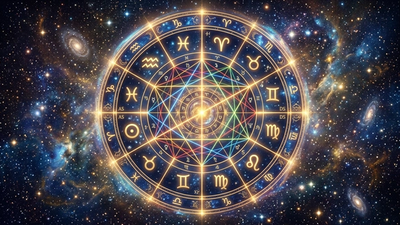
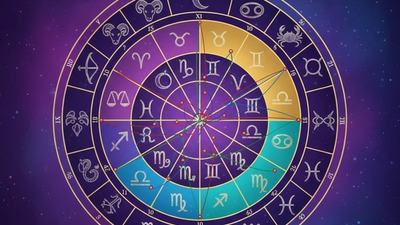
A birth chart is a map of the sky at the exact moment you were born. It captures the precise positions of the Sun, Moon, and all planets across 12 zodiac signs and 12 houses - creating a cosmic fingerprint that belongs only to you. Getting a free birth chart analysis online takes about 2 minutes, and it reveals patterns about your personality, relationships, career path, and life timing that no personality quiz can match.
Your personal astrologer - Vedic + Western.
Reads all 10,000+ points of your birth chart to answer your question. First question free, no card needed.
Ask your question free →But here's the thing most free chart generators won't tell you: generating the chart is the easy part. Reading it is where the real insight lives. A birth chart contains roughly 10,000+ data points when you factor in planetary positions, house placements, aspects between planets, nakshatras (lunar mansions), and dasha periods. That's a lot of cosmic information packed into one diagram.
This guide walks you through exactly how to read your birth chart - step by step, in plain language. No astrology degree required. And if you want the shortcut, MyNitya generates your complete Vedic birth chart and explains every placement conversationally. Your first question is free.
> Quick answer: A free birth chart analysis maps the sky at your birth moment to reveal personality traits, relationship patterns, career strengths, and life timing. You need your exact birth date, time, and location. The most accurate systems use Vedic (sidereal) calculations with Swiss Ephemeris data.
What Exactly Is a Birth Chart?
Think of your birth chart as a photograph of the cosmos taken at the precise second you took your first breath. The planets weren't randomly scattered - they were in specific zodiac signs, in specific houses, forming specific geometric relationships with each other. That arrangement is yours alone.
In Vedic astrology (Jyotish), the birth chart is called a Kundli or Janam Patri. It uses the sidereal zodiac, which tracks the actual astronomical positions of constellations rather than the seasonal-based tropical zodiac used in Western astrology. The difference? Your Vedic Sun sign is often one sign back from your Western sign. A Western Aries might be a Vedic Pisces. Neither is "wrong" - they're measuring different things.
Your birth chart has three core layers:
- Planets (Grahas): The Sun, Moon, Mars, Mercury, Jupiter, Venus, Saturn, plus Rahu and Ketu (the lunar nodes). Each planet represents a different energy or drive in your life.
- Signs (Rashis): The 12 zodiac signs that color how each planet expresses itself. Mars in Aries is bold and direct. Mars in Cancer is protective and indirect. Same planet, completely different flavor.
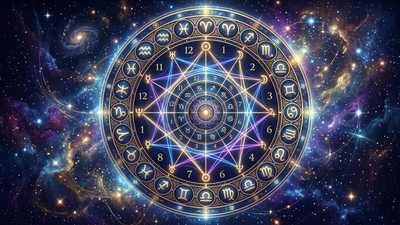
- Houses (Bhavas): The 12 life areas where planetary energies play out. The 7th house governs partnerships. The 10th house governs career. A planet's house placement tells you where in your life its energy shows up most.
The magic happens at the intersections. Your Moon in Scorpio in the 4th house tells a very different story than your Moon in Scorpio in the 10th house - even though the emotional nature (Scorpio Moon) is the same.
Why Your Birth Time Matters More Than You Think
Here's a detail that separates a useful birth chart from a vague one: your exact birth time.
The Ascendant (Lagna) - the zodiac sign rising on the eastern horizon at your birth - shifts approximately every two hours. Miss your birth time by 30 minutes and your entire house system could be off. That means planets land in wrong houses, and the reading becomes unreliable.
Your Ascendant is arguably the most important point in your chart. It determines:
- How the world perceives you (your "first impression" energy)
- Which life areas each planet governs for you specifically
- The starting point for all house calculations
- Your physical constitution and health tendencies
If you don't know your exact birth time, check your birth certificate - many countries record it. Hospital records are another option. In India, families traditionally note the exact time for this very reason.
Without a birth time, you can still get a partial reading based on your Moon sign chart (Chandra Kundli), but you'll miss the house-level detail that makes astrology genuinely personal.
The 9 Planets and What They Reveal About You
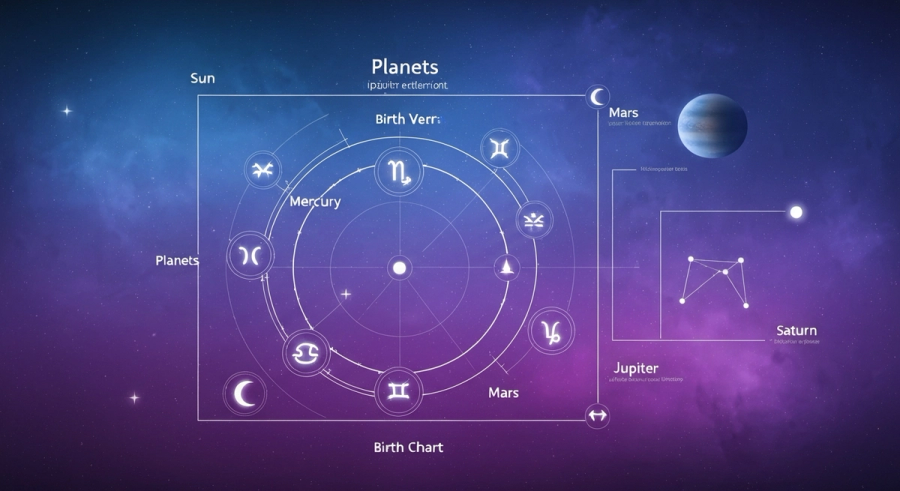
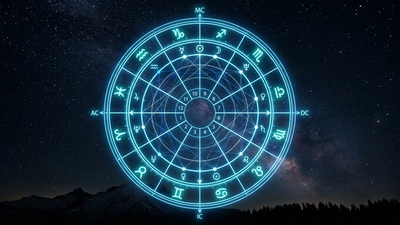
Birth chart components showing planets houses and zodiac signs in Vedic astrology layout
Each planet in your birth chart governs specific aspects of your life. Here's what they mean in Vedic astrology:
Sun (Surya) - Your Core Identity
The Sun represents your soul's purpose, your ego, your relationship with authority, and your father. A strong Sun gives confidence, leadership ability, and vitality. A challenged Sun can show struggles with self-worth or authority figures.
In Vedic astrology, the Sun rules Leo and is exalted in Aries. Its house placement shows where you naturally seek recognition and where your life purpose unfolds.
Moon (Chandra) - Your Emotional World
The Moon is arguably more important than the Sun in Vedic astrology. It governs your emotions, instincts, mother, mental health, and how you nurture yourself and others. Your Moon sign (Rashi) is what traditional Indian astrology uses for predictions - not your Sun sign.
The Moon changes signs every 2.5 days, which is why birth time precision matters so much. Your Moon's nakshatra (the specific lunar mansion it occupies) adds another layer of personality detail that's unique to Vedic astrology.
Mars (Mangal) - Your Drive and Courage
Mars represents energy, ambition, physical vitality, courage, and how you handle conflict. In relationships, Mars shows your passion style and what triggers your anger. The famous "Manglik" consideration in Indian marriage matching comes from Mars's placement in certain houses.
Mercury (Budh) - Your Mind and Communication
Mercury governs intelligence, communication, business sense, and analytical ability. A strong Mercury makes you articulate, quick-thinking, and commercially savvy. Mercury's sign and house placement reveal whether you think logically or intuitively, and how you process information.
Jupiter (Guru/Brihaspati) - Your Wisdom and Fortune
Jupiter is the great benefic - the planet of wisdom, expansion, luck, and spiritual growth. Jupiter's placement shows where life tends to bless you, where you find meaning, and your relationship with teachers and mentors. In Vedic astrology, Jupiter also governs marriage for women.
Venus (Shukra) - Your Love and Pleasure
Venus rules love, beauty, art, luxury, and how you experience pleasure. Your Venus sign reveals your love language - how you give and receive affection. Venus also governs marriage for men in Vedic astrology, and its placement indicates the quality of romantic relationships.
Saturn (Shani) - Your Discipline and Karma
Saturn is the taskmaster. It represents discipline, hard work, delays, karma, and life lessons. Saturn's placement shows where you face your biggest challenges - and where you build your greatest strengths through persistence. The famous "Sade Sati" (Saturn's 7.5-year transit over your Moon) is one of the most significant timing periods in Vedic astrology.
Rahu - Your Obsessions and Ambitions
Rahu (the North Node of the Moon) represents worldly desires, unconventional paths, obsessions, and areas where you're driven to grow beyond your comfort zone. Rahu amplifies whatever it touches - for better or worse. It shows where you're hungry for experience in this lifetime.
Ketu - Your Past Life Gifts and Detachment
Ketu (the South Node) represents spiritual wisdom, past life skills, detachment, and areas where you've already mastered the lesson. Ketu's placement shows natural talents that come effortlessly - and areas where you may feel disconnected or disinterested despite being skilled.
The 12 Houses: Where Life Happens
The houses are the stage where planetary dramas play out. Each house governs a specific life domain:
- 1st House (Lagna): Self, body, personality, first impressions, overall life direction
- 2nd House: Wealth, family, speech, food habits, early childhood
- 3rd House: Courage, siblings, communication skills, short travels, hobbies
- 4th House: Home, mother, emotional peace, property, vehicles, education
Meet Nitya, your AI astrologer
She reads your birth chart to answer anything about your life. Your first complete answer is free, with no card required. Continued chat, Synastry, and Daily Guidance require Premium.
Questions you can ask about this topic
Tap any one below - or just write your own question in the form ↓
Nitya isn't a one-time horoscope. She's with you for the whole journey.
Understand yourself
Career, love, money, timing - any decision you are weighing. Answers read straight from your birth chart.
Understand any relationship
Add your partner, a parent, a friend, even a colleague. Nitya reads both charts together to explain the bond, the friction, and how to work through it.
Guidance for every day
Start each morning knowing what the day favors, what to watch for, and the best moments to act.
No card needed. Nitya just needs your birth details to read your chart.
Ask Nitya your first question - free →- 5th House: Creativity, romance, children, intelligence, past life merit
- 6th House: Health challenges, enemies, debts, daily work, service
- 7th House: Marriage, business partnerships, public dealings, relationship destiny
- 8th House: Transformation, longevity, inheritance, hidden knowledge, sudden events
- 9th House: Luck, father, higher education, long-distance travel, spirituality
- 10th House: Career, reputation, public status, achievements, authority
- 11th House: Income, gains, friendships, aspirations, elder siblings
- 12th House: Expenses, foreign lands, spirituality, isolation, sleep, liberation
When you see "Jupiter in the 10th house" in your chart, it means Jupiter's expansive, fortunate energy is directed toward your career and public reputation. That's a placement often found in people who achieve recognition in their field.
How to Read Your Birth Chart: Step-by-Step

Person reading their free birth chart analysis on a laptop with glowing astrological chart display
Ready to actually read your chart? Here's the process professional Vedic astrologers follow, simplified for self-study:
Step 1: Generate Your Chart
You need three pieces of information: your birth date, exact birth time, and birth location (city is sufficient - the system converts it to coordinates).
Use a Vedic chart generator that calculates using the Lahiri ayanamsa (the most widely used sidereal calculation standard). MyNitya uses Swiss Ephemeris - the same astronomical engine used by professional astrologers worldwide - to calculate over 10,000+ data points from your birth moment. Generate your free chart here.
Step 2: Find Your Ascendant (Lagna)
Your Ascendant sign is the foundation of everything. It determines which sign rules which house in your chart. Look at the 1st house - the sign there is your Ascendant.
If your Ascendant is Taurus, then Taurus rules your 1st house (self), Gemini rules your 2nd house (wealth), Cancer rules your 3rd house (communication), and so on around the zodiac.
Step 3: Locate Your Moon Sign
Find the Moon in your chart. The sign it occupies is your Moon sign (Rashi) - this is your emotional core and the sign used for most Vedic predictions. The nakshatra your Moon occupies adds even more specificity.
Step 4: Check Each Planet's Position
Go through each planet and note:
- Which sign it's in (how the planet expresses itself)
- Which house it's in (where in life that energy manifests)
- Whether it's in a friendly, neutral, or enemy sign (affects strength)
- Whether it's exalted (strongest) or debilitated (weakest)
Step 5: Look at Planetary Aspects
In Vedic astrology, planets cast aspects (drishti) on other planets and houses. Jupiter aspects the 5th, 7th, and 9th houses from its position. Saturn aspects the 3rd, 7th, and 10th. Mars aspects the 4th, 7th, and 8th. These aspects modify the houses they touch.
Step 6: Check Your Dasha Periods
This is where Vedic astrology gets genuinely predictive. The Vimshottari Dasha system divides your life into planetary periods. Each planet "rules" a specific number of years, and during that period, the themes of that planet dominate your life.
For example, if you're running a Venus dasha, relationships, creativity, and comfort become central themes. If Saturn's dasha begins, expect a period of hard work, restructuring, and karmic lessons.
Your current dasha period explains why certain themes are active in your life right now - and when they'll shift.
Free Birth Chart Tools: What's Available in 2026
Several platforms offer free birth chart generation. Here's an honest comparison:
Traditional chart generators (AstroSage, Prokerala, DrikPanchang) give you the raw chart with basic interpretations. They're accurate for calculations but the readings tend to be generic and template-based. You get the data but need astrology knowledge to interpret it meaningfully.
Western-focused tools (Astro.com, Co-Star, The Pattern) use the tropical zodiac, which places planets differently than Vedic calculations. If you're interested in Vedic astrology specifically, these won't match.
AI-powered analysis is the newest category. MyNitya generates your Vedic birth chart using Swiss Ephemeris precision and then lets you ask specific questions about your chart in a conversational format. Instead of reading a wall of generic text, you ask "What does my career look like?" or "Why do I keep attracting the same type of partner?" and get answers based on your actual planetary placements. Your first question is free - no credit card, no signup wall.
The advantage of conversational AI analysis is specificity. A traditional generator might say "Jupiter in the 7th house brings a fortunate marriage." MyNitya can tell you when that Jupiter energy activates based on your dasha periods, what kind of partner your 7th house configuration attracts, and how your Venus placement modifies the picture.
What Your Birth Chart Can (and Can't) Tell You
Let's be honest about what astrology does well and where it has limits.
What a birth chart reveals reliably:
- Personality patterns and psychological tendencies
- Natural talents and career inclinations
- Relationship patterns and what you need from a partner
- Timing of major life themes (via dasha periods and transits)
- Health vulnerabilities to watch for
- Financial tendencies and wealth-building periods
What a birth chart doesn't do:
- Predict specific events with certainty (astrology shows tendencies, not fate)
- Replace professional medical, financial, or legal advice
- Determine your worth or limit your potential
- Work accurately without a precise birth time
The Brihat Parashara Hora Shastra - the foundational text of Vedic astrology, written over 2,000 years ago - describes astrology as a "lamp in darkness." It illuminates the terrain ahead so you can navigate more wisely. It doesn't walk the path for you.
Common Birth Chart Patterns and What They Mean
Certain planetary combinations (yogas) appear frequently and carry specific meanings:
Gajakesari Yoga (Jupiter in a kendra from Moon): Found in charts of people with natural wisdom, good reputation, and financial stability. One of the most auspicious combinations.
Budhaditya Yoga (Sun conjunct Mercury): Sharp intellect, communication skills, and potential for success in fields requiring analytical thinking. Very common - about 1 in 4 people have this.
Chandra-Mangal Yoga (Moon conjunct Mars): Emotional intensity, strong willpower, and financial drive. Can indicate wealth accumulation through effort and determination.
Viparita Raja Yoga (lords of 6th, 8th, or 12th houses in each other's houses): Success that comes through overcoming adversity. People with this yoga often thrive precisely because of their challenges, not despite them.
Kemadruma Yoga (Moon with no planets in adjacent signs): Can indicate periods of emotional isolation or self-reliance. Often found in charts of people who develop deep inner strength through solitary experiences.
These yogas don't operate in isolation - they're modified by the overall chart context. That's why a personalized reading matters more than checking a list of combinations.
Your Next Step: From Chart to Clarity
You now understand the building blocks of a birth chart - planets, signs, houses, aspects, and dashas. That's more than most people ever learn about their cosmic blueprint.
But understanding the theory and applying it to your specific chart are different things. The combinations are complex, the interactions between planets are nuanced, and the timing layers (dashas, transits, annual charts) add dimensions that take years of study to master.
That's exactly why we built MyNitya. Instead of spending months learning to read charts, you can ask Nitya specific questions about your life - relationships, career, timing, compatibility - and get answers drawn from your actual birth chart data. Over 10,000+ data points, calculated with Swiss Ephemeris precision, interpreted through Vedic astrological principles.
Get your free Vedic birth chart analysis. Your first question is on us.
Frequently Asked Questions
How do I get a free birth chart analysis online?
Enter your exact birth date, time, and location into a Vedic chart generator. MyNitya generates your complete Vedic birth chart in under 2 minutes using Swiss Ephemeris calculations and provides AI-powered analysis of every placement. Your first question is free.
What information do I need for an accurate birth chart?
You need three things: your exact birth date, your birth time (to the minute if possible), and your birth location (city). The birth time is critical because the Ascendant changes every two hours, which shifts your entire house system and changes the reading significantly.
What's the difference between Vedic and Western birth charts?
Vedic astrology uses the sidereal zodiac (based on actual constellation positions), while Western astrology uses the tropical zodiac (based on seasons). Due to precession, there's roughly a 24-degree difference - meaning your Vedic Sun sign is often one sign back from your Western sign. Vedic astrology also uses the dasha system for timing predictions, which Western astrology doesn't have.
Can I read my birth chart without knowing my birth time?
Partially. Without birth time, you can still analyze your Moon sign chart (Chandra Kundli) and planetary sign placements. But you'll miss house-level detail, your Ascendant, and the precise Moon nakshatra - which means roughly 40% of the chart's information is unavailable.
What are the most important things to look at in a birth chart?
Start with three things: your Ascendant (overall life direction and personality), your Moon sign and nakshatra (emotional nature and mental patterns), and your current dasha period (what life themes are active right now). These three elements alone give you more insight than a generic Sun sign horoscope ever could.
Is birth chart analysis scientifically proven?
Astrology is not recognized as a science by the mainstream scientific community. However, Vedic astrology has been practiced and refined for over 5,000 years, and its mathematical calculations (planetary positions, eclipses, transits) are astronomically precise. The interpretive framework is based on millennia of observed correlations between planetary positions and human experience, as documented in texts like the Brihat Parashara Hora Shastra.