How to Find Your Rising Sign (Ascendant): 3 Accurate Methods
In this Article
Your Big Three Calculator
For accurate Moon and Rising signs, you need your exact birth time. This calculator shows your Sun sign and approximate Moon sign.
Your rising sign is the zodiac sign that was climbing over the eastern horizon at the exact minute and location you were born. It's also called your ascendant, and it sits at the cusp of your first house. To find it, you need three things: your birth date, your exact birth time, and your birth city.
I've been reading charts for over fifteen years, and the rising sign is the placement that explains the most about how you actually move through the world. Sun sign is who you are inside. Rising sign is what people meet when you walk into a room.
Your personal astrologer - Vedic + Western.
Reads all 10,000+ points of your birth chart to answer your question. First question free, no card needed.
Key Takeaways
- Your rising sign is the zodiac sign on the eastern horizon at the exact moment of your birth
- You need your birth date, exact birth time, and birth city to calculate it accurately
- The ascendant changes signs roughly every two hours, so a 15-minute timing error can shift it
- Rising sign shapes first impressions, physical presence, and how you start things
- Without a birth time, you can narrow it down through rectification or behavioral clues
- Your rising sign is different from your Sun sign and shows a separate, equally important layer of identity

Birth time clock and chart wheel showing the ascendant calculation on the eastern horizon
What Is a Rising Sign and Why It Matters
A rising sign is the zodiac sign that was ascending over the eastern horizon at your exact moment and place of birth. It marks the cusp of your first house in a Western natal chart and shapes your physical presence, instinctive reactions, and the way the world first encounters you. The ascendant changes roughly every two hours.
Here's what most casual astrology readers miss. The Sun moves through one sign per month. The Moon moves through one sign every two and a half days. But the ascendant cycles through all twelve signs every twenty-four hours. That speed is why birth time matters so much. Two babies born in the same hospital, ninety minutes apart, can have completely different ascendants and live noticeably different lives.
The rising sign is the chart's gateway. Once you know it, the twelve houses snap into place around it, and your Sun, Moon, Venus, and Mars all live in specific life areas. Without it, you can read planets in signs, but you can't tell which life area each planet activates.
Ptolemy treated the ascendant as the primary "place of life" in his second-century Tetrabiblos. Centuries later, William Lilly's Christian Astrology (1647) opened with the ascendant for nearly every horary question, calling it the "querent's significator." It's been considered foundational in Western astrology for almost two thousand years, and that's not an accident - it anchors the chart to your specific location and minute.
Among charts analyzed on MyNitya, users with Scorpio rising are the most likely to ask, on their very first question, about why people misread them or find them intense. That pattern lines up exactly with what classical sources describe for the sign.
How to Find Your Rising Sign - The 3 Methods
How to know your rising sign comes down to one principle: you need an accurate birth time and a chart calculator that uses it. The three reliable methods are an online rising sign calculator with NASA-grade ephemeris data, a manual calculation using a table of houses, and a verification check against your life events.
The quick version - here's how to find your rising sign in four steps:
- Find your exact birth time on your birth certificate - the ascendant changes signs roughly every two hours.
- Enter your birth date, exact birth time, and birth city into a rising sign calculator that uses real ephemeris data.
- Read the zodiac sign on your first-house cusp - that is your ascendant, or rising sign.
- Confirm it matches your appearance and how people first read you when you walk into a room.
Method 1 - Use an Online Rising Sign Calculator
This is the fastest method and the one I recommend for most people. A good calculator takes your birth date, exact birth time, and birth city, then computes your ascendant using a real ephemeris. Most default to the Placidus house system, the standard for Western astrology.
The workflow:
- Pull your birth certificate. Don't trust memory or family stories.
- Enter the time exactly as written. If it says 4:47 PM, enter 4:47, not "around 5."
- Enter the city of birth, not the state. The calculator needs coordinates.
- Confirm the time zone matches the one in effect at your birth, including historical Daylight Saving rules.
If your certificate lists a round time like 12:00 PM, treat it with mild suspicion. Hospital staff sometimes round. I cross-check round-number times against a person's actual life events.
You can run this on MyNitya as part of onboarding - the platform calculates your full Western natal chart and feeds the rising sign and house structure into Nitya's analysis. Ask your first question free on MyNitya.
Method 2 - Calculate It Manually With a Table of Houses
Traditionalists and astrology students sometimes prefer to calculate by hand. You need an ephemeris, a table of houses for your latitude, and your sidereal time at birth. Look up sidereal time at midnight Greenwich, adjust for your local time and longitude, then read the ascendant degree off the table row matching your sidereal time. Slow, but useful for understanding what the calculator is actually doing. Do the math by hand once. After that, use software.
Method 3 - Verify Through a Personalized Reading
Even good software can be off if your recorded birth time is wrong. Verification means taking the calculated rising sign and checking it against your physical traits, life events, and the timing of major transits. If everything fits, you're solid. If something feels consistently off, your birth time may need rectification.
On MyNitya, Nitya can flag inconsistencies between your reported life patterns and the chart configuration, which is often the first signal a birth time needs a second look. MyNitya supports both Vedic and Western astrology. Western excels at psychological depth and personality; Vedic excels at timing and karmic patterns. Whatever speaks to you, Nitya can guide you through your full birth chart. Chat with Nitya about your birth chart - try free.
What If You Don't Know Your Birth Time?
How do I find my rising sign without a birth time is one of the most common questions I get. The honest answer: you can narrow it down, but you can't pin it precisely without rectification or a verified record. The ascendant moves about half a degree per minute of clock time, which is why approximate times produce unreliable results.
A tiered approach when the birth certificate isn't enough:
Tier 1 - Hunt for the record. Many US states list birth time on the long-form certificate. Order it through your state's vital records office. Hospital records, baby books, birth announcements, and family bibles are all worth checking. timeanddate.com offers a helpful overview of how birth time data is recorded around the world.
Tier 2 - Estimate the window. Morning births tend to put the ascendant in the same sign as the Sun, or one to two signs after. Late afternoon births often put the ascendant opposite the Sun. This narrows the possibilities to two or three signs.
Tier 3 - Use rectification. A practitioner takes well-documented life events - marriages, deaths, moves, career changes - and tests different birth times to see which produces transits that match the timing. AstroSeek's chart rectification page describes the process.
Tier 4 - Read by Sun and Moon only. This is the fallback. You read the chart with the Sun on the ascendant (a "solar chart"), which gives you planet-in-sign analysis without house placements. Not as rich, but not nothing either.
One thing not to do: don't pick a birth time based on which rising sign you wish you had. I see this a lot, and it doesn't work.
What Each Rising Sign Means
What each rising sign means is best understood as the first impression you give and the way you instinctively respond to new situations. Each ascendant brings a distinct physical signature, social style, and life-approach pattern.
Meet Nitya, your AI astrologer
She reads your birth chart to answer anything about your life - and she can go deep on any relationship you care about and guide your day ahead. First question free, no card needed.
Some questions our users ask Nitya
Tap any one below - or just write your own question in the form ↓
Rising Sign | First Impression | Physical Signature | Life Approach
- Aries: Direct, energetic, leans forward - Strong jaw, athletic build, often a mark on the head - Starts fast, hates waiting
- Taurus: Calm, grounded, slow to commit - Round features, steady gaze, melodic voice - Builds gradually, values comfort
- Gemini: Curious, talkative, mentally fast - Slim build, expressive hands, youthful look - Pursues variety, struggles with routine
- Cancer: Warm, slightly guarded, observant - Soft features, expressive eyes, often a moon-shaped face - Leads with feeling, attaches to home
- Leo: Confident, theatrical, takes up space - Strong hair, upright posture, magnetic presence - Wants to be seen and to create
- Virgo: Polite, observant, mildly reserved - Clean features, alert eyes, careful grooming - Refines and improves through service
- Libra: Charming, balanced, instantly likable - Symmetrical features, graceful movement, pleasant voice - Seeks fairness and partnership
- Scorpio: Intense, watchful, hard to read - Penetrating eyes, dense brows, contained energy - Goes deep or not at all
- Sagittarius: Open, optimistic, expressive - Tall or long-limbed, broad smile, animated gestures - Chases meaning and freedom
- Capricorn: Composed, serious, professional - Defined cheekbones, controlled posture, mature look - Builds slowly, plays the long game
- Aquarius: Friendly but detached, original - Distinctive features, unconventional style, electric eyes - Approaches life through ideas
- Pisces: Soft, dreamy, perceptive - Liquid eyes, gentle voice, fluid movement - Feels first, then responds
A worked example: Aries rising creates a forward-leaning physical posture and a tendency to start conversations before the other person has finished. The first house is ruled by Mars, and the body itself signals readiness - chin up, shoulders open, weight on the front foot. This is one of the most consistent rising-sign body cues I see, described in nearly every classical text on physiognomy and astrology going back to Lilly.

Person holding a luminous mask in front of a starry sky representing the rising sign as the social mask
If you want to see how all twelve rising signs interact with the rest of your chart, the free birth chart analysis guide on MyNitya walks through how houses, signs, and planets layer together once your ascendant is set.
How Your Rising Sign Differs From Your Sun Sign
Your rising sign and your Sun sign describe two genuinely different layers of you. The Sun is your core identity - what energizes you and what you're growing toward. The rising sign is your interface - how you instinctively meet the world and what people see in the first thirty seconds. They're rarely identical.
The Sun is internal. It's the part of you that lights up when you talk about something you love. The rising sign is external - the body language, the speech rhythm, the thing your friend describes when explaining you to someone who hasn't met you yet.
I had a client a few years back: Pisces Sun with Capricorn rising. From the outside, polished and slightly formal - classic Capricorn rising. People assumed she was an executive type. Inside, she was Pisces - emotional, dreamy, drawn to art. She'd spent her twenties trying to live as the person other people met. Once she understood the split, the work was integration, not choosing one over the other.
A practical rule: when you're stressed or surprised, you usually default to your rising sign. When you're at home and relaxed, you express your Sun. For a deeper read of how all three "big three" placements work together, see the Sun, Moon, and rising sign calculator guide.
This is also why two people with the same Sun sign can feel like completely different people. They almost certainly have different rising signs.
Common Mistakes When Calculating Rising Sign
Common mistakes when calculating your rising sign almost always come down to bad input data, not bad math. The calculator is fine. The birth time is the problem. Five mistakes cause the vast majority of wrong ascendants.
- Using a rounded or remembered birth time. "Around 7 PM" is not a birth time. Even thirty minutes of error can shift the ascendant into the next sign.
- Ignoring Daylight Saving Time history. DST rules change. Reliable calculators handle this using historical time-zone databases. Cheap ones don't.
- Entering the wrong city. "Born in New York" might mean Manhattan, Brooklyn, or a hospital across the river in New Jersey. Coordinates matter.
- Confusing AM and PM. It happens constantly. A 4:30 AM birth and a 4:30 PM birth produce ascendants twelve hours apart - almost always opposite signs.
- Trusting an "approximate time" calculator. Some sites offer a "noon chart" if you skip the time. That's fine for sun-and-moon analysis, but the ascendant it gives you isn't real.
If two calculators give different rising signs, the issue is almost always the time zone or the DST flag. Cafe Astrology's technical explainer on how birth time conversions work is worth reading once if you want to understand the underlying logic.
When in doubt, calculate the chart yourself, then compare it with the chart generated on MyNitya during the consultation flow. If both agree, you're solid.
How Rising Sign Shapes First Impressions and Physical Appearance
Your rising sign shapes the first impression you make and, to a real degree, your physical appearance. The first house governs the body, the head, and how you present yourself before you've said anything. Classical sources have catalogued these signatures for centuries, and they hold up in modern practice.
The mechanism, in plain language: the sign on the first-house cusp acts like a filter the rest of your chart passes through on the way out. A Leo Sun with Cancer rising doesn't shout "Leo" the way a Leo Sun with Sagittarius rising does. The Cancer ascendant softens the edges and adds emotional reachability. Same internal Sun, different external delivery.
Patterns I've seen consistently across thousands of charts:
- Aries rising carries a forward-leaning posture and starts sentences before the previous one ends. There's often a small mark or scar on the face or head.
- Taurus rising has a noticeably steady voice and stands with both feet planted. Strong jaw and full features are common.
- Cancer rising often has a round, moon-shaped face and a gaze that registers other people's emotional state without trying.
- Scorpio rising holds eye contact longer than is socially comfortable and has a contained physical energy - they don't fidget.
- Pisces rising tends to have liquid eyes and a voice that drops in volume when they're focused.
These aren't horoscope party tricks. They're patterns documented in Lilly's Christian Astrology (Book I, on physiognomy), refined by 20th-century astrologers like Charles Carter, and visible to anyone who's read enough charts.
The implication is real. People treat you partly based on the cues your rising sign sends. A Capricorn rising often gets handed responsibility early, sometimes too early. A Libra rising gets included in groups easily but can also be expected to defuse every conflict. Knowing your rising sign helps you understand why people respond to you the way they do.
When Your Rising Sign Affects Your Life
Your rising sign affects your life most strongly during two recurring patterns: when transiting planets cross your ascendant, and across rolling phases the first house governs - beginnings, identity shifts, and physical changes.
Three transit patterns matter most:
Saturn crossing your ascendant. Roughly every twenty-nine years, transiting Saturn moves over your ascendant degree. This typically marks a serious identity reset. You become more "yourself" - but only after a period of pruning what isn't real. On May 24, 2025, Saturn ingressed Aries, and anyone with an Aries ascendant in the first ten degrees has been working through a Saturn-on-the-ascendant chapter. Aries-rising users on MyNitya report this transit as exhausting, clarifying, and ultimately freeing.
Jupiter crossing your ascendant. Every twelve years, Jupiter crosses your rising sign. This usually correlates with visible expansion - opportunities, shape change, new public roles. It's one of the most consistently positive ascendant transits in Western astrology.
Progressed Moon through your first house. This is slower and more personal. The progressed Moon takes about two and a half years to cross your first house, and that period often correlates with a felt-from-the-inside identity shift - change in how you dress, present, or describe yourself.
Beyond transits, the rising sign matters in any moment that involves a "first impression." Job interviews. First dates. Speaking on stage. The first house is the house of beginnings, and your ascendant is the energy you lead with whether you mean to or not. Understanding it lets you work with it instead of being surprised by it.
If you want a personalized read on what your specific rising sign means for the next year of transits, get personalized guidance based on your birth chart on MyNitya. For a wider view of what your full chart reveals about life direction, the what your astrological birth chart reveals guide is a useful follow-up.
Frequently Asked Questions
What is my ascendant sign?
Your ascendant sign is the same as your rising sign — the zodiac sign on the eastern horizon at the exact moment of your birth. "Ascendant" is the technical term; "rising sign" is the everyday name. To find it, enter your birth date, exact birth time, and birth city into a rising sign calculator.
How do I figure out my rising sign?
To figure out your rising sign, you need your birth date, exact birth time, and birth city. Enter them into a rising sign calculator that uses a real ephemeris, or calculate it by hand with a table of houses. The ascendant changes roughly every two hours, so an accurate birth time is essential.
Where do I find my rising sign on my birth chart?
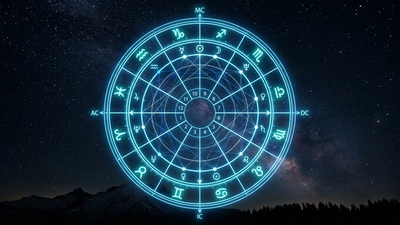
Your rising sign sits on the cusp of the first house — the leftmost point of the birth chart wheel, usually marked "ASC" or "AC." It's the sign that was ascending on the eastern horizon when you were born, and it anchors the layout of all twelve houses around your chart.
How accurate does my birth time need to be to find my rising sign?
Your birth time should be accurate to within five minutes. The ascendant moves about half a degree per minute of clock time, so a fifteen-minute error shifts the ascendant by seven and a half degrees. If your true ascendant is near a sign boundary, even a small error can flip you into the next sign. Always use the time on your birth certificate.
Can my rising sign change?
Your natal rising sign is fixed for life. It's calculated from the exact moment and place of your birth, and that data doesn't change. The progressed ascendant shifts roughly one degree per year and can move into a new sign every twenty to thirty years, but your natal ascendant remains the foundational placement.
Is the rising sign more important than the Sun sign?
Neither is "more important" in absolute terms. The Sun describes your core identity. The rising sign describes how you present and respond instinctively. Because the rising sign sets the houses, it has wide structural influence on the chart. Most experienced astrologers read both as essential layers.
What if my calculated rising sign doesn't match how I see myself?
The most common cause is an inaccurate birth time. Check the time on your birth certificate, confirm the time zone and DST settings, and verify the city. If the data is correct and the rising sign still feels wrong, you may be expressing your Sun or Moon more strongly, or the ascendant may be heavily aspected by another planet.
Do twins have different rising signs?
Twins usually share a rising sign, but not always. If they're born more than a few minutes apart and the ascendant is near a sign boundary, they can have different ascendants. Even when they share a sign, the ascendant degree differs slightly, which means transits hit them at different times.
Can I find my rising sign from my Sun sign and time of day?
You can estimate roughly, but not precisely without an ephemeris. Sun-on-the-ascendant happens around sunrise, and the ascendant moves through the zodiac at roughly two hours per sign from there. Use this as a sanity check, not a final answer.
Your rising sign is not the whole picture, but it's the doorway. Once you know it, the rest of your chart becomes navigable in a way it wasn't before. You stop reading planets in a vacuum and start seeing where in your life each one actually lives. That's where astrology stops feeling abstract and starts feeling personal.
If you've been carrying the wrong rising sign for years - and a lot of people have, just because they trusted a memory or a noon chart - finding the real one can be a quietly profound moment. The patterns line up. The chart starts speaking in your voice instead of someone else's.
Take the ten minutes. Find your birth certificate. Run the calculation. And if you want a real conversation about what your specific ascendant means for the year ahead, ask your first question free on MyNitya.
Nitya isn't a one-time horoscope. She's with you for the whole journey.
Understand yourself
Career, love, money, timing - any decision you are weighing. Answers read straight from your birth chart.
Understand any relationship
Add your partner, a parent, a friend, even a colleague. Nitya reads both charts together to explain the bond, the friction, and how to work through it.
Guidance for every day
Start each morning knowing what the day favors, what to watch for, and the best moments to act.
No card needed. Nitya just needs your birth details to read your chart.