Vedic vs Western Astrology: Which Is More Accurate (and Why It Matters)
In this Article
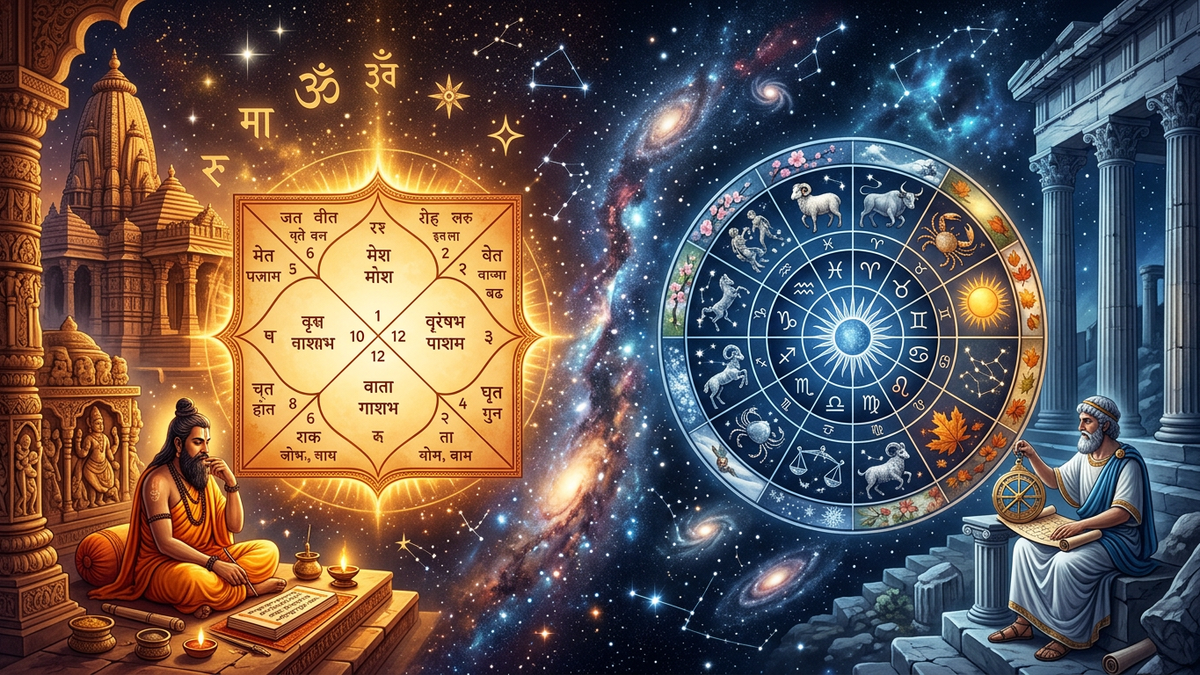
Vedic astrology is more accurate than Western astrology for predicting specific life events and their timing. Western astrology is stronger for psychological personality analysis. The two systems use different zodiacs, different planetary sets, and fundamentally different techniques - so the answer to "which is more accurate" depends entirely on what you're trying to find out. If you want to know who you are, Western astrology has strong tools. If you want to know when something will happen, Vedic astrology is significantly more precise.
That's the short answer. But the real story is more interesting - and more useful - than a simple winner-takes-all verdict. These two systems share ancient roots but diverged over two thousand years ago, and each developed tools the other doesn't have. Understanding both gives you a more complete picture of your chart than either system alone.
Your personal astrologer - Vedic + Western.
Reads all 10,000+ points of your birth chart to answer your question. First question free, no card needed.
Ask your question free →Key Takeaways: Vedic astrology (Jyotish) uses the sidereal zodiac aligned with actual star positions, while Western astrology uses the tropical zodiac aligned with seasons. The ~24-degree gap between them means most people have different signs in each system. Vedic astrology's unique tools - the Vimshottari dasha system, 27 nakshatras, and 16 divisional charts - give it unmatched predictive specificity for timing life events. Western astrology's integration of outer planets (Uranus, Neptune, Pluto) and psychological frameworks gives it depth in personality and self-awareness work. The most complete approach uses both systems for their respective strengths.
What Is Vedic Astrology?
Vedic astrology is the traditional astrological system of India, known as Jyotish - a Sanskrit word meaning "science of light." It's one of the six Vedangas (limbs of the Vedas) and has been practiced continuously for over 5,000 years.
Jyotish uses the sidereal zodiac, which tracks the actual positions of stars and constellations in the sky. When a Vedic astrologer says your Moon is in Rohini nakshatra in Taurus, the Moon was physically positioned in front of those stars at your birth. It's astronomy-based astrology.
The foundational texts of Vedic astrology include the Brihat Parashara Hora Shastra (attributed to the sage Parashara), the Brihat Jataka by Varahamihira, and the Surya Siddhanta - an astronomical treatise that describes planetary calculations with remarkable precision for its era. These texts establish the framework that Vedic astrologers still use today: the 12 rashis (signs), 27 nakshatras (lunar mansions), 12 bhavas (houses), the Vimshottari dasha system, and 16 divisional charts.
Vedic astrology works with nine grahas (celestial bodies): Sun, Moon, Mars, Mercury, Jupiter, Venus, Saturn, and the two lunar nodes - Rahu (North Node) and Ketu (South Node). It does not traditionally use Uranus, Neptune, or Pluto. The emphasis falls heavily on the Moon sign and the Ascendant (Lagna) rather than the Sun sign.
What Is Western Astrology?
Western astrology is the astrological tradition that developed from Babylonian and Hellenistic Greek roots, codified by Ptolemy around 150 CE in his work Tetrabiblos. It's the system behind the horoscopes you see in magazines, apps, and most English-language astrology content.
Western astrology uses the tropical zodiac, which defines the signs based on Earth's relationship to the Sun and the seasons. Zero degrees Aries always begins at the vernal equinox (around March 20-21), regardless of where the actual constellation Aries is in the sky. The tropical zodiac is a seasonal framework, not a star-based one.
Modern Western astrology incorporates the outer planets discovered after the invention of the telescope: Uranus (discovered 1781), Neptune (1846), and Pluto (1930). It also integrates asteroids like Chiron and Lilith, and uses multiple house systems (Placidus, Koch, Whole Sign, Equal). The emphasis falls primarily on the Sun sign, with the Moon and Ascendant as secondary factors.
Over the past century, Western astrology has increasingly merged with psychology - particularly Jungian archetypes, humanistic psychology, and evolutionary astrology. This gives Western readings a therapeutic, self-development quality that many people find valuable for understanding personality patterns and psychological dynamics.
Vedic vs Western Astrology: The 7 Key Differences
The differences between Vedic and Western astrology go far deeper than "different signs." They're fundamentally different systems with different tools, different priorities, and different strengths. Here's a clear comparison.
1. Zodiac System: Sidereal vs Tropical
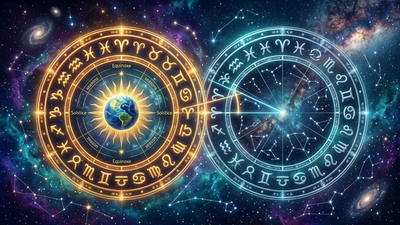
This is the most visible difference. Vedic astrology uses the sidereal zodiac (fixed to stars). Western astrology uses the tropical zodiac (fixed to seasons). The gap between them - called ayanamsa - is currently about 24 degrees, which means most people's sidereal sign is one sign earlier than their tropical sign.
If you're a tropical Scorpio (born November 5), your sidereal Sun is in Libra. Tropical Leo (born August 10)? Sidereal Cancer. This single difference changes your entire chart interpretation.
2. Primary Luminary: Moon vs Sun
Western astrology leads with the Sun sign. "What's your sign?" means "what's your Sun sign?" The Sun represents ego, identity, and life purpose in Western astrology.
Vedic astrology leads with the Moon sign (Rashi) and the Ascendant (Lagna). The Moon represents your mind, emotions, and daily inner experience. In Jyotish, the Moon is considered more important than the Sun for understanding a person's nature because it changes signs every 2.5 days (versus the Sun's monthly sign changes), making it a more precise indicator.
Your Vedic Moon sign determines your dasha sequence, your nakshatra, and your emotional constitution. It's the starting point for almost every Vedic analysis.
3. Planetary Bodies
Vedic astrology uses 9 grahas: Sun, Moon, Mars, Mercury, Jupiter, Venus, Saturn, Rahu, and Ketu. The lunar nodes (Rahu and Ketu) are given enormous importance - they represent karmic destiny, obsession, liberation, and the soul's evolutionary direction.
Western astrology uses 10 planets (the same 7 visible planets plus Uranus, Neptune, and Pluto) and often includes asteroids and points like Chiron, Lilith, and the Part of Fortune. The outer planets represent generational themes and transpersonal forces.
4. Predictive Timing: Dashas vs Transits
This is where the systems diverge most dramatically. Western astrology predicts timing primarily through transits (where planets are now relative to your birth chart) and progressions (a symbolic system where one day equals one year). These methods identify general periods of influence but rarely pinpoint specific dates.
Vedic astrology uses the Vimshottari dasha system - a 120-year cycle of planetary periods determined by your Moon's nakshatra at birth. Each planet rules a specific number of years, and within each major period (Mahadasha) are sub-periods (Antardasha) and sub-sub-periods (Pratyantardasha). This creates a timing framework that can narrow predictions to specific months or even weeks.
When a Vedic astrologer says "your Jupiter Mahadasha begins in March 2027 and you'll see career expansion during the Jupiter-Venus sub-period from September 2028 to May 2031," that's a level of timing specificity that Western transit analysis typically can't match.
5. Chart Precision: Divisional Charts vs Single Chart
Western astrology primarily works with one chart - the natal chart (with occasional use of solar return charts and progressed charts). Everything is interpreted from this single wheel.
Vedic astrology uses 16 divisional charts (Varga charts) that zoom into specific life areas:
- Rasi (D1) - The main birth chart, overall life
- Hora (D2) - Wealth and financial capacity
- Drekkana (D3) - Siblings and courage
- Chaturthamsa (D4) - Property and fixed assets
- Saptamsa (D7) - Children and progeny
- Navamsa (D9) - Marriage, spiritual purpose, and the deeper truth of your chart
- Dashamsa (D10) - Career and professional destiny
- Dwadashamsa (D12) - Parents and ancestral patterns
A planet that appears weak in the Rasi chart might be powerfully placed in the Navamsa - meaning its potential unfolds through marriage or in the second half of life. This layered analysis gives Vedic astrology a resolution that single-chart systems can't achieve.
6. Remedial Measures
Vedic astrology has an extensive system of remedies - practical actions to strengthen weak planets or mitigate difficult transits. These include gemstone recommendations (specific stones for specific planets), mantra recitation, charitable acts, fasting on specific days, and ritual practices.
Western astrology generally doesn't prescribe remedies. The approach is more observational and psychological: understand the pattern, work with it therapeutically, integrate the shadow. There's wisdom in this approach, but it doesn't offer the same actionable toolkit for people who want to do something about a difficult planetary period.
7. Philosophical Framework: Karma vs Psychology
Vedic astrology operates within a karmic framework. Your birth chart is a map of your accumulated karma - the results of actions from past lives that shape this one. Difficult placements aren't "bad luck" - they're lessons your soul chose to work through. The dasha system reveals when specific karmic themes activate.
Western astrology, especially in its modern form, operates within a psychological framework. Your chart reveals personality patterns, unconscious drives, and growth opportunities. Difficult aspects represent psychological tensions to be integrated, not karmic debts to be repaid.
Neither framework is objectively "right." But they lead to very different types of readings and very different advice.
Nakshatras: The Precision Tool Western Astrology Doesn't Have
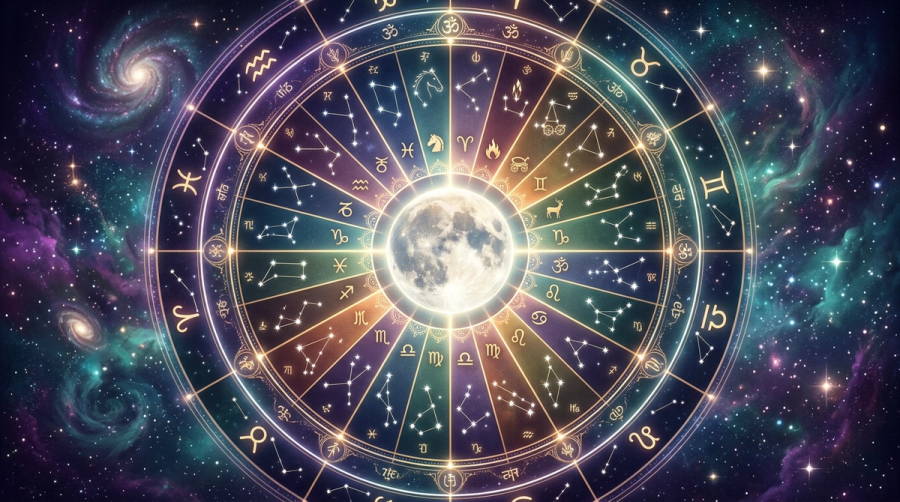
The 27 Vedic nakshatras arranged in a wheel around the Moon showing lunar mansions unique to Vedic astrology
Nakshatras are 27 lunar mansions that divide the zodiac into segments of 13 degrees and 20 minutes each. They're one of the oldest components of Vedic astrology - referenced in the Rigveda, which dates back over 3,500 years - and they have no equivalent in Western astrology.
While the 12 zodiac signs give you broad personality strokes, nakshatras give you the fine details. Each nakshatra has its own ruling deity, planetary ruler, animal symbol, gender, guna (quality), and specific life themes. According to DashaClub's nakshatra analysis, nakshatras provide 2.25 times more precision than zodiac signs alone for daily predictions.
Consider two people with Moon in sidereal Scorpio. In Western astrology, they'd both be described as intense, secretive, and transformative. But in Vedic astrology:
- Moon in Vishakha nakshatra (ruled by Jupiter) - Ambitious, goal-oriented, driven by a sense of purpose. The "star of triumph." These people pursue their objectives with single-minded determination.
- Moon in Anuradha nakshatra (ruled by Saturn) - Devoted, loyal, capable of deep friendship. The "star of success through devotion." These people build lasting bonds through patience and commitment.
Meet Nitya, your AI astrologer
She reads your birth chart to answer anything about your life. Your first complete answer is free, with no card required. Continued chat, Synastry, and Daily Guidance require Premium.
Questions you can ask about this topic
Tap any one below - or just write your own question in the form ↓
Nitya isn't a one-time horoscope. She's with you for the whole journey.
Understand yourself
Career, love, money, timing - any decision you are weighing. Answers read straight from your birth chart.
Understand any relationship
Add your partner, a parent, a friend, even a colleague. Nitya reads both charts together to explain the bond, the friction, and how to work through it.
Guidance for every day
Start each morning knowing what the day favors, what to watch for, and the best moments to act.
No card needed. Nitya just needs your birth details to read your chart.
Ask Nitya your first question - free →- Moon in Jyeshtha nakshatra (ruled by Mercury) - Protective, authoritative, drawn to positions of seniority. The "eldest star." These people naturally assume leadership and carry responsibility for others.
Same sign. Three completely different emotional constitutions. This is why Vedic astrology can distinguish between people who share the same sign placement - and why generic sun-sign horoscopes feel so imprecise to anyone who's experienced nakshatra-level analysis.
Your Moon's nakshatra also determines your entire Vimshottari dasha sequence - the planetary timing cycles that map your life's major chapters. It's the single most important data point in Vedic astrology, and Western astrology has nothing comparable.
The Dasha System: Why Vedic Astrology Predicts Timing Better
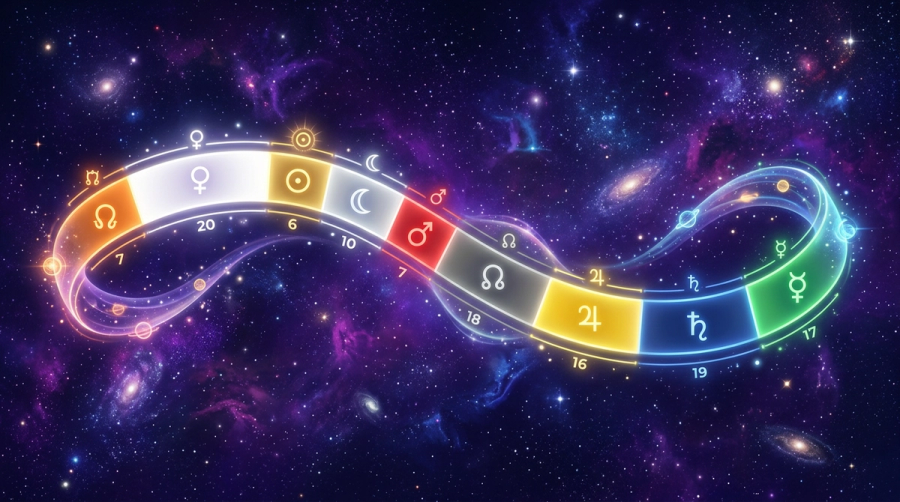
Vimshottari Dasha planetary timeline showing colored segments for each planetary period in Vedic astrology
The Vimshottari dasha system is Vedic astrology's most powerful predictive tool and the primary reason many astrologers consider Jyotish more accurate for forecasting life events. It has no equivalent in Western astrology.
How the Dasha System Works
The system divides your life into planetary periods totaling 120 years:
- Ketu: 7 years
- Venus: 20 years
- Sun: 6 years
- Moon: 10 years
- Mars: 7 years
- Rahu: 18 years
- Jupiter: 16 years
- Saturn: 19 years
- Mercury: 17 years
Your starting point in this sequence is determined by your Moon's nakshatra at birth. If you were born with Moon in Bharani nakshatra (ruled by Venus), your first dasha is Venus, followed by Sun, Moon, Mars, and so on. Each major period (Mahadasha) is subdivided into sub-periods (Antardasha), and those into sub-sub-periods (Pratyantardasha) - creating a timing grid that can narrow predictions to specific weeks.
Why This Matters Practically
Imagine two people born on the same day with similar charts. One is running Jupiter Mahadasha (16 years of expansion, wisdom, and opportunity). The other is running Saturn Mahadasha (19 years of hard work, restriction, and delayed rewards). Their daily horoscopes might be identical, but their lived experiences are completely different.
The dasha system explains why. It's the reason a person can have a "great chart" but struggle for years - they're in a difficult dasha period, and the chart's potential hasn't activated yet. It's also why someone with a modest chart can suddenly experience a breakthrough - their dasha shifted to a well-placed planet.
As DashaClub's dasha guide explains, the system "allows astrologers to predict not just what will happen, but exactly when it will happen." Western astrology's transit-based timing can identify general windows of influence, but it can't match this level of specificity.
Among charts analyzed on MyNitya, users who learn their current dasha period consistently report that it explains their present life circumstances more accurately than any transit reading they've received. The dasha system doesn't just describe your personality - it describes your life's timeline.
Is Vedic Astrology More Accurate? The Honest Assessment
Vedic astrology is more accurate for specific, measurable predictions. Western astrology is more developed for psychological self-understanding. Here's the nuanced breakdown.
Where Vedic Astrology Is Clearly Stronger
- Event timing: The dasha system predicts when career changes, marriages, health events, and financial shifts are most likely to occur - often to within months. Western transits identify general periods but rarely achieve this precision.
- Astronomical accuracy: The sidereal zodiac tracks actual star positions. When a Vedic astrologer says Jupiter is in Taurus, you can verify it with a telescope. The tropical zodiac has drifted ~24 degrees from the constellations it was originally based on.
- Relationship compatibility: Vedic astrology's Ashtakoot Milan system scores compatibility across eight dimensions using nakshatra analysis. It's more systematic and specific than Western synastry, which relies on aspect interpretation.
- Remedial guidance: Vedic astrology offers concrete actions (gemstones, mantras, charitable acts) to strengthen weak planets. Western astrology identifies problems but generally doesn't prescribe solutions beyond self-awareness.
- Chart resolution: 16 divisional charts provide zoomed-in analysis of specific life areas. A career question gets analyzed through the Dashamsa (D10). A marriage question gets the Navamsa (D9). Western astrology reads everything from one chart.
Where Western Astrology Is Clearly Stronger
- Psychological depth: Modern Western astrology's integration with Jungian psychology, evolutionary astrology, and humanistic approaches gives it sophisticated tools for understanding personality patterns, unconscious drives, and psychological growth.
- Outer planet analysis: Uranus, Neptune, and Pluto represent generational and transpersonal forces that Vedic astrology doesn't traditionally address. These planets are genuinely useful for understanding collective shifts and individual awakening experiences.
- Accessibility: Western astrology is easier to learn at a basic level. Sun-sign astrology, while oversimplified, provides an accessible entry point. Vedic astrology's learning curve is steeper.
- Modern relevance: Western astrologers have been more active in adapting astrological language to contemporary life - addressing topics like gender identity, neurodivergence, and modern relationship structures in ways that traditional Vedic texts don't.
The Practical Answer
If you're asking "what career should I pursue and when should I make the move?" - Vedic astrology gives you a more specific, actionable answer through the 10th house lord, Dashamsa chart, and dasha timing.
If you're asking "why do I keep repeating the same relationship pattern and how do I break it?" - Western astrology's psychological approach might give you deeper insight into the unconscious dynamics at play.
If you're asking both types of questions - and most people are - using both systems gives you the most complete picture. Your birth chart interpretation becomes richer when you can see both the Vedic timing framework and the Western psychological lens.
Why Many Western Astrology Fans Are Switching to Vedic
There's a growing trend of Western astrology enthusiasts discovering Vedic astrology and finding that it resonates more deeply. Here's why the switch happens.
The "Wrong Sign" Revelation
The most common trigger is discovering that your sidereal sign is different from your tropical sign - and realizing the sidereal description fits better. A lifelong "Gemini" discovers they're a sidereal Taurus and suddenly understands their need for stability and resistance to change. A "Sagittarius" finds out they're a sidereal Scorpio and finally has language for their intensity and need for depth.
This doesn't happen for everyone. Some people resonate strongly with their tropical sign. But for the significant percentage who've always felt their Western horoscope was slightly off, the sidereal chart often provides the missing clarity.
The Timing Gap
Western astrology is excellent at describing what - what your personality is like, what themes are active, what challenges you face. But it's less precise about when. "Saturn is transiting your 10th house for the next 2.5 years" is useful but vague. "Your Saturn Mahadasha, Mercury Antardasha begins in April 2027 and activates your 10th house lord - expect a career restructuring that peaks between August and November 2027" is actionable.
People who've been frustrated by the vagueness of Western timing predictions often find the dasha system revelatory. It transforms astrology from a personality description into a life planning tool.
The Depth of Nakshatras
Once you've experienced nakshatra-level analysis, 12-sign astrology feels like reading with the lights half off. The jump from "you're a Cancer Moon" to "you're a Pushya nakshatra Moon - nurturing through discipline, drawn to teaching and caregiving, with Saturn's patience underlying your emotional nature" is enormous. It's the difference between a sketch and a photograph.
How to Try Vedic Astrology for the First Time
If you're curious about Vedic astrology but don't know where to start, here's a practical path.
What You Need
The same three things any birth chart requires: your birth date, exact birth time, and birth location. Birth time precision matters even more in Vedic astrology because the Ascendant (Lagna) changes signs approximately every two hours, and the Ascendant determines your entire house system and planetary lordships.
What to Look For in Your Vedic Chart
- Your sidereal Sun, Moon, and Ascendant - Compare these to your tropical placements. Notice which descriptions resonate more.
- Your Moon's nakshatra - This is the most important single data point in Vedic astrology. It determines your emotional nature and your dasha sequence.
- Your current Mahadasha and Antardasha - What planetary period are you in right now? This explains the dominant themes of your current life chapter.
- Your Navamsa (D9) Ascendant - This reveals the deeper truth of your chart and often becomes more relevant after age 30-35.
On MyNitya, you enter your birth details and your complete Vedic birth chart is calculated using Swiss Ephemeris data - the same astronomical engine used for NASA planetary calculations. Nitya, your personal AI astrologer, analyzes over 6,000 data points including all sidereal planetary positions, nakshatra placements, dasha periods, and divisional charts. Then she explains what it all means in plain language, personalized to your specific questions about career, relationships, timing, and life direction.
The difference between reading a generic "Vedic astrology explainer" and actually seeing your own Vedic chart analyzed is like the difference between reading about swimming and jumping in the water. The concepts make sense intellectually. But the personal chart is where it clicks.
Chat with Nitya about your Vedic birth chart - ask your first question free on MyNitya.
Can You Use Both Vedic and Western Astrology?
Yes - and many serious astrologers do. The two systems aren't contradictory. They're complementary lenses that illuminate different dimensions of the same life.
A Practical Dual Approach
- Use your tropical chart for understanding personality patterns, psychological dynamics, and the archetypal themes of your life. The outer planets (Uranus, Neptune, Pluto) add a layer of generational and transpersonal insight that Vedic astrology doesn't address.
- Use your sidereal chart for timing decisions, understanding karmic patterns, and getting specific guidance on career moves, relationship timing, and life transitions. The dasha system and nakshatras provide a precision that tropical methods can't match.
- Cross-reference both when facing major decisions. If your Western chart shows a challenging Pluto transit and your Vedic chart shows a Saturn Mahadasha beginning simultaneously, you know you're entering a period of deep transformation that requires patience and discipline.
What Doesn't Work
Mixing the systems carelessly creates confusion. Don't use tropical sign placements with Vedic house interpretations, or apply dasha timing to a tropical chart. Each system has its own internal logic, and the techniques work within their own framework. Use both systems - but use each one on its own terms.
Frequently Asked Questions
Is Vedic astrology more accurate than Western astrology?
Vedic astrology is more accurate for predicting specific life events and their timing, thanks to the Vimshottari dasha system, nakshatra analysis, and 16 divisional charts. Western astrology is more developed for psychological personality analysis through its integration with Jungian psychology and inclusion of outer planets. For astronomical precision, Vedic astrology's sidereal zodiac tracks actual star positions, while the tropical zodiac has drifted approximately 24 degrees from the constellations.
What is the main difference between Vedic and Western astrology?
The main difference is the zodiac system: Vedic astrology uses the sidereal zodiac (fixed to actual star positions), while Western astrology uses the tropical zodiac (fixed to Earth's seasons). This creates a ~24-degree gap, meaning most people have different signs in each system. Beyond the zodiac, Vedic astrology uses unique tools like the dasha timing system, 27 nakshatras, and 16 divisional charts that Western astrology doesn't have.
Why is my Vedic sign different from my Western sign?
Your Vedic sign differs because of the precession of the equinoxes - a slow wobble in Earth's axis that has shifted the seasonal equinox points approximately 24 degrees away from the constellations over the past 1,700+ years. Vedic astrology corrects for this drift using a factor called ayanamsa. Western astrology does not correct for it, keeping signs locked to the seasons rather than the stars.
Which astrology system should I use?
Use Vedic astrology if you want specific timing predictions, karmic insight, and actionable guidance for life decisions. Use Western astrology if you want psychological self-understanding, personality analysis, and archetypal insight. Many experienced astrologers recommend using both - Vedic for timing and prediction, Western for psychology and self-awareness. The most complete picture comes from understanding your chart through both lenses.
What are nakshatras and why don't Western astrologers use them?
Nakshatras are 27 lunar mansions in Vedic astrology, each spanning 13 degrees and 20 minutes of the sidereal zodiac. They provide far more precision than the 12 zodiac signs alone - distinguishing between people who share the same sign but have different emotional constitutions and life patterns. Western astrology doesn't use nakshatras because it developed from a different tradition (Hellenistic Greek) that divided the zodiac only into 12 signs and 36 decans.
Can a Vedic astrologer and Western astrologer give different advice?
Yes, and this is common. A Vedic astrologer might say "don't change careers until your Jupiter dasha begins in 2028 - the timing isn't right yet." A Western astrologer looking at the same person's chart might say "Uranus is transiting your 10th house - this is a period of career revolution, embrace the change." Both readings can be valid within their own frameworks. The Vedic reading emphasizes optimal timing; the Western reading emphasizes the transformative energy available.