What Is a Cusp in Astrology? The Real Meaning Explained
In this Article
A cusp in astrology is the exact boundary line where one zodiac sign ends and the next begins. It is a single point of transition, not a wide zone where you belong to two signs at once. Being "born on the cusp" simply means your birthday falls very close to the day the Sun changed signs that year, so you still have one Sun sign, not a hybrid of two. If you want to know your real Sun sign, ask your first question free on MyNitya.
That distinction surprises a lot of people. If you have spent years telling friends you are "a Gemini-Cancer" or "a bit of both," the truth is gentler and clearer than the myth. Your Sun was in exactly one sign at the moment you were born. What you feel as a blend usually comes from other parts of your chart, not from a shared sign.
Your personal astrologer - Vedic + Western.
Reads all 10,000+ points of your birth chart to answer your question. First question free, no card needed.
Ask your question free →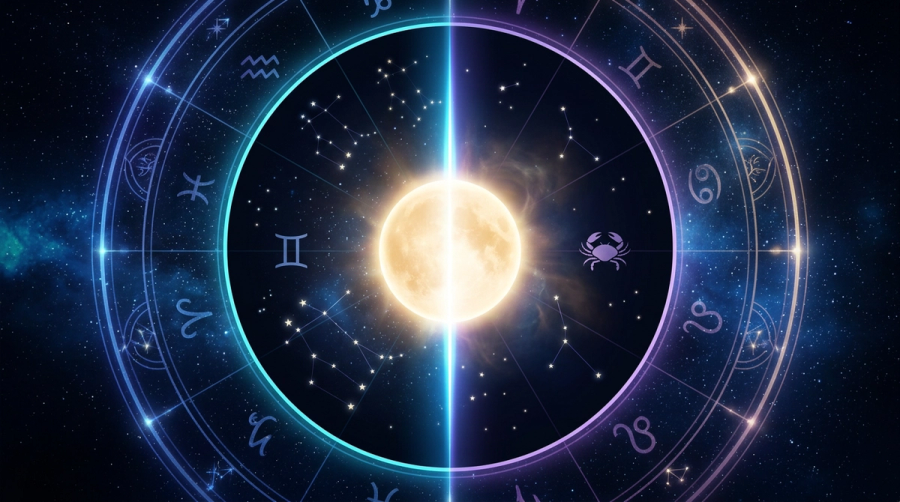
The Sun sitting precisely on the glowing threshold between two zodiac sectors representing being born on the cusp
Key Takeaways:
- A cusp is the precise boundary line between two zodiac signs, or the line that starts a house in your chart
- You have one Sun sign, never two - the Sun cannot sit in two signs at the same moment
- "Born on the cusp" means your birthday lands near a sign change, so your exact date, year, and time decide which sign is yours
- Sign-change dates shift by a day or two each year because the Sun's ingress happens at a fixed astronomical moment, not a fixed calendar date
- A sign cusp and a house cusp are two different things - one divides signs, the other starts a house
- Vedic (sidereal) astrology uses different sign dates and whole-sign houses, so "cusps" work differently there
- The blended feeling people describe is real, but it usually comes from the Moon, rising sign, or planet placements, not a two-sign Sun
What Is a Cusp in Astrology?
A cusp in astrology is the exact degree where one zodiac sign or house transitions into the next. The word comes from the Latin cuspis, meaning point or tip. It marks a hard line, like 29 degrees 59 minutes of Aries flipping into 0 degrees of Taurus. There is no overlap zone where a planet lives in both signs at once.
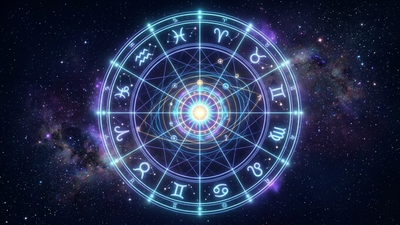
Astrologers use "cusp" in two separate ways, and mixing them up is where most confusion starts. The first is the boundary between two of the twelve zodiac signs. The second is the boundary that opens each of the twelve houses in a birth chart. Both live on the astrology wheel that maps the twelve signs and houses, and both are transition points, but they answer different questions.
As the astrologers behind Cobra and Crescent explain in their piece on whether cusps are real, the key word in the definition is "point." A cusp is a solid line, not a smear. Once you see it that way, a lot of pop-astrology confusion clears up on its own.
The Honest Truth: You Have One Sun Sign, Not Two
You have exactly one Sun sign. The Sun moves through the zodiac at a steady pace and occupies a single sign at any given moment, so it cannot be split between two. A "cusp Sun sign" as a third hybrid category does not exist in real chart work, even if it is popular online.
Here is the mechanics of it. The Sun travels roughly one degree per day along the ecliptic. On the day it changes signs, it might be at 29 degrees of one sign in the morning and 0 degrees of the next by evening. That is a real, precise moment. Your birth chart captures the Sun's position down to the degree and minute, so it lands firmly on one side of the line.
So why do so many people swear they feel like two signs? Usually because the rest of the chart is doing the blending. Your Moon sign shapes your emotional world. Your rising sign shapes how you come across. A Leo Sun with a Virgo Moon really can feel like a Leo-Virgo mix, but the Sun itself is pure Leo. That is a different thing entirely, and the difference between your Sun, Moon, and rising signs explains far more about the "two sides" feeling than any cusp ever could.
The feeling is valid. The label is just aimed at the wrong part of the chart.
Sign Cusp vs House Cusp: Two Different Things
A sign cusp is the boundary between two zodiac signs. A house cusp is the starting line of one of the twelve houses in your birth chart. They are not the same, and confusing them is the single most common cusp mistake. One sorts signs, the other sorts life areas.
Sign cusps are fixed and universal. The line between Taurus and Gemini falls at the same zodiac degree for everyone on Earth. It never moves, because it is defined by the zodiac itself, not by your birth location.
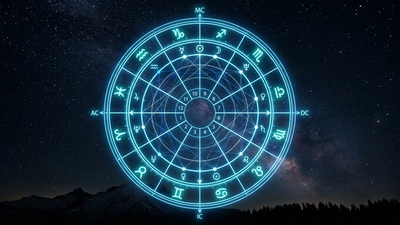
House cusps are personal. They depend on your exact birth time and place, because the houses are calculated from the horizon and the sky as it looked from your specific spot. The cusp of your 1st house is your Ascendant, or rising sign. The cusp of your 10th house is your Midheaven, the career and public-role angle. The sign sitting on each house cusp colors how that area of life expresses.
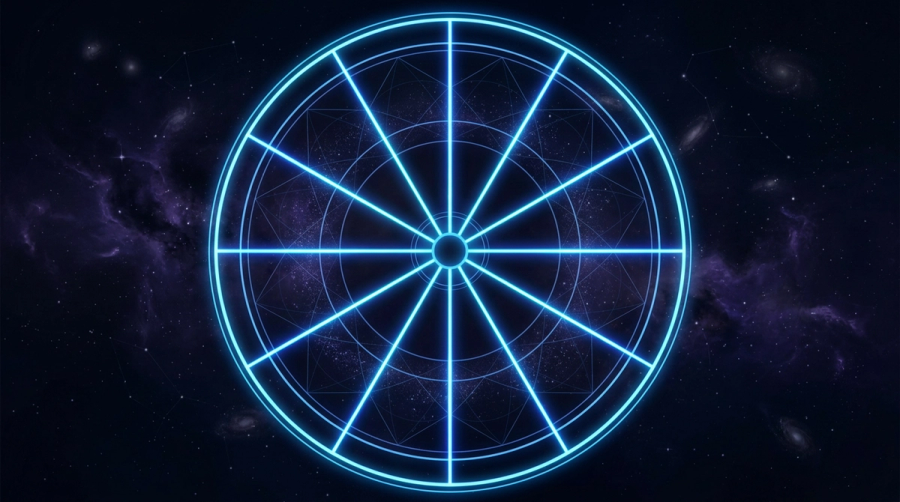
Astrological chart wheel with twelve radiating boundary lines showing house cusps dividing the circle
A quick example. Say your 7th house cusp sits at 8 degrees Scorpio. That does not make you "a Scorpio." It means Scorpio flavors your partnerships, which is exactly the kind of detail the 7th house and its relationship patterns unpack in depth. The house cusp is about where in life a sign shows up, not which Sun sign you are. House cusps also raise a subtler point called interception, where a whole sign sits inside a house without touching either cusp, which Big Sky Astrology's guide to cusps and interceptions walks through in plain terms.
Why You Need Your Exact Birth Date, Year, and Time
You need your exact birth date, year, and time to know your real Sun sign because the Sun changes signs on slightly different calendar dates each year. The boundary is set by an astronomical moment, not a fixed date, so a birthday near a sign change can land in either sign depending on the year.
This is the piece most cusp confusion ignores. The tropical zodiac used in Western astrology is tied to the seasons and the vernal equinox, not to the visible constellations. The solar year runs about 365.25 days, so the Sun reaches each sign boundary a few hours later each year until a leap day resets the drift. That is why sign-change dates wobble by a day or two.
Meet Nitya, your AI astrologer
She reads your birth chart to answer anything about your life. Your first complete answer is free, with no card required. Continued chat, Synastry, and Daily Guidance require Premium.
Questions you can ask about this topic
Tap any one below - or just write your own question in the form ↓
Nitya isn't a one-time horoscope. She's with you for the whole journey.
Understand yourself
Career, love, money, timing - any decision you are weighing. Answers read straight from your birth chart.
Understand any relationship
Add your partner, a parent, a friend, even a colleague. Nitya reads both charts together to explain the bond, the friction, and how to work through it.
Guidance for every day
Start each morning knowing what the day favors, what to watch for, and the best moments to act.
No card needed. Nitya just needs your birth details to read your chart.
Ask Nitya your first question - free →A practical case. The Sun typically leaves Gemini and enters Cancer somewhere around June 20 to June 22. If you were born on June 21, your Sun sign genuinely depends on the year and the hour of your birth. One year that date is late Gemini. Another year, or a few hours later, it is early Cancer. Only an exact calculation settles it, which is why the popular cusp combination of Gemini and Cancer is worth reading closely if your birthday sits in that window.
The same is true across every boundary. The Sun changes signs around the 19th to the 23rd of most months, but never on a guaranteed fixed day. So a "cusp birthday" is really a signal that says: get your chart calculated properly before you assume.
The Popular Zodiac Cusp Combinations and Their Date Ranges
The popular zodiac cusp combinations are twelve named date ranges that sit around each sign change, each given a poetic label in modern pop astrology. These names are cultural inventions, not classical astrology, but they are common enough that people search for them by name.
Here are the widely circulated cusp names and their approximate ranges. Remember the exact cut-over day shifts by one to two days per year, so treat these as windows, not fixed borders.
Neighboring signs | Popular cusp name | Approximate date range
- Pisces and Aries: Cusp of Rebirth - March 17 to 23
- Aries and Taurus: Cusp of Power - April 16 to 22
- Taurus and Gemini: Cusp of Energy - May 17 to 23
- Gemini and Cancer: Cusp of Magic - June 17 to 23
- Cancer and Leo: Cusp of Oscillation - July 19 to 25
- Leo and Virgo: Cusp of Exposure - August 19 to 25
- Virgo and Libra: Cusp of Beauty - September 19 to 25
- Libra and Scorpio: Cusp of Drama and Criticism - October 19 to 25
- Scorpio and Sagittarius: Cusp of Revolution - November 18 to 24
- Sagittarius and Capricorn: Cusp of Prophecy - December 18 to 24
- Capricorn and Aquarius: Cusp of Mystery - January 16 to 23
- Aquarius and Pisces: Cusp of Sensitivity - February 15 to 21
The two boundaries people ask about most are the summer ones. If your birthday sits in the July window, the shift from watery Cancer to fiery Leo can feel especially dramatic, which is why the Cancer and Leo cusp has its own dedicated breakdown. These names are fun and memorable, but they describe proximity to a boundary, not a real dual Sun sign.
Do Cusps Exist in Astrology? Why the Idea Still Resonates
Cusps exist as boundary lines, but "cusp signs" as blended personalities do not exist in technical astrology. The Sun sits in one sign, full stop. Still, the idea resonates for good reasons, and it is worth honoring why so many people feel seen by it rather than just dismissing it.
Part of it is timing. People born within a day or two of a sign change often were told the "wrong" Sun sign as kids, because a magazine used generic dates instead of a real calculation. When they finally run an accurate chart, they discover the Sun was in the neighboring sign all along. That lifelong "I never fully fit my sign" feeling suddenly makes sense.
Part of it is chart complexity. A person can have the Sun in one sign and a stack of planets in the next. Someone with a Gemini Sun but Mercury, Venus, and Mars in Cancer will read as deeply Cancerian in daily life. That is not a cusp. That is a cluster of planets, and if three or more pile into one sign it forms a stellium, which genuinely shifts the personality toward that sign.
And part of it is simply emotional. Astrology at its best helps people feel understood. The cusp idea gives language to a real experience of feeling in-between. The experience is true even when the mechanism is misnamed. A careful reading just points that same feeling at the part of the chart actually causing it, whether that is the Moon, the rising sign, or a planetary cluster.
The Vedic Contrast: Sidereal Dates and Whole-Sign Houses
In Vedic astrology, the idea of a cusp works differently because Vedic uses the sidereal zodiac and, most commonly, whole-sign houses. The sidereal zodiac is aligned to the actual stars rather than the seasons, so its sign dates are shifted roughly 23 to 24 degrees behind the tropical dates most Western readers know.
That shift matters for cusp thinking. A birthday that sits right on a Western sign boundary usually lands cleanly inside a single sidereal sign, because the whole zodiac reference frame is offset. So your "cusp" birthday in Western astrology often is not a boundary birthday in Vedic astrology at all. The gap between the two systems is exactly what the guide on sidereal versus tropical zodiac dates lays out.
Houses differ too. Many Vedic charts use whole-sign houses, where each entire sign becomes one house and the sign boundary is the house boundary. There is no separate quadrant house cusp cutting through the middle of a sign the way Placidus houses do in Western charts. That removes a lot of the house-cusp ambiguity Western astrologers debate.
This is one reason MyNitya supports both systems. MyNitya is an AI astrology platform where Nitya, your personal AI astrologer, reads your full Vedic or Western birth chart. Ask her anything in chat, compare your chart with someone else's for a compatibility reading, and get a personalized daily guidance reading each morning. Premium unlocks all three; your first question is free. Western astrology shines at psychological depth and personality, while Vedic shines at timing and karmic patterns, so you can pick the lens that fits your question. If your birthday sits near a boundary, the Moon sign is often where the "blended" feeling really lives, and Nitya can show you which sign your Sun and Moon actually occupy in each system.
For the classical grounding: the seasonal, tropical framework of Western astrology traces back to Ptolemy's Tetrabiblos in the 2nd century, which anchored the signs to the equinoxes rather than the constellations. That single choice is why Western and Vedic sign dates disagree today. Among the charts calculated on MyNitya, many people who arrive certain they are "two signs" find their Sun sitting firmly in one sign once the exact birth time is used, with the second flavor traced to the Moon or rising sign instead.
Frequently Asked Questions
What does it mean to be born on the cusp?
Being born on the cusp means your birthday falls within a day or two of a zodiac sign change, so your Sun is near the boundary between two signs. It does not mean you have two Sun signs. Your Sun still sits in exactly one sign, decided by your precise birth date, year, and time. Only an accurate chart calculation confirms which one.
Can you really be two zodiac signs at once?
No, you cannot be two zodiac signs at once for your Sun sign. The Sun occupies a single point in the zodiac at your moment of birth, so it lands in one sign only. The feeling of being "two signs" usually comes from other placements, like your Moon sign, rising sign, or a cluster of planets in a neighboring sign. Those are real influences, just not a dual Sun.
How do I know my real Sun sign if I was born on a cusp?
To know your real Sun sign, calculate your birth chart using your exact date, year, time, and place of birth. Because sign-change dates shift by a day or two each year, only a precise calculation settles a boundary birthday. Generic magazine dates are not reliable near a cusp. On MyNitya, the chart is computed as part of the consultation, so Nitya can tell you the exact sign and degree of your Sun.
What is the difference between a sign cusp and a house cusp?
A sign cusp is the boundary between two zodiac signs and is the same for everyone. A house cusp is the starting line of one of the twelve houses in your personal chart and depends on your exact birth time and place. The 1st house cusp is your rising sign; the 10th house cusp is your Midheaven. Sign cusps sort signs; house cusps sort life areas.
Are the cusp names like "Cusp of Power" real astrology?
The cusp names like Cusp of Power or Cusp of Magic are modern pop-astrology labels, not classical terms. They describe birthdays near a specific sign boundary, but they do not create a real hybrid Sun sign. They can be a fun shorthand, yet a proper chart reading always resolves your Sun into one definite sign rather than a named blend.
Do cusps exist in Vedic astrology?
Cusps work differently in Vedic astrology because it uses the sidereal zodiac and usually whole-sign houses. The sidereal sign dates are shifted from the Western tropical dates, so a Western "cusp birthday" often falls cleanly inside one sidereal sign. And with whole-sign houses, the sign boundary is the house boundary, which removes much of the house-cusp ambiguity seen in Western chart systems.
A cusp in astrology is a boundary, not a blend. Once you know that, the pressure to be "half one sign and half another" quietly lifts. You are one Sun sign, calculated from a precise moment in the sky, and the parts of you that feel like a second sign are still there, just living in a different corner of your chart than you thought.
If you have carried a cusp label your whole life, it is worth ten minutes to find out what your Sun, Moon, and rising signs actually are. The answer is often more accurate, and more validating, than the two-sign story you were handed. To find your real Sun sign and see where that "blended" feeling truly comes from, chat with Nitya about your birth chart - try free.