7th House Astrology: Your Relationship Blueprint
In this Article
The 7th house in astrology is the sector of your birth chart that begins at the descendant - the western horizon, the point where the sky meets the earth on the opposite side from your ascendant - and it describes the kind of partner you keep meeting, the qualities you keep encountering in close one-to-one relationships, and, more honestly, the part of yourself you haven't yet learned to own. It's traditionally called the marriage house. The deeper truth is that it's the projection house. Try MyNitya free.
If you're reading this because you keep ending up with the same kind of person in different bodies - the emotionally unavailable one, the controlling one, the dreamer who can't commit, the workaholic who's too busy to love you back - you're not unlucky and you're not broken. You're meeting the 7th house. And once you understand what it actually is, the question stops being why do I keep attracting this kind of person and becomes something much more useful: what part of me lives in them, and what would change if I could live in it myself?
Your personal astrologer - Vedic + Western.
Reads all 10,000+ points of your birth chart to answer your question. First question free, no card needed.
Ask your question free →Key Takeaways: The 7th house in astrology is the sector of the birth chart that governs partnership, marriage, and close one-to-one relationships, and in psychological astrology it's also the screen onto which you project the parts of yourself you haven't owned yet. The sign on the 7th house cusp (the descendant) describes the qualities you keep meeting in others. Planets in the 7th house show specific archetypes that arrive through partners. The ruler of the 7th - placed wherever it is - describes the deeper pattern. The work isn't finding the right person. It's pulling the projection back home.

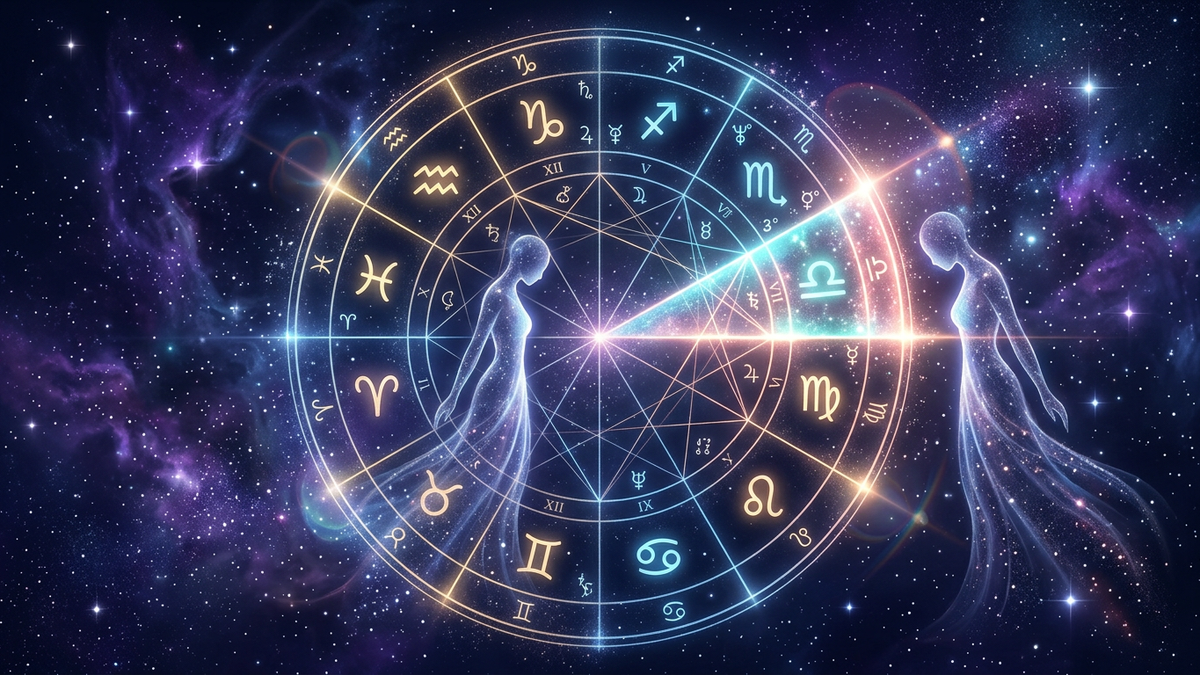
Two luminous figures facing each other across a starlit divide with one figure's reflection echoed in the other
What Is the 7th House in Astrology?
The 7th house in astrology is the chart's sector for committed partnerships, marriage, business contracts, and any close one-to-one relationship - including, traditionally, declared adversaries. It begins at the descendant, sits directly opposite the 1st house of self, and is traditionally ruled by Libra and Venus. In psychological astrology, it's also the chart's primary projection field - the place where you meet, in others, what you don't yet meet in yourself.
The technical definition first. In a Western natal chart, the 7th house is the sector beginning at the descendant - the cusp formed by the western horizon at the moment of your birth - and continuing for thirty degrees in the direction of the imum coeli. Its sign is determined by whatever sign was rising on the western horizon when you were born, which is always the sign opposite your ascendant. If your ascendant is Aries, your descendant is Libra. If your ascendant is Cancer, your descendant is Capricorn. The opposition is built into the sky.
The 7th house is the chart's I-Thou room. The 1st house is who you experience yourself as being. The 7th is who you experience the other as being. And that's where the trouble - and the gift - comes in. Because the other isn't just other. The other is a screen. What you see in your partner is partly them, and partly the qualities of the sign on your descendant, projected outward, encountered as if they belonged exclusively to someone else.
In Western astrology, the 7th house is most often associated with marriage, long-term romantic partnership, and committed partnerships of every kind, including business contracts. Older texts also include "open enemies" - the people you're locked into a defined adversarial dynamic with - under the same roof, because the energetic signature of declared opposition turns out to be remarkably similar to the signature of declared partnership. Both are I-Thou. Both are committed encounters. Both are governed by the same axis. Kerykeion's psychological astrology guide on the 7th house and projection walks through the I-Thou framework in clean depth, and it's where this article's framing draws much of its psychological grounding.
In Vedic astrology, the same sector is called the saptama bhava - literally the seventh house - and is also the house of marriage, the spouse's qualities, business partnership, and the public exchange of the chart-holder with the world. The Brihat Parashara Hora Shastra describes the 7th as the house of kalatra (spouse) and the lord of the 7th as a primary indicator of the partner's nature, with the planet's strength, sign, and aspects shaping the kind of marriage encountered. Both Vedic and Western traditions agree on this much: the 7th house is where the chart's owner meets other. Both also agree the meeting is rarely accidental.
Emotionally, the 7th house is the answer to a specific kind of pain. The pain of I keep finding the same person in different clothes. The pain of I love them but I can't make this work. The pain of why does my chart keep producing this exact kind of relationship? The 7th house is the chart's response to that pain, and the response is rarely simple. It's not that you've been cursed with a specific kind of partner. It's that you've been carrying a specific kind of projection, and the projection always finds someone willing to wear it.
Why the 7th House Is Your "Shadow Partner"
The 7th house is your shadow partner because it carries the qualities of yourself that you haven't claimed - qualities you instead encounter, with eerie consistency, in the people you fall in love with, marry, fight with, and can't quite get free from. C.G. Jung called this projection. Astrologers map it onto the descendant. The pattern is the same: what you can't yet own, you'll keep meeting in someone else.
Carl Jung's concept of projection is one of the foundational ideas of depth psychology. In his framework, every personality contains qualities the conscious self has rejected - sometimes because those qualities were shamed in childhood, sometimes because they don't fit the person you decided to become, sometimes simply because the psyche has limits and not everything fits inside the I. The rejected qualities don't disappear. They go into the unconscious. And from there, they get projected outward - onto other people, who then carry them on the projector's behalf, often without knowing it.
The 7th house, in psychological astrology, is the precise astrological location of this mechanism. Your ascendant - the 1st house - is your conscious I. The 7th house, sitting exactly opposite, is the unconscious not-I that you experience as the other. The sign on your descendant is the style of the projection. The planets in your 7th house are specific archetypes you've outsourced to other people. The ruler of your 7th, placed wherever it is in the chart, describes the deeper structural pattern of who you keep choosing.
Liz Greene, the Jungian astrologer who co-founded the Centre for Psychological Astrology in London with Howard Sasportas in 1983, makes this argument explicitly across her work. In Relating: An Astrological Guide to Living with Others on a Small Planet - one of the foundational psychological astrology texts on partnership - she describes the 7th house as the place where the chart-holder meets, in concrete human form, the qualities they have not yet integrated. The aspects to the 7th house ruler, the planets sitting inside it, and the sign on the cusp all describe what specific qualities are being externalized.
Howard Sasportas, in The Twelve Houses - the standard psychological reference on house meanings - develops the same point with characteristic gentleness. The 7th house, in his reading, is what the I needs in order to become whole. The qualities of the sign on the descendant aren't qualities you lack accidentally. They're qualities you actively need in order to become a complete person. You meet them first in others because that's the only way you can encounter them while they're still unconscious. Eventually, the work is to develop them in yourself - at which point the partner you keep meeting either evolves with you or stops being the magnetic figure they were before.
Astro Butterfly's piece on the shadow in the natal chart names this with helpful concreteness: the descendant and 7th house are the root of the projection-shadow process in the natal chart. Whatever sign sits on your 7th cusp is the version of yourself you've spent decades meeting in lovers, spouses, and primary partners, and it's the version you'll eventually have to grow into if the pattern is going to change.
So when someone asks why do I keep attracting the same type - the answer most astrology articles give is shallow ("you have Pisces on your descendant, so you attract dreamers"). The real answer is deeper. You attract the pattern because the pattern lives in you in unconscious form. The partner is the visible expression of an invisible piece of your own psyche. The chemistry is real, the love is real, the grief when it doesn't work is real. And underneath all of it, the chart is showing you a part of yourself you haven't yet learned to be.
This is the part of astrology that doesn't fit on social media. It can't be summed up in a meme. It's slow, often years-long inner work. But it's also, by a wide margin, the most useful frame astrology offers for understanding why your love life has the shape it has.
How the 7th House Differs from Other Relationship Indicators
The 7th house is one of several relationship indicators in a Western chart, and confusing it with the others is the most common reason readers misread their own pattern. Synastry shows the live exchange between two people. Venus shows what you find beautiful and how you give and receive love. Mars shows what you desire. The composite shows the relationship as its own entity. The 7th house, alone among these, shows the unconscious template - the kind of person you keep choosing before you even know you're choosing.
A clean distinction.
Synastry is the comparison of your chart with another specific person's chart. It tells you what's happening between the two of you, right now, in this particular pairing. It's dynamic, situational, specific. For the full deep dive, see the synastry chart relationship reading guide.
Venus in your chart describes how you love, what you find beautiful, what brings you pleasure. It's about your love nature - what you bring to the table.
Mars describes what you desire and how you pursue. It's about appetite and assertion.
The composite chart describes the relationship itself as a third entity, calculated from the midpoints of two charts.
The 7th house describes something none of the others touch directly: the unconscious blueprint of the kind of partner you keep meeting. Across many different specific relationships. With many different specific people. The same theme keeps surfacing because the same theme lives in the descendant of your chart and the planets that sit there.
Think of it this way. Your Venus tells you what kind of love you give. Your Mars tells you what you desire. Your synastry with a specific person tells you what's happening between the two of you. But your 7th house tells you the shape of the room you keep walking partners into. Whether the partner is the workaholic, the artist, the rescuer, the volatile one, or the absent one - the room itself was built before any of them showed up. They just walked into it because the room was already there.
For the broader architecture of all twelve houses and how they fit together, see houses in the natal chart explained. For the existing companion piece on the 7th house focused on partnerships, marriage, and traditional indicators, the 7th house astrology, partnerships and marriage guide covers the more conventional territory in depth - and pairs naturally with this article, which goes deeper into the projection mechanism and the sign-on-the-cusp signature.
Each Sign on the 7th House Cusp
The sign on your 7th house cusp - also called your descendant sign - describes the style of partner you keep meeting and the qualities you tend to project. Not the partner's sun sign. The pattern. Each of the twelve signs paints a different picture, and most readers, on reading their own descendant, recognize the pattern by the second sentence.
A working tour through the twelve. Find your descendant - it's the sign opposite your ascendant - and read the corresponding paragraph carefully.
Aries on the 7th House Cusp
If Aries is on your 7th cusp, your ascendant is Libra. You experience yourself as harmonious, diplomatic, fair, attuned to others. The qualities you've outsourced are assertion, directness, anger, the willingness to fight for what you want. So you keep ending up with partners who carry those qualities - sometimes beautifully, sometimes brutally. The independent one. The combative one. The one who knows what they want and goes after it without apologizing. You may admire them. You may also be exhausted by them. The work is owning your own assertion. Until you do, you'll keep dating it.
Howard Sasportas, in The Twelve Houses, describes this signature with characteristic precision: the Libra-rising person often spends a decade or more attracting partners who fight all the battles they themselves can't bear to start, and the relationships keep ending the moment the partner tries to make the chart-holder fight one too.
Taurus on the 7th House Cusp
If Taurus is on your 7th cusp, your ascendant is Scorpio. You experience yourself as intense, deep, all-or-nothing, suspicious of surface. The qualities you've outsourced are simple physical groundedness, sensual ease, comfort with the ordinary. So you keep ending up with partners who are stable, embodied, sometimes possessive, sometimes too placid for your storm. They feel like a refuge. They can also feel boring once your need for intensity comes back online. The work is finding stability inside yourself rather than borrowing it from someone else's nervous system.
Gemini on the 7th House Cusp
If Gemini is on your 7th cusp, your ascendant is Sagittarius. You experience yourself as expansive, philosophical, big-picture, hungry for meaning. The qualities you've outsourced are curiosity about details, daily communication, mental flexibility, the comfort of changing your mind. So you keep ending up with partners who talk a lot, who are sometimes inconsistent, who bring restlessness into the partnership. They feel mentally alive. They can also feel scattered. The work is bringing your own attention down to the small and the specific.
Cancer on the 7th House Cusp
If Cancer is on your 7th cusp, your ascendant is Capricorn. You experience yourself as competent, structured, responsible, the one who shows up. The qualities you've outsourced are softness, emotional expression, the willingness to need someone openly. So you keep ending up with partners who carry the feelings - the nurturers, the ones who cry first, the ones whose emotional weather is more vivid than yours. Sometimes they feel like home. Sometimes they feel too much. The work is letting your own need surface without immediately covering it with a task.
Leo on the 7th House Cusp
If Leo is on your 7th cusp, your ascendant is Aquarius. You experience yourself as detached, intellectual, fair, connected to a bigger collective. The qualities you've outsourced are warmth, dramatic flair, the unapologetic claim to be seen. So you keep ending up with partners who shine, who take up space, who want attention and ask for it. You may find them self-centered. You may also find that without them, your own life feels gray. The work is letting your own light come forward without needing someone else to be the spotlight.
Virgo on the 7th House Cusp
If Virgo is on your 7th cusp, your ascendant is Pisces. You experience yourself as dreamy, fluid, compassionate, sometimes overwhelmed. The qualities you've outsourced are practical analysis, attention to detail, healthy critique, the willingness to be precise. So you keep ending up with partners who fix things, organize things, sometimes critique things - including you. They feel grounding. They can also feel withholding when their precision turns into judgment. The work is developing your own discernment instead of letting them carry all of it.
Libra on the 7th House Cusp
If Libra is on your 7th cusp, your ascendant is Aries. You experience yourself as direct, fast, independent, unwilling to compromise on your own desire. The qualities you've outsourced are diplomacy, partnership, the actual skill of being half of a pair. So you keep ending up with partners who are charming, social, harmony-seeking, sometimes indecisive. They feel like a softening. They can also feel like they're always asking you to slow down. The work is learning to stay in a partnership without experiencing every accommodation as a loss of self.
Scorpio on the 7th House Cusp
If Scorpio is on your 7th cusp, your ascendant is Taurus. You experience yourself as steady, sensual, grounded, slow-moving, loyal. The qualities you've outsourced are intensity, depth, the willingness to be transformed by love. So you keep ending up with partners who are emotionally complex, sometimes possessive, sometimes secretive, often the ones who pull you into the deep end whether you wanted to go or not. They feel magnetic. They can also feel destabilizing. The work is letting your own depth surface without fearing it'll cost you your stability.
Liz Greene's Relating identifies Scorpio-on-the-7th as one of the most reliable signatures of repeated transformative partnership - the person whose comfortable life keeps getting blown open by lovers who refuse to stay on the surface, until eventually the chart-holder makes peace with their own depth.
Sagittarius on the 7th House Cusp
If Sagittarius is on your 7th cusp, your ascendant is Gemini. You experience yourself as curious, communicative, flexible, light. The qualities you've outsourced are conviction, philosophy, the search for meaning bigger than the moment. So you keep ending up with partners who are adventurous, opinionated, sometimes preachy, often from somewhere - geographically, culturally, intellectually - far from where you started. They feel expansive. They can also feel too sure of themselves. The work is finding your own beliefs rather than borrowing theirs.
Capricorn on the 7th House Cusp
If Capricorn is on your 7th cusp, your ascendant is Cancer. You experience yourself as soft, intuitive, family-oriented, emotionally receptive. The qualities you've outsourced are structure, responsibility, ambition, the willingness to be the one who holds the line. So you keep ending up with partners who are older - actually or in energy - disciplined, accomplished, sometimes emotionally distant. They feel like a foundation. They can also feel cold. The work is building your own structure so the partner doesn't have to be the only adult in the room.
Stephen Arroyo, in Relationships and Life Cycles, names Capricorn descendant as one of the most common signatures in long-marriage charts - and also one of the most likely to produce mid-life crises when the chart-holder finally develops their own discipline and the parent role of the partner stops being magnetic.
Aquarius on the 7th House Cusp
If Aquarius is on your 7th cusp, your ascendant is Leo. You experience yourself as warm, expressive, dramatic, hungry to be seen. The qualities you've outsourced are emotional detachment, friendship-style intimacy, freedom, the kind of love that doesn't require constant adoration. So you keep ending up with partners who are unconventional, sometimes unavailable in standard ways, often best as friends first. They feel like freedom. They can also feel cold to your warmth. The work is building a self that doesn't need constant mirroring to feel real.
Pisces on the 7th House Cusp
If Pisces is on your 7th cusp, your ascendant is Virgo. You experience yourself as careful, analytical, organized, attuned to imperfection. The qualities you've outsourced are mystery, surrender, the willingness to dissolve into something larger than the rational mind. So you keep ending up with partners who are sensitive, artistic, sometimes confusing, sometimes addicted, often the ones whose chaos you keep trying to fix. They feel like a calling. They can also feel like a project. The work is letting in your own mystery without needing to clean it up first.
Planets in the 7th House - What Each One Activates
When a planet sits in your 7th house, it adds a specific archetype to the partnership signature. The sign on the cusp describes the style of partner. The planets describe particular qualities you'll meet in close relationships, often before you can own them in yourself. A 7th house full of planets - three or more - usually means partnership is one of the central life arenas, with relationships acting as the chart-holder's primary path to self-knowledge.
A working summary of what each planet does when it lives there.
Sun in the 7th house. Identity is found through partnership. The chart-holder often doesn't fully experience themselves until they're in committed relationship - sometimes for better, sometimes for worse. Partners tend to be vivid, central figures whose presence shapes the chart-holder's sense of self.
Meet Nitya, your AI astrologer
She reads your birth chart to answer anything about your life - and she can go deep on any relationship you care about and guide your day ahead. First question free, no card needed.
Some questions our users ask Nitya
Tap any one below - or just write your own question in the form ↓
Nitya isn't a one-time horoscope. She's with you for the whole journey.
Understand yourself
Career, love, money, timing - any decision you are weighing. Answers read straight from your birth chart.
Understand any relationship
Add your partner, a parent, a friend, even a colleague. Nitya reads both charts together to explain the bond, the friction, and how to work through it.
Guidance for every day
Start each morning knowing what the day favors, what to watch for, and the best moments to act.
No card needed. Nitya just needs your birth details to read your chart.
Ask Nitya your first question - free →Moon in the 7th house. Emotional security is sought in partnership. The chart-holder needs a partner who feels like home, and the absence of partnership often feels like emotional homelessness. The mother's marriage is sometimes echoed in the chart-holder's pattern.
Mercury in the 7th house. Communication is the heart of partnership. The chart-holder learns to think with a partner, often through conversation, sometimes through writing or shared work. Partners are mentally vivid - talkers, writers, thinkers.
Venus in the 7th house. The classic indicator of love and ease in partnership. Venus is at home here. Partners tend to bring beauty, harmony, and pleasure. Marriage is usually wanted and often achieved.
Mars in the 7th house. Desire and conflict both live in partnership. The chart-holder may attract assertive, sometimes combative partners. Open enemies can be a theme. Partnership is energizing and sometimes volatile.
Jupiter in the 7th house. Partnership expands the chart-holder's world. Partners tend to be teachers, mentors, foreigners, or people who bring philosophical or cultural breadth. Marriage is usually fortunate.
Saturn in the 7th house. The classic indicator of delayed but committed partnership. Marriage often comes later - typically after 28-30, sometimes much later. Partners may be older, serious, sometimes restrictive. The lesson is structure, commitment, and the difference between fear of partnership and the real weight of it.
Uranus in the 7th house. Partnership is unpredictable, unconventional, sometimes sudden in its arrivals and departures. The chart-holder needs freedom inside relationship and tends to attract partners who require the same. Standard marriage often doesn't fit.
Neptune in the 7th house. Partners carry the chart-holder's idealization. The line between love and projection is hardest to find here. Soulmate experiences are common, as are disillusionments. The work is learning to see partners clearly rather than through the haze of what the chart-holder needs them to be.
Pluto in the 7th house. Partnership is transformative. The chart-holder often goes through one or more relationships that change them at a fundamental level - sometimes through power dynamics, sometimes through obsession, sometimes through the slow erosion of who they were before. Walking away rarely feels possible while the relationship is active.
Chiron in the 7th house. Partnership activates the chart-holder's deepest wound. The pattern is explored fully in Chiron in the 7th house and attachment issues, which covers the long arc of what this placement asks from a person.
For the deeper specific reading of which planets activate which kinds of partner, see planets on the descendant in 7th house astrology. It walks through each placement in more depth than fits here.
Among birth charts analyzed on MyNitya, users with three or more planets in the 7th house most consistently describe their lives as organized around partnership - not always married, but always relationally focused, with intimate one-to-one relationships shaping major life decisions about geography, career, and identity. The placement, once recognized, often relieves a particular kind of confusion: the question of why does so much of my life seem to revolve around the people I'm with finally has an honest astrological answer.
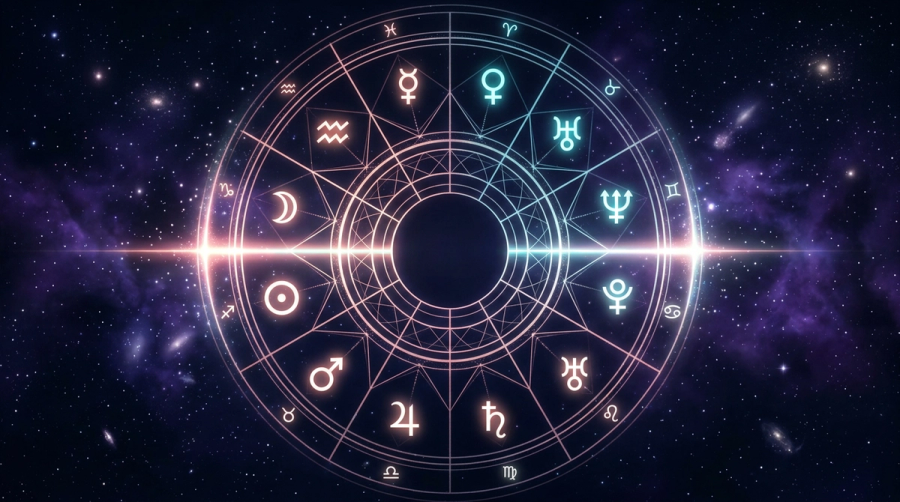
Detailed natal chart wheel with the seventh house cusp highlighted and zodiac signs glowing along the descendant axis
The 7th House Ruler - Where the Real Pattern Lives
The 7th house ruler is the planet that rules the sign on your 7th cusp, and its placement elsewhere in the chart describes the deeper structure of the kind of partner you keep meeting. The cusp tells you the style. The planets in the 7th tell you specific archetypes. The 7th house ruler tells you the pattern - what life area, what dynamic, what unconscious script keeps repeating across relationships.
To find your 7th house ruler, identify the sign on your 7th cusp. The traditional ruler of that sign is your 7th house ruler. If your descendant is Aries, your 7th ruler is Mars. If your descendant is Taurus, your 7th ruler is Venus. Gemini, Mercury. Cancer, Moon. Leo, Sun. Virgo, Mercury. Libra, Venus. Scorpio, Mars (with Pluto as modern co-ruler). Sagittarius, Jupiter. Capricorn, Saturn. Aquarius, Saturn (with Uranus as modern co-ruler). Pisces, Jupiter (with Neptune as modern co-ruler).
Once you know the planet, look at where it sits in your chart - the house and sign - and what it aspects. That placement tells you the deeper pattern.
A few examples to make this concrete.
If your 7th house ruler is in your 5th house, your partnership pattern is wired to romance, creativity, and play. You meet partners through dating, creative projects, your children, or scenes of self-expression. The relationship has a romantic, sometimes performative quality. Marriage may follow a long stretch of dating.
If your 7th house ruler is in your 10th house, partnership is wired to career and public life. You meet partners through work, often partners with strong public profiles, often relationships that affect your reputation. The 10th-house overlay can produce power couple dynamics or, conversely, partnerships that destabilize the chart-holder's career identity.
If your 7th house ruler is in your 12th house, partnership has a hidden, sometimes spiritual quality. Partners may be unavailable, in different countries, in institutional settings, or carrying unconscious dynamics neither person fully sees. Marriage can feel fated. It can also be where the chart-holder's most unconscious patterns play out.
If your 7th house ruler is in your 8th house, partnership is wired to depth, sex, shared resources, and transformation. Relationships rarely stay on the surface. Power dynamics, money themes, and intense intimacy are common.
If your 7th house ruler is in your 6th house, partnership lives in daily life - work, routine, health, the ordinary. Partners may be coworkers, healthcare providers, people met through routine rather than romance.
If your 7th house ruler is in your 4th house, partnership is wired to home, family, and roots. Partners feel like family. The relationship has a domestic, settled quality from the start.
The aspects to your 7th house ruler add another layer. A 7th ruler conjunct Saturn produces commitment-fears or delayed marriage. A 7th ruler conjunct Neptune produces idealization and confusion in partnership. A 7th ruler conjunct Pluto produces obsessive or transformative pairings. The aspects describe the dynamic that runs through every partnership the chart-holder enters, until the dynamic is recognized and worked with.
Robert Hand's Horoscope Symbols - one of the standard 20th-century references on Western astrology - devotes substantial space to the 7th ruler as the most reliable single indicator of relationship theme. The cusp tells you the surface flavor. The ruler tells you the actual structure of what keeps happening.
The Projection Mechanism: Why Your Partner Looks Suspiciously Like Your Disowned Self
The projection mechanism in 7th house astrology works like this: every quality you can't yet hold inside your conscious sense of self gets outsourced to the people you're closest to, and the closer they are, the more vividly they'll carry the projection. Your partner ends up looking - sometimes exactly, sometimes uncannily - like the parts of you that you can't quite be yet. They're not pretending. They're not manipulating you. They're just showing up in the shape of the room you built before they arrived.
Jung's framing is the cleanest. In his work, the shadow is the sum of qualities the conscious self has rejected, repressed, or simply never developed. The shadow doesn't go away. It goes underground. And from underground, it gets projected onto other people, who appear to the projector as the carriers of the rejected material. The hated boss who's exactly the kind of authoritarian the projector swore they'd never become. The dreamy ex who's exactly the kind of impractical romantic the projector was trained out of being at age six. The cold partner who's exactly the kind of self-protective person the projector secretly is, but won't admit.
Astrologically, the mechanism shows up most reliably on the descendant axis. The 1st house is the conscious I. The 7th is the unconscious not-I, experienced as other. The sign on your descendant is the type of shadow material you carry. The planets in your 7th are the specific archetypes you're projecting. The 7th ruler describes the life-area the projection plays out in.
The cleanest way to recognize you're inside a 7th house projection is this: the partner has qualities you find yourself describing in absolute terms. They're so confident. They're so emotional. They're so independent. They're so needy. The absoluteness is the giveaway. When a quality lives outside you in pure form, it's rarely because the partner is purely that. It's because you're seeing only that aspect of them, amplified, because their version of the quality is what you need to encounter to grow toward it yourself.
The partner usually carries some genuine version of the projected quality - projection rarely lands on someone who has zero of it. But it amplifies what's there. They become the symbol of the disowned trait, not just a person who happens to have it. Once the projection lands, the chart-holder reacts to the symbol, not to the actual partner. The partner gets idealized, demonized, or both at once. The relationship gets driven by something neither person can name.
Liz Greene's framing in Relating is direct: the 7th house aspects don't show attraction. They show which parts of the self the chart-holder will inevitably project, which parts the partner will project back, and where the actual growth will live once those projections start coming home. The chart isn't predicting the partner. It's predicting the projection. The partner is whoever is willing to wear it.
Kerykeion's longer treatment of psychological individuation in astrology frames the same mechanism in Jung's own language - individuation is the slow process by which projected material gets recognized, withdrawn, and integrated, and the descendant axis is one of the most reliable astrological maps of where that work needs to happen for any given chart-holder.
This is why the same person can cycle through ten different partners and end up with the same kind of person ten times. The bodies change. The names change. The projection doesn't. Until the chart-holder finds the projected quality inside themselves, the partner-shape will keep refilling.
How to Take the Projection Back
Taking the projection back is the slow, often years-long work of recognizing that the qualities you find in your partner - especially the ones you find most magnetic and most maddening - also live inside you, and growing your capacity to hold those qualities in your own conscious sense of self. It can't be rushed. It can't be talked into existence in a weekend workshop. It happens through repeated, honest seeing, and it changes everything about who you choose next.
A working framework. Not a quick fix.
Step 1: name what you keep finding in partners. Write down the three or four qualities your partners have most consistently shared, across the last decade or more. Be specific. Not "they were toxic." Try "they were emotionally unavailable in a way that always pulled me toward proving I was lovable enough." Or "they were ambitious in a way that made me feel small and excited at the same time." The pattern is in the specifics.
Step 2: cross-check with your descendant. Look at the sign on your 7th house cusp, the planets in your 7th, and the placement of your 7th ruler. The pattern you wrote in Step 1 will, with eerie accuracy, match the astrological signature.
Step 3: ask where in your own life that quality is missing. This is the slow part. If your partners keep being assertive and you have Aries on your 7th, where in your own life are you under-asserting? If your partners keep being emotionally vivid and you have Cancer on your 7th, where in your own life are you under-feeling? The shadow rarely lies about what it wants you to develop.
Step 4: practice the disowned quality in small, ordinary ways. Not in dramatic gestures. In small, daily acts. Aries on the descendant: practice saying no to one small thing every week. Cancer on the descendant: practice naming one feeling out loud every day. Taurus on the descendant: practice slowing down for one full meal. The work is daily, almost boring, and disproportionately effective.
Step 5: notice when the chemistry shifts. As you develop the disowned quality, the partners who carried it for you will either evolve with you or stop being magnetic. Some will deepen alongside the work. Others will fall away. Either is a sign the projection is coming home.
Step 6: don't hate the people who carried the projection for you. They weren't wrong. They were the visible shape of what you couldn't yet hold. The grief when those relationships end is real. So is the gratitude, eventually, for what they made visible.
This is years of work, not a quick fix. The chart doesn't change. The chart is what it is. But the meaning of the chart changes as you change. The 7th house that produced one kind of relationship at twenty-three produces something different at thirty-five, again at forty-eight, again at sixty. The work is slow, lifelong, and the most worthwhile inner work most people will ever do on their love lives.
Astrology offers a framework for understanding - it doesn't replace professional mental health support. If projection patterns are causing you serious relational harm, or if you're stuck in repeating dynamics that feel impossible to leave, please reach out to a licensed therapist or counselor who can hold the depth-work alongside you. The chart describes the pattern. A therapist can help you actually live differently inside it.
Get personalized guidance based on your birth chart on MyNitya.
The 7th House Through Your Life: Saturn Return and Beyond
The 7th house is not a static feature of the chart - it's an arena that gets activated, restructured, and worked on by transits across your life, with several specific timing windows where partnership themes intensify dramatically. The first Saturn return between ages 28 and 30 is the most universally important of these. The second Saturn return at 58-60, the Jupiter returns every twelve years, and the various transits of Pluto, Neptune, and Uranus through the 7th house each produce their own kind of relational restructuring.
Saturn returns to its natal position approximately every 29.5 years, producing the famous Saturn return between 28 and 30, then again between 58 and 60. When Saturn transits the 7th house - which it does for roughly two and a half years at a time, every twenty-nine years - partnership becomes the chart-holder's central work. Marriages happen. Marriages end. Long-term partnerships get tested. The relationships that survive Saturn through the 7th house are the ones built on actual structure, not infatuation. The ones that don't survive don't survive because Saturn is the planet of honest weight, and what can't carry weight collapses.
The first Saturn return alone - even when it's transiting elsewhere in the chart - affects the 7th house indirectly because it forces the chart-holder to grow up, get clear on what they actually want, and stop building partnerships out of unconscious projections alone. Many first marriages happen in the 27-32 window, propelled by the Saturn return's pressure to commit to something real. Many of them also end in the early-30s window when the unconscious basis for the choice becomes visible.
Pluto's transit through the 7th house - which happens at most once in a lifetime, lasting roughly twelve to twenty years depending on the sign - is one of the most transformative experiences a chart can record. Partnerships that exist before Pluto enters the 7th rarely survive Pluto leaving the 7th, unless both partners are willing to let the relationship be utterly remade. The relationships that form during Pluto in the 7th house tend to be intense, irreversible, often the chart-holder's defining adult partnership.
Neptune transiting the 7th house produces the era of idealized love - the chart-holder may meet someone they experience as a soulmate, with all the gifts and risks that come with the projection running at full strength. Neptune can produce the great love of a life. It can also produce the great delusion. Often both, in the same relationship.
Uranus transiting the 7th house produces sudden change. Marriages that have been quietly stagnant for years often end during Uranus through the 7th. Partnerships that come together during Uranus through the 7th are usually unconventional in some specific way - long-distance, cross-cultural, age-gap, structural. Uranus rewrites the rules. Whatever the chart-holder thought partnership had to be becomes negotiable.
The Jupiter return every twelve years often opens windows of partnership opportunity, especially when Jupiter transits the 7th house specifically. New relationships often form, or existing ones expand into a new phase, during these windows.
The point isn't to predict the partner. It's to recognize that the 7th house evolves across the life. Who you are at twenty-three, who you choose, who chooses you, what you project, what you can hold - none of it is static. The chart describes the pattern. The transits describe the chapters. And by the third or fourth chapter, most chart-holders have learned things about partnership that the first chapter could never have shown them.
For more on the Saturn return specifically, including how it affects partnership, see the broader writing on houses in the natal chart explained and the deeper composite chart calculator and relationship astrology reading on long-term partnership dynamics.
When Your 7th House Is "Empty"
An empty 7th house - meaning no traditional planets sit inside it - is often misread as an absence of partnership themes, which it isn't. About six in twelve charts have empty 7th houses, simply because there are ten major astrological bodies and twelve houses to distribute them across. An empty house doesn't mean a missing life area. It means the area is read primarily through the sign on the cusp and the placement of the house ruler rather than through planets sitting directly inside.
This distinction matters because empty-7th-house readers often ask, with real worry, does this mean I won't have relationships? No. It means the relationships in your life will be shaped primarily by the descendant sign and by where the 7th ruler lives in your chart, rather than by the energetic complexity of multiple planets in the 7th itself.
In some ways, an empty 7th house is easier to read than a packed one. The signature is cleaner. Whatever's on your descendant is the dominant relationship theme. Wherever your 7th ruler sits is the dominant life area where partnership lives. That's usually it. There aren't four different planetary archetypes complicating the picture.
A packed 7th house - three or more planets in it - often produces a life where partnership is the central arena, with multiple distinct partners and multiple distinct relationship phases each playing out a different planetary archetype. Each partner activates a different planet. The chart-holder learns about themselves through partnership in a way someone with an empty 7th may not.
Neither version is better. They're different relational architectures. The empty 7th has cleaner partnership themes and often more internal stability outside relationship. The packed 7th has more relational drama and often more rapid self-discovery through partners. Both can produce excellent marriages. Both can produce significant pain. The chart describes the architecture, not the verdict.
If your 7th is empty, focus your reading on the descendant sign, the 7th house ruler, and any aspects to the descendant axis from outside the 7th. Those three pieces, together, will tell you most of what you need to know about your relational pattern.
The Vedic 7th House: Saptama Bhava
A brief note for readers familiar with Vedic astrology: the same sector of the chart in Jyotish is called the saptama bhava - the seventh bhava - and is also the house of marriage, the spouse, business partnership, and the chart-holder's public exchange. Vedic astrology evaluates the 7th bhava through the lord of the 7th - its sign, dignity, and aspects - and through the planets that sit in the bhava itself, particularly Venus (Shukra) for romantic and marital indications.
The Vedic system also uses a specific divisional chart, the navamsha (ninth divisional chart, also called D9), as a refined indicator of marriage. The 7th house of the navamsha, the lord of that 7th, and the placement of Venus in the navamsha are all treated as primary indicators of married life. Many Vedic readings of marriage timing use the dasha - the planetary periods unique to Vedic astrology - to estimate when partnership themes will activate, with the 7th lord's mahadasha or antardasha often correlating with marriage windows.
Both Vedic and Western traditions agree on the 7th house as the primary location of partnership themes. Where they differ is method: Western astrology adds the depth-psychology layer of projection and shadow, drawing on Jung. Vedic astrology adds the karmic and timing layer, drawing on the dasha system and the navamsha's refinement of marital indications. MyNitya supports both systems - you can ask Nitya for a Western reading of your descendant and projection patterns, or a Vedic reading of your saptama bhava and dasha-based marriage timing, depending on which lens speaks to your question.
Western astrology excels at the psychological depth of partnership and the inner architecture of who you keep choosing. Vedic astrology excels at timing - when partnership activates, when it's tested, when it transforms - through the dasha system and transit timing.
A Real Note on the Limits
The 7th house describes a real pattern. It also doesn't replace the actual experience of being in relationships, which is messier, slower, and more unpredictable than any chart can fully capture. Two people with similar 7th houses can have completely different relational lives based on age, culture, family of origin, accumulated trauma, and whether they've done any inner work at all. The chart shows the field. The lived life is what actually grows in it.
The most common misuse of 7th house astrology is treating the descendant sign as a prescription - I have Aries on my 7th so I should marry an Aries. That misses the point entirely. The descendant sign is a description of the qualities you'll keep meeting in others until you develop them in yourself. The literal sun sign of your eventual partner matters far less than whether the relationship gives you the chance to actually grow toward those qualities in your own life. Some partners do that. Some don't. The chart helps you recognize which is which.
The second most common misuse is treating the 7th house as a verdict. I have Saturn in the 7th, so I'll have a hard marriage. Wrong frame. Saturn in the 7th describes the kind of work partnership will ask from you. Met consciously, that work produces some of the most durable, foundational partnerships astrology records. Met unconsciously, the same placement produces marriages that feel like punishment. The placement is the same. The lived experience depends entirely on whether the chart-holder grows toward what the chart is asking from them.
For a deeper dive on long-term partnership dynamics specifically, see the existing 7th house astrology, partnerships and marriage guide - the natural companion piece to this article. That one walks through the traditional indicators of marriage, partnership, and the long-term arc of the 7th. This article goes deeper into the projection mechanism and the sign-on-the-cusp signatures. Read together, they cover the full territory.
For the full reading on what you might be unconsciously seeking through partnership, see the who is my soulmate by birthdate guide on the soulmate-recognition question, which sits adjacent to the 7th house but is a slightly different question - the soulmate signature comes through nodal contacts and Vertex aspects, not just through the descendant.
Frequently Asked Questions
What is the 7th house in astrology?
The 7th house in astrology is the sector of the natal chart that begins at the descendant - the western horizon, opposite the ascendant - and governs marriage, committed partnerships, business contracts, and close one-to-one relationships. In psychological astrology, it's also the chart's primary projection field: the place where you encounter, in others, the qualities you haven't yet integrated in yourself. The sign on the cusp, the planets in the house, and the placement of the 7th ruler together describe your unconscious relationship pattern.
What does the descendant sign mean?
The descendant sign is the sign on the 7th house cusp - always the sign opposite your ascendant - and it describes the qualities you keep meeting in close partners. It's not the sun sign of the partner you'll marry. It's the style of person you tend to attract and the qualities you tend to project. Aries on the descendant attracts assertive partners; Cancer attracts nurturing ones; Capricorn attracts older or more disciplined ones. The pattern repeats until the chart-holder develops the descendant qualities in themselves.
What does it mean to have planets in the 7th house?
Planets in the 7th house add specific archetypes to your partnership signature. Sun in the 7th seeks identity through partnership. Moon in the 7th seeks emotional security there. Venus in the 7th brings ease and beauty to relationships. Saturn in the 7th delays but commits to partnership. Pluto in the 7th produces transformative, sometimes obsessive pairings. Each planet describes a quality you'll meet first in partners and gradually own in yourself across the lifetime.
Is the 7th house always about marriage?
The 7th house is traditionally called the marriage house, but it covers all close one-to-one committed relationships - long-term partnerships, business contracts, and even declared adversaries. Marriage is one expression of the 7th, not the whole of it. The deeper meaning, in psychological astrology, is the I-Thou relationship: the place where the chart-holder encounters another person as a conscious counterpart and, through that encounter, becomes more fully themselves.
What does an empty 7th house mean?
An empty 7th house means no traditional planets sit inside it - but it doesn't mean you won't have relationships. About half of all charts have empty 7th houses simply because there are more houses than planets. With an empty 7th, the relationship pattern is read primarily through the sign on the descendant and the placement of the 7th house ruler. The signature is often cleaner and easier to read than a packed 7th house, just less internally complex.
What is the 7th house ruler and how do I find it?
The 7th house ruler is the planet that rules the sign on your 7th house cusp. To find it, identify your descendant sign and look up its traditional ruler: Aries is ruled by Mars, Taurus by Venus, Gemini by Mercury, Cancer by the Moon, Leo by the Sun, Virgo by Mercury, Libra by Venus, Scorpio by Mars and Pluto, Sagittarius by Jupiter, Capricorn by Saturn, Aquarius by Saturn and Uranus, Pisces by Jupiter and Neptune. The placement of that planet - its house, sign, and aspects - describes the deeper pattern of your relationships.
How does projection work in the 7th house?
Projection in the 7th house works by outsourcing qualities you haven't yet owned in yourself onto the people you're close to, who then appear to you as the carriers of those qualities. The closer the relationship, the stronger the projection. The sign on your descendant is the style of the projection. The planets in your 7th are the specific archetypes you're projecting. Until you develop those qualities in yourself, you'll keep meeting them in partners with eerie consistency.
Why do I keep attracting the same kind of partner?
You keep attracting the same kind of partner because your 7th house describes a pattern - an unconscious template for the kind of person you choose, built from the qualities you haven't yet owned in yourself. The bodies change, the names change, the pattern repeats. Once you recognize the descendant sign, the planets in your 7th, and the placement of your 7th ruler, the pattern becomes visible. Once the pattern is visible, you can begin doing the slow inner work to change what you keep choosing.
The Last Word
The 7th house isn't a verdict. It's a description. It tells you the shape of the room you keep walking partners into, the qualities you keep meeting in others, the projection you keep carrying. Once you can see the room, you can decide whether you want to keep building the same one or build a different one. That decision is years of work. It's also the most worthwhile inner work most people will ever do on their love lives.
If you keep ending up with the same kind of person - the unavailable one, the dominating one, the dreamer, the workaholic, the volatile one - your chart isn't broken and you aren't cursed. You're meeting a part of yourself you haven't yet been able to live as your own. The partner is the visible shape of an invisible piece of your psyche. The chemistry is real. The love is real. The grief when it doesn't work is real. And underneath all of it, the chart is showing you something honest: the part of you that wants to grow into the partner you've been seeking outside.
Curious what your descendant, your 7th house planets, and your 7th ruler are actually saying about your relationship pattern? Give Nitya your birth details and ask. Try MyNitya free. MyNitya - an AI-powered astrology platform where you chat with Nitya, a personal AI astrologer who analyzes over 10,000 data points from your birth chart. Both Western and Vedic systems are supported, so you can read the 7th house through whichever lens speaks to you most - psychological depth through Western astrology, or karmic and timing precision through the Vedic saptama bhava and dasha system.