
Transits for Love: Your Personal Romance Forecast
In this Article
Transits for love are the moments when planets currently in the sky form aspects to your natal chart that activate romance, commitment, intimacy, or relationship transformation. They are not generic horoscopes. They are personal - calibrated to your exact birth date, time, and place - and they tell you when the planetary weather is genuinely supporting connection in your life, not the average reader's. This article teaches you how to read them yourself, against your own chart, for any year. Ask your first question free on MyNitya.
If you've spent any time on astrology TikTok or in a comments section under a "love forecast" video, you already know the frustration. Some stranger says "this week is huge for Venus" and you feel nothing. Or "Mercury retrograde will mess up your love life" and your relationship sails through it cleanly. The reason the generic forecast misses you is that it's not about you. The Sun-sign horoscope describes the average experience of one-twelfth of the population. The personal transit reading describes what's happening to your specific chart. Once you know how to read the second kind, the first kind becomes useless to you. That's the goal here.
Your personal astrologer - Vedic + Western.
Reads all 10,000+ points of your birth chart to answer your question. First question free, no card needed.
Ask your question free →Key Takeaways: Transits for love are personalized - they activate your unique natal chart, not your Sun sign. The seven most reliable love transits to track are Jupiter through your 5th house (a roughly 12-month romance-window every 12 years), Jupiter through your 7th house (partnership-grade opportunity), the annual Venus return (about every 365 days), the progressed Venus return or sign change (every 12-30 years), Saturn through your 7th house (a 2.5-year reality-test, once every 29 years), eclipses on your 5th-7th axis (relationship plot twists), and Pluto transits to natal Venus (transformation through love). Reading them yourself requires three things: your birth chart, knowing what house each planet is currently moving through for you, and the discipline to read configurations rather than headlines. Transits open windows. They don't deliver people.

Single figure looking up at a sky where Venus and Jupiter converge in cosmic light during a love transit
What Are "Transits for Love"?
Transits for love are real-time planetary movements forming aspects to specific points in your natal chart that govern romance, partnership, and intimacy. The sky right now is in motion. Your birth chart is a frozen snapshot of where every planet sat at the second you took your first breath. A transit is the contact between the two - the moment a planet currently moving through space lights up something specific in your chart.
The technical definition: a transit occurs when a planet in the sky today forms a precise geometric angle (a conjunction, square, trine, opposition, or sextile) to one of your natal planets, your natal chart angles (Ascendant, IC, Descendant, Midheaven), or moves through one of your natal houses. The emotional definition is what those contacts feel like. Jupiter conjunct your natal Venus, by transit, often feels like falling in love with the world for ten days. Saturn opposite your natal Venus, by transit, often feels like asking yourself whether your relationship is real. Same machinery. Different planet making the call.
Each planet has a domain. Venus rules attraction, taste, what you find beautiful, what you reach toward. Jupiter rules expansion, opportunity, optimism, and the doors that open when you least expect them. Saturn rules structure, commitment, duration, and the testing of bonds under weight. Pluto rules transformation, depth, and the relationships that change you at the cellular level. When any of these makes contact with your natal love-houses, your natal Venus, or your natal 7th-house ruler, it activates the part of your life that planet governs. That activation is the transit.
People come to transit reading for one of two reasons. The first: they want to know when they'll meet someone. The second: they're already in a relationship and something feels different and they want to know why. Both questions have answers in the chart.
The Difference Between Generic Transits and Personal Transits
Generic transit horoscopes use only your Sun sign - that's about 5% of your chart's information. Personal transits use your full birth chart - every planet, every house, every angle, calibrated to your exact birth time and location. The difference is the difference between a weather forecast for "the United States" and a forecast for the corner of your block.
Generic content tells you "Venus is in Libra this month, so love feels balanced and harmonious." That's true on average. It tells you essentially nothing about your love life unless your natal Venus is in Libra, your 7th-house cusp is in Libra, or transiting Venus is currently aspecting one of your natal personal planets - which the generic forecast can't see.
Personal transit reading tells you "Venus is currently transiting your 5th house, which is in Sagittarius for you, while simultaneously forming a trine to your natal Mars in Leo over the next ten days." That's specific. It says: dating energy is high for the next month-ish; the next ten days are particularly chemistry-charged because of the Venus-Mars contact; the energy will feel adventurous, fiery, slightly impatient. None of that is in a generic horoscope. All of it is in your chart.
Most people who say "astrology doesn't work for me" are evaluating astrology by its generic version. The personal version is a different practice. It uses the same vocabulary but applies it to a chart that actually belongs to you. Once you make that switch, the predictive accuracy goes up dramatically. Cafe Astrology's Predicting Love Relationships and Marriage walks through real example charts where transiting Saturn conjunct natal Venus precisely marked a commitment-friendly window - accuracy that isn't possible in a Sun-sign forecast.
The Top 7 Transits to Watch for Love
There are dozens of transit configurations that touch love. The seven below cover roughly 90% of the meaningful love-related transits you'll experience in any given decade. Memorize these. The rest is detail.
1. Jupiter Through Your 5th House - The Romance Window
Jupiter spends about 12 months in each sign - and therefore about 12 months in each of your natal houses. When it lands in your 5th house, you're in the most reliable romance-and-dating window the calendar offers. The 5th house rules flirtation, dating, fun, creative self-expression, and what most people mean when they say "I want to fall in love." Jupiter in there expands all of it.
What it actually feels like: you become more visible. You laugh more. You say yes to things you'd usually decline. People you wouldn't normally notice register on your radar. Confidence rises. The doors of dating open. Whether you walk through them depends on you. Stars, Moon and Sun's overview of Jupiter transiting natal houses calls this the "life pops" feeling - and that's accurate.
The catch: Jupiter through the 5th expands what's there, including casual dating energy. It's not automatically a "meet your future spouse" transit. It's a "meet a lot of people, have a lot of fun, and figure out what you actually want" transit. That's still gold, especially if you've been in a romantic dry spell. The window comes once every 12 years.
2. Jupiter Through Your 7th House - Partnership-Grade Opportunity
Jupiter through your 7th house is the "meeting your partner" transit when it works. The 7th house rules committed one-to-one relationships - marriage, business partnerships, the formal "we're together" arrangement. Jupiter expanding the 7th means partnership opportunities open in a way that feels qualitatively different from 5th-house dating energy.
The 7th-house Jupiter transit doesn't always deliver a partner, but it often delivers the conditions for one. People who've been dating casually for years tend to suddenly meet someone who feels like the real thing. People in long-term relationships tend to either propose, get proposed to, or have the conversation that names the partnership formally. Liz Greene has noted that Jupiter's 7th-house passage tends to "magnify whatever you're already on track to do" in partnership.
Like the 5th-house version, this comes once every 12 years. If you've been wondering why a previous "great relationship" arrived right around when it did, check whether transiting Jupiter was in your 7th house at the time. The pattern recognition is often striking. The misread: Jupiter through the 7th doesn't mean every relationship started during this transit lasts. It means partnership-shaped opportunities show up. Whether they last depends on Saturn's involvement and on what you do with what arrives.
3. The Venus Return - The Annual Love Reset
Your Venus return happens about once a year - roughly every 365 days, with some variance because of Venus's retrograde cycles. It's the moment transiting Venus returns to the exact degree, sign, and minute of your natal Venus. Astrologers cast a "Venus return chart" for that moment, and it functions as a year-long preview of your love-and-values themes.
The Venus return is one of the most underused tools in personal astrology. It's quieter than a Saturn or Jupiter transit, but it's reliable, annual, and surprisingly accurate. The chart cast for the moment of your Venus return tells you about the next 12 months of your love life - what house Venus is in for that return chart shows you which life area love will play out in. Venus in the 5th of the return chart? Dating year. Venus in the 7th? Commitment year. Venus in the 12th? Internal year - therapy, hidden relationships, dreams about exes, processing.
Robert Hand's Planets in Transit describes Venus's recurring contact with itself as "the recalibration of taste" - what you find beautiful, who you find attractive, what feels worth your affection all subtly shift each time. Most people don't notice it consciously. They just notice that the kind of person they were dating last year doesn't appeal to them quite as much now. You can find your Venus return date through any standard astrology calculator. Mark it on your calendar.
4. Progressed Venus - The Slow Inner Shift
The progressed Venus return is much rarer - and much more profound - than the transiting one. Secondary progressions move planets at the rate of one day per year of life, which means progressed Venus moves slowly. A progressed Venus return takes a full Venus cycle - 84 to 225 years depending on Venus's speed at your birth - so most people never have one in a lifetime. What you can have is progressed Venus changing signs, which happens roughly once every 12-30 years.
When progressed Venus changes signs, what you want from love changes. Not your standards. Not your values, exactly. But the texture of what feels good in a relationship shifts. Someone who's been happy in an earth-sign progressed Venus phase - wanting stability, routine, physical reliability - may suddenly find themselves restless when progressed Venus enters air, wanting more conversation, more friendship, more intellectual engagement. The relationship hasn't changed. The progressed inner Venus has.
This is one of the most useful things personal astrology gives you. When you find yourself feeling differently about a long-standing relationship and you can't explain it, check your progressed Venus. Often it's just changed signs in the past 18-36 months. That doesn't mean leave the relationship. It means understand what's actually shifting in you, so you can communicate it accurately rather than picking a fight to avoid the harder conversation. Stephen Arroyo, in Relationships and Life Cycles, treats progressed Venus as one of the three most important relationship indicators in any chart, alongside the progressed Moon and the natal 7th house.
5. Saturn Through Your 7th House - The Partnership Reality Test
Saturn through your 7th house is the most rigorous love transit in the calendar. It lasts about 2.5 years and happens roughly once every 29 years - so most people experience it once at around 28-30, again at around 56-58. It's the transit that tests every existing partnership against Saturn's standards: real, accountable, structured, willing to last.
What it does: weak relationships end. Strong ones get formalized. People in undefined situationships get definitions - sometimes the definition is "we're getting married," sometimes the definition is "we were never going to work." Single people in their late 20s often experience this transit as romantic isolation, only to look back later and realize Saturn was clearing the field for the real partnership that arrived the year after the transit ended.
Erin Sullivan's Saturn in Transit describes the 7th-house passage as "the reality-test of partnership" - and it's an accurate name. It's not punishment. It's structural. Saturn doesn't want to ruin your love life. Saturn wants the relationships you keep to be real ones. Whatever survives Saturn through the 7th is built to last; whatever doesn't was always going to fail eventually, and Saturn just compressed the timeline.
Among birth charts analyzed on MyNitya, users tracking their personal transits report that Saturn's passage through the 7th house is the single most accurate predictive transit they observe - every reader who's been through one can identify within hours of starting to track it which relationship was being tested and what the verdict was.
The misread: Saturn through the 7th is not a "you'll be alone forever" transit. It's a "you'll be alone for as long as your judgment is unclear" transit. The work is to get your own foundation in order. The relationship arrives - usually - when you stop looking for it to fix you and start being someone who can hold one.
6. Eclipses on Your 5th-7th Axis - The Plot-Twist Transit
Eclipses fall on a sign axis - Aries-Libra, Taurus-Scorpio, Gemini-Sagittarius, etc. When the active eclipse axis matches your natal 5th-7th-house axis, your love life is in eclipse season for about 18 months. Eclipses don't behave like other transits. They surface what's hidden, fast.
A relationship that's been quietly dying for a year ends in the two-week window around an eclipse. A flirtation that's been building for months gets confessed. A partner you didn't know was unhappy reveals it. Decisions you've been avoiding get forced. Liz Greene calls eclipses "evolutionary pressure points," and she's right - they accelerate what was going to happen anyway, on a timeline you didn't choose.
Don't make permanent decisions in the two weeks on either side of the exact eclipse date. Eclipses bring information, not closure. Information looks like closure for about ten days. Then it usually turns out the picture was more complicated than what the eclipse first revealed. Wait three weeks past the eclipse before you sign anything emotional. The eclipse axis shifts every 18 months as the lunar nodes move through the zodiac.
7. Pluto Transits to Natal Venus - Transformation Through Love
Pluto transits to natal Venus are the longest, deepest, and most dangerous love transits in the calendar. Pluto moves slowly - about 14-30 years per sign, depending on its position. When transiting Pluto forms a major aspect to your natal Venus (conjunction, square, opposition), that aspect can be in orb for one to three years. Whatever happens during those years tends to stay with you for life.
What it does: it brings the kind of love that changes you. Sometimes it's an affair. Sometimes it's a marriage. Sometimes it's a relationship that ends and breaks something open in you that needed to break. The bond carries a magnetic, fated, sometimes obsessive quality. Power dynamics surface. Old wounds about being controlled, abandoned, or betrayed get activated. Sue Tompkins, in Aspects in Astrology, describes Pluto-Venus contacts as "love that goes through the underworld" - and that's not metaphor.
The gift, when handled with consciousness, is a love that transforms you into someone capable of more honesty, more depth, and more real intimacy than you were before. The cost, when handled unconsciously, can be obsession, jealousy, or staying in something that should have ended years before it did. If you're in a Pluto-Venus transit right now, Look Up The Stars' essay on transits and meeting someone covers the romantic-encounter angle in useful detail - though no article can replace the work of actually walking through it with awareness. Therapy is often a better companion to a Pluto-Venus transit than any astrology book.
Astrology offers a framework for understanding - it doesn't replace professional mental health support. If a Pluto-Venus or Saturn-7th transit is surfacing trauma, attachment patterns, or emotional patterns that feel beyond your capacity, please reach out to a licensed therapist or counselor. The chart shows the structure. Therapy helps you live inside it.
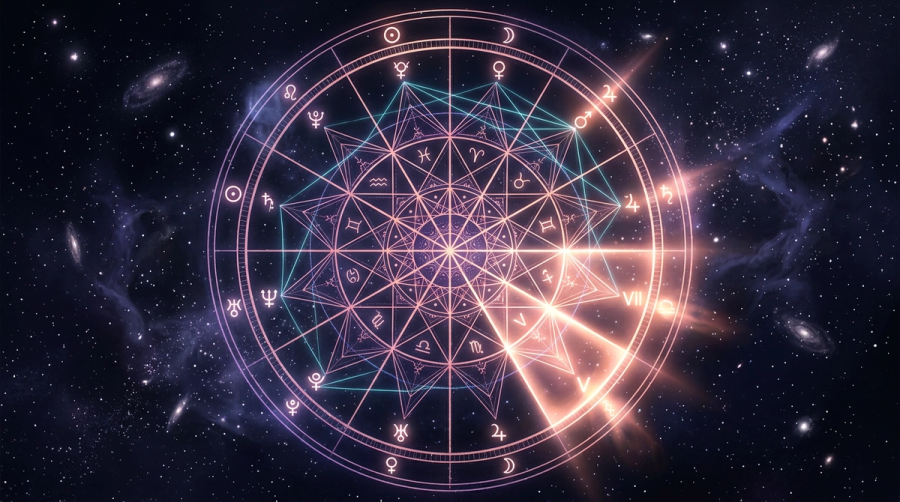
Natal chart wheel with current planetary positions overlaid in a concentric ring with the 5th and 7th houses glowing
Meet Nitya, your AI astrologer
She reads your birth chart to answer anything about your life - and she can go deep on any relationship you care about and guide your day ahead. First question free, no card needed.
Some questions our users ask Nitya
Tap any one below - or just write your own question in the form ↓
Nitya isn't a one-time horoscope. She's with you for the whole journey.
Understand yourself
Career, love, money, timing - any decision you are weighing. Answers read straight from your birth chart.
Understand any relationship
Add your partner, a parent, a friend, even a colleague. Nitya reads both charts together to explain the bond, the friction, and how to work through it.
Guidance for every day
Start each morning knowing what the day favors, what to watch for, and the best moments to act.
No card needed. Nitya just needs your birth details to read your chart.
Ask Nitya your first question - free →How to Identify Your Most Active Love Houses
Your most active love houses are the 5th, the 7th, and the 8th - and they each rule a different stage and texture of relating. Knowing which one a current transit is hitting tells you what kind of love event to expect.
House | What It Rules | Transit Through It Brings
- 5th: Dating, romance, flirtation, creative play, the early "spark" stage - New connections, dating energy, fun, attraction
- 7th: Committed partnership, marriage, formal one-to-one bonds - Partnership opportunities, definition, formalizing existing relationships
- 8th: Sexual intimacy, deep merging, shared resources, transformation through union - Deep psychological bonds, sexual chemistry, financial entanglement, breakdown of false intimacy
The 5th is where you meet someone for coffee. The 7th is where you decide they're your person. The 8th is where you actually let them see you, and where you have to negotiate the harder questions of merging - money, sex, the parts of yourself you don't show socially.
Most love transits hit at least one of these three. Some hit all three across several years, which is what creates the experience of a relationship that begins as flirtation, becomes a partnership, and then transforms both people. That's the whole arc - three houses, three stages.
To find which house a current planetary placement is moving through for you, you need your natal chart with houses marked. Most online chart calculators give you this. Look at where the planet sits today in the sky and check which natal house cusp range it falls between. If transiting Jupiter is at 18° Cancer and your 5th house in Cancer runs from 12° to 28° Cancer, Jupiter is currently transiting your 5th house.
How to Calculate Your Personal Transits
Calculating your personal transits is a four-step process: get your natal chart, identify the rulers of your 5th and 7th houses, find the current positions of the major planets, and check which natal points they're aspecting right now.
Step 1: Get your accurate natal chart. You need date, time, and place of birth. Time matters more for love astrology than people realize - house cusps move about one degree every four minutes, which means a 30-minute time uncertainty can shift your 5th-house ruler from one sign to another. (For chart-reading basics, the natal chart love compatibility guide covers Venus, Mars, and 7th-house basics in depth.)
Step 2: Identify your 5th-house ruler and 7th-house ruler. The ruler of a house is the planet that rules the sign on its cusp. If your 5th-house cusp is in Pisces, your 5th-house ruler is Neptune (modern) or Jupiter (traditional). If your 7th-house cusp is in Capricorn, your 7th-house ruler is Saturn. These two are the planets to track most closely for love.
Step 3: Find the current positions of Venus, Jupiter, Saturn, and Pluto. Any astrology site shows "transit positions" or "today's planets" - what sign, what degree, what house in your personal chart.
Step 4: Check for active aspects. An aspect is an angular relationship between two planets - usually conjunction (0°), sextile (60°), square (90°), trine (120°), or opposition (180°), with an orb of about 1-5 degrees. When a transiting planet is within orb of an aspect to your natal Venus, your natal 5th- or 7th-house ruler, or your Descendant, you have an active love transit.
If this sounds tedious, that's because it is - for the first three or four times. After that, your eye learns it. Saturn and Honey's beginner's guide to reading your own transits is the best free resource for the mechanics. The other option, if you want the analysis without the homework, is to ask Nitya. On MyNitya, you enter your birth details and chat with Nitya - an AI astrologer who deeply understands your Western natal chart and can read what's active for you in 90 seconds. Chat with Nitya about your birth chart - try free.
Reading the "When Will I Find Love?" Question Through Transits
The honest answer is that transits open windows; they don't deliver people. A Jupiter-through-the-5th transit makes the conditions for new romance more likely. It does not guarantee that someone shows up. Whether someone shows up depends on a hundred variables astrology doesn't see - where you live, who you've been spending time with, whether you're emotionally available, whether you're using dating apps or going to events where strangers can meet.
What transits tell you, accurately, is when your odds are higher and when your odds are lower. They tell you when you're in a season of attraction versus a season of clearing. They tell you when an existing relationship is being tested versus expanded. Used well, they let you stop wasting energy fighting the planetary weather and start leaning into it.
Imagine you're a small business with busy seasons and slow seasons. You don't make every dollar in December. You make most of your dollars in December. Knowing that, you don't blame yourself for slow weeks in March - you plan your effort accordingly. Transits work the same way for love. The Jupiter-through-the-5th window is your December. The Saturn-7th-house window is your inventory-clearing month. None of them deliver romance. All of them tell you when to spend your energy. The single biggest mistake people make with transit astrology is treating a love-friendly transit as if it owed them a relationship. It doesn't. Astrology is the calendar, not the date.
Common Misreadings of Transits for Love
Three misreadings sabotage most beginner transit work. Knowing them up front saves you a year of confusion.
Misreading 1: Venus alone is enough. Venus is the most popular love planet, but reading transits to Venus in isolation tells you only about a fraction of what's happening. A Venus transit might bring a flirtation. It probably won't bring a marriage. The bigger love events - the partnerships that last, the relationships that change you - usually involve Jupiter, Saturn, or Pluto in addition to Venus. If you're tracking only Venus, you're missing the structure transits that decide which connections last.
Misreading 2: Mercury retrograde is a death sentence for relationships. Mercury retrograde gets blamed for far more than it actually causes. Yes, it can muddle communication. Yes, it can resurface old patterns. No, it does not destroy healthy relationships. People in solid partnerships sail through Mercury retrograde with maybe a couple of crossed signals. People in fragile partnerships use Mercury retrograde as the excuse for things that were going to surface anyway. Don't postpone every important conversation. Just slow down, double-check, and don't sign legal contracts mid-retrograde. (For the full read, see the Mercury retrograde 2026 dates, meaning and effects guide.)
Misreading 3: Saturn is always punishment. Saturn through your 7th house is one of the most dreaded transits in popular astrology, and it's mostly misunderstood. Saturn is the planet of structure, weight, and reality. It's also the planet of marriage in classical astrology - Saturn rules contracts, formal commitments, and the long arc of duration. A relationship that survives Saturn doesn't just survive; it becomes real in a way it wasn't before. The transit is hard. What it builds is durable.
Combining Transits with Synastry: When the Stars Say "Now," Look at the Person's Chart Too
Transits tell you about timing. Synastry tells you about compatibility. The two together - knowing that you're in a love-transit window AND knowing that this specific person's chart matches yours in meaningful ways - is when astrology gives you the most accurate read on love.
The practical version: you're in Jupiter-through-the-5th-house this year, dating, having fun, meeting people. You meet someone who feels different. The transit told you the door was open. Synastry tells you whether this specific person walking through the door is structurally compatible with you or just a Jupiter-flavored fling. (For the full breakdown, see the synastry chart relationship reading guide - it covers Venus, Mars, Sun-Moon, and the cross-chart house overlays in detail.)
The synastry markers that match the depth of a real love transit usually include: Sun-Moon contacts (emotional fluency), Venus-Mars contacts (chemistry), Saturn-Venus or Saturn-Sun contacts within about 3-5 degrees (structural staying power), and Pluto contacts to personal planets (transformation). When a relationship beginning during a strong love transit also has these synastry signatures, the transit isn't bringing you a fling. It's bringing you the partner.
When the transit is strong but the synastry is thin, you're usually meeting someone who feels right for the season but isn't going to last past the transit. That's not failure. That's information. People are allowed to be the right person for a chapter without being the right person for the book.
Your Personal Transit Calendar: How to Build Your Own
Building your own personal transit calendar takes about an hour the first time and ten minutes a year after that. The result is a single page that tells you when your love windows open, when they close, and what to expect in between. Most people who do this once never go back to generic horoscopes.
Here's the workflow:
- Pull a one-year transit chart for yourself. Most online astrology calculators offer this for free.
- Highlight the slow-planet movements first. Saturn, Jupiter, Pluto, the lunar nodes, Neptune. Mark when each ingresses a new house, forms major aspects to your natal Venus or Mars or 7th-house ruler, and stations.
- Add the Venus return. Mark your Venus return date. Cast a Venus return chart for that moment if you want the full year-ahead read.
- Mark the eclipses. If the current eclipse axis falls on your natal 5th-7th axis, mark all eclipse dates for the next 18 months. Otherwise, you can mostly skip them for love-tracking.
- Cross-reference with your relationship status. If single, 5th-house and 7th-house transits matter most. If partnered, the 7th-house Saturn and 8th-house Pluto transits matter more.
- Update once a year. Every birthday, redo the calendar. Note what was accurate and what wasn't from the previous year - this calibrates your reading skill faster than any astrology book.
The calendar isn't predictive in the woo sense. It's a planning tool - it tells you when your judgment is steady, when your nervous system is activated, and when the cosmic weather supports love decisions versus when it doesn't.
A short note on the dual-system question: Vedic astrology has been doing this work for thousands of years through gochara (planetary transits) layered with the dasha system (planetary periods) for added precision. Western astrology arrives at the same insights through transits and progressions. Both are valid; they have different strengths. Vedic excels at timing and life-purpose questions. Western excels at psychological depth and relationship dynamics. MyNitya supports both, so you can ask Nitya about your Western transits or your Vedic dashas - whatever serves the question.
How MyNitya Helps With Personal Love Transits
Reading your own transits is a real skill, and a real learning curve. If you want the analysis without spending six months mastering ephemeris-reading, MyNitya is built for exactly this. On MyNitya, you enter your birth details and chat with Nitya - an AI astrologer who deeply understands your Western natal chart. Nitya analyzes planetary positions, house placements, aspects, and transits to give you personalized guidance on career, relationships, timing, and life patterns.
The questions Nitya is best at, for love-transit work, look like these:
- "What love transits are active for me in the next six months?"
- "Is the relationship I'm in right now under any specific transit pressure?"
- "When is my next Jupiter-through-the-5th-house window?"
- "I just met someone - does my transit weather support it, and what's the synastry?"
- "When does my current Saturn transit end, and what's likely after it?"
Your result depends on your exact birth time, date, and location - that's what makes the reading real. Get personalized guidance based on your birth chart on MyNitya.
For the time-bound year-ahead view, see our companion piece: love transits 2026 and when you'll meet someone special. This article taught you the skill; that one applies it to a specific year. If your question is "is this person my soulmate," the broader astrology guide to love life decisions covers the decision angle. The transits in your natal chart and planetary movements guide covers the wider transit framework - career, money, life-purpose.
Frequently Asked Questions
What are transits for love in astrology?
Transits for love are real-time planetary movements that form aspects to specific points in your natal chart governing romance and partnership - your 5th house, 7th house, natal Venus, and 7th-house ruler. Unlike Sun-sign horoscopes, they're personal to your exact birth chart and tell you when planetary energy is genuinely supporting connection in your specific life.
How do I know which transits affect my love life?
To know which transits affect your love life, look for current planetary positions making aspects to your natal Venus, your natal 5th-house ruler, your natal 7th-house ruler, or your Descendant. The slow-moving planets - Jupiter, Saturn, Pluto - produce the biggest love events when they aspect these points. Faster planets like Venus and Mars produce shorter-term shifts.
Which transit means I'll meet someone?
The transits most associated with meeting someone are Jupiter through your 5th house (new romance windows, lasting about 12 months), Jupiter through your 7th house (partnership-grade meetings), and any Pluto transit to natal Venus (fated, transformative connections). No transit guarantees a meeting - they create the conditions, and the rest depends on where you go and who you spend time with.
How long do love transits last?
Love transits last anywhere from a few days to several years, depending on the planet. Venus transits last 1-3 days for an exact aspect. Jupiter spends about 12 months in each house. Saturn spends about 2.5 years. Pluto can stay in aspect to a natal point for up to three years. The slower the planet, the deeper and longer the transit's effect.
Is Venus retrograde bad for new relationships?
Venus retrograde isn't automatically bad for new relationships, but it's not an ideal moment to start one. Venus retrograde happens about every 18 months and lasts roughly 6 weeks - during it, exes resurface, old patterns reactivate, and new connections often turn out to be revisiting unfinished business. Most astrologers recommend waiting until Venus stations direct to formalize a new relationship.
What does Saturn through the 7th house mean for marriage?
Saturn through the 7th house tests every existing partnership against Saturn's standards: real, accountable, structured, willing to last. The transit lasts about 2.5 years and happens once every 29 years. Strong relationships often get formalized - marriages, engagements, formal commitments. Weak ones tend to end. The result is durable partnership for those who pass the test.
Can I read my own love transits, or do I need an astrologer?
You can read your own love transits with practice. The basics - identifying which house each planet is moving through and what aspects it's making to your natal points - can be self-taught in a few hours. The deeper skill of weighing transits against each other takes longer. For complex questions or specific timing decisions, a personalized AI like Nitya can give you a faster, more accurate read than you'd reach on your own.
How is this different from a 2026 love forecast?
A 2026 love forecast is time-bound - it tells you what's happening this specific year. This guide is evergreen - it teaches you the technique of reading transits against your own chart for any year. Use the 2026 forecast for the current year's specific windows. Use this article to build the skill that lets you read every year ahead on your own.
The Real Promise of Personal Love Transits
Transits for love don't predict whether you'll be loved. They predict when the conditions are most supportive for the kind of love you're actually capable of receiving. Those are different questions, and the second one is the more useful one to answer.
If you've been waiting on a generic horoscope to tell you when love is coming, you've been waiting on a forecast that was never going to be accurate enough to matter. The personal version - calibrated to your exact chart, watching the planets that actually contact your natal love-houses - is honest in a way the generic version can't be. It tells you when to lean in. It tells you when to wait. It tells you when a relationship is being tested versus expanded. And it gives you the patience to let real love arrive on the schedule the chart actually supports rather than the one your impatience invented.
Your next love transit is already on the way. Your job is to know which one and what it's bringing. The chart will tell you. Ask your first question free on MyNitya, and Nitya will read the next twelve months of your love transits with you - what's opening, what's closing, and what's worth your attention.