Who Will I Marry? What Your Birth Chart Really Reveals
In this Article
Who will I marry? Astrology can't hand you a name, but your birth chart describes your future spouse with surprising detail - their temperament, the qualities you're drawn to, and often how and where you'll meet. In Vedic astrology those clues sit in the 7th house, its ruling planet, Venus, and the Darakaraka. In Western astrology they show up in your Descendant sign, your Venus, the planets in your 7th house, and the asteroid Juno.
If you landed here after taking a "who will I marry" quiz, you already know the feeling: the result was fun for ten seconds, then it evaporated. A quiz built on your Sun sign and three multiple-choice answers can't see the person your chart is actually pointing to. Your real birth chart can. That's the difference this article is about.
Your personal astrologer - Vedic + Western.
Reads all 10,000+ points of your birth chart to answer your question. First question free, no card needed.
Ask your question free →Key Takeaways:
- Your birth chart describes your future spouse's type and temperament, not their literal name
- Vedic astrology reads the 7th house, the 7th lord's placement, Venus, Jupiter, and the Darakaraka (the spouse significator)
- Western astrology reads the Descendant sign, Venus, planets in the 7th house, and Juno
- The placement of your 7th lord often hints at how and where you'll meet - through work, travel, friends, or family
- A "who will I marry" quiz uses your Sun sign; a real reading needs your exact birth date, time, and place
- Astrology shows the pattern and the recognition markers - you still choose the person
A glowing doorway opening in a starry nebula sky symbolizing a future spouse arriving in your life
Who Will I Marry? What Your Birth Chart Actually Shows
Your birth chart shows the kind of person you're likely to marry - their temperament, the energy they carry, and the qualities you keep being drawn to - plus timing windows and clues about how you'll meet. It does not name them, predict a face, or guarantee an outcome. It describes a recognizable pattern the right person fits.
Think of it as a portrait, not a phone number. Both Vedic and Western astrology have a dedicated "house of the other" - the 7th house - and a set of planets that color in the details. Read together, they sketch someone specific enough that people often say, months later, "the chart was describing my husband before I'd even met him."
The two systems approach the question from different angles. Vedic astrology (Jyotish) leans on precise significators and dasha timing. Western astrology leans on psychological description - what you're attracted to and why. Neither replaces your judgment; both narrow the search.
Why a "Who Will I Marry" Quiz Can't Answer This
A "who will I marry" quiz can't answer the question because it uses almost no real data - usually your Sun sign plus a few preference questions - and outputs a generic archetype. A real chart reading uses your exact birth date, time, and place to analyze houses, planets, and aspects unique to you. That's roughly the difference between a horoscope column and a fingerprint.
Here's what a typical quiz misses. Your Sun sign is shared by roughly one-twelfth of the planet. Your Descendant - the single most important marriage marker in Western astrology - depends on your birth time down to the minute. Skip the birth time and you've thrown away the most personal half of the reading. As Vogue's guide to reading your own birth chart explains, the houses and angles only appear once you add an accurate time and place.
So take the "who am I gonna marry quiz" for fun. Just don't mistake it for the answer. The questions people really mean - who would I marry, who should I marry, who am I gonna marry - all need the same thing a quiz refuses to ask for: your whole chart. And the chart isn't naming a stranger somewhere in the world. It's describing the person you're wired to recognize.
What Vedic Astrology Says About Who You'll Marry
In Vedic astrology, who you'll marry is read primarily from the 7th house, the planet that rules it, Venus and Jupiter, and the Darakaraka - the "spouse significator." Together they describe your spouse's nature, appearance, and the circumstances of your meeting. The classical framework comes from the Brihat Parashara Hora Shastra and the Jaimini Sutras.
Vedic astrology describes this well because it uses natural significators. Venus signifies the spouse in a man's chart; Jupiter signifies the husband in a woman's chart - a distinction Brihat Parashara Hora Shastra lays out directly, though modern practitioners read both for everyone.
Your 7th House Sign and Its Lord
The sign on your 7th house and the placement of its ruling planet (the 7th lord) do most of the work. The 7th house sign describes your spouse's baseline temperament. The house your 7th lord sits in often hints at how and where you meet them.
Some common patterns:
- 7th lord in the 10th house often points to meeting a spouse through work, career, or someone in a position of authority
- 7th lord in the 9th can indicate a partner met through travel, higher study, a teacher, or someone from a different culture or region
- 7th lord in the 5th frequently shows a love marriage - meeting through romance, creativity, children, or a hobby
- 7th lord in the 3rd can mean a partner met nearby, through siblings, short trips, or your everyday circle
- 7th lord in the 2nd or 11th often brings a spouse through family networks, community, or friends
The sign on the 7th cusp adds the flavor. A Taurus 7th house leans toward a steady, sensual, reliable partner; a Scorpio 7th toward intensity and depth; an Aquarius 7th toward someone independent and unconventional who feels like a friend first. The sign, the lord, and the aspects to the house combine into one description.
For a deeper technical treatment of these placements, our who will I marry astrology guide goes through the divisional charts and dignity rules in detail.
The Darakaraka - Your Spouse Significator
The Darakaraka is the planet with the lowest degree in your chart, and in Jaimini astrology it's the single strongest indicator of your spouse's character. "Dara" means partner, "karaka" means significator - literally, the spouse marker. Its planetary nature colors your partner's temperament and presence.
Each Darakaraka points to a different spouse type:
Meet Nitya, your AI astrologer
She reads your birth chart to answer anything about your life. Your first complete answer is free, with no card required. Continued chat, Synastry, and Daily Guidance require Premium.
Questions you can ask about this topic
Tap any one below - or just write your own question in the form ↓
Nitya isn't a one-time horoscope. She's with you for the whole journey.
Understand yourself
Career, love, money, timing - any decision you are weighing. Answers read straight from your birth chart.
Understand any relationship
Add your partner, a parent, a friend, even a colleague. Nitya reads both charts together to explain the bond, the friction, and how to work through it.
Guidance for every day
Start each morning knowing what the day favors, what to watch for, and the best moments to act.
No card needed. Nitya just needs your birth details to read your chart.
Ask Nitya your first question - free →- Venus - graceful, attractive, artistic, harmony-seeking, drawn to beauty
- Jupiter - wise, generous, principled, often older or a teacher-figure
- Mars - energetic, athletic, direct, protective, sometimes headstrong
- Saturn - mature, disciplined, patient, serious, often the long-haul builder
- Mercury - clever, communicative, youthful, quick-minded
- Moon - nurturing, emotionally attuned, home-oriented
- Sun - confident, dignified, leadership-minded
The Jagannath Hora reference on how the Darakaraka shapes a spouse's appearance and nature covers the physical and temperamental signatures for each planet. A useful caution: the Darakaraka works alongside the 7th house, not instead of it. When both point the same way, the description gets sharp.
What Western Astrology Says About Who You'll Marry
In Western astrology, who you'll marry is read from your Descendant sign, any planets in your 7th house, your Venus sign, and the asteroid Juno - the marriage-commitment marker. The Descendant describes the partner you're drawn to; Venus describes what you find attractive; Juno describes the person you commit to for the long haul. This framework traces back to Ptolemy's Tetrabiblos, Book IV, which read marriage primarily from the 7th house and the planets aspecting it.
Western astrology shines at the psychology of attraction, why a certain type keeps showing up in your life, and which chart placements matter most for predicting marriage.
Your Descendant Sign
Your Descendant is the sign directly opposite your Rising sign, and it's the first thing most Western astrologers read for a future spouse. It represents the "not-you" - the qualities you don't naturally lead with but recognize and need in a partner.
- Aries / Leo / Sagittarius - drawn to direct, warm, adventurous partners with confidence and drive
- Taurus / Virgo / Capricorn - drawn to steady, capable, dependable partners who build for the long term
- Gemini / Libra / Aquarius - drawn to witty, fair, independent partners who feel like a friend first
- Cancer / Scorpio / Pisces - drawn to nurturing, intense, intuitive partners with real emotional depth
Our 7th house relationship meaning guide explains how the Descendant sign interacts with the rest of your chart.
Venus, Juno, and Planets in the 7th
Venus by sign tells you what you find attractive; Venus by house tells you where love tends to find you. Venus in the 9th, for example, can indicate a partner met while travelling, in higher education, or a foreign-born spouse. Venus in the 10th often points to meeting someone through career or public life. Venus in the 5th leans toward romance, creativity, or meeting through play.
Juno adds the commitment layer. Where Venus shows attraction, Juno describes the qualities of the person you actually marry and the kind of contract you're built for. Juno in Cancer wants emotional security and family; Juno in Aquarius needs freedom and friendship inside the marriage; Juno in Capricorn commits seriously and expects the relationship to be built to last.
Planets sitting in your 7th house are loud signals. Saturn in the 7th tends to delay marriage rather than deny it - the commitment arrives later and lasts longer. Jupiter in the 7th often brings a partner who is foreign, philosophical, or older. Our planets on the Descendant guide breaks down each one.
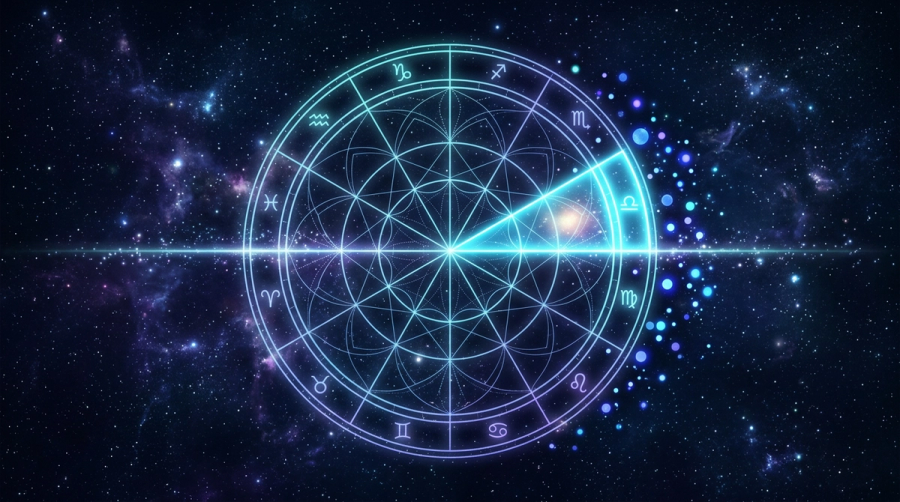
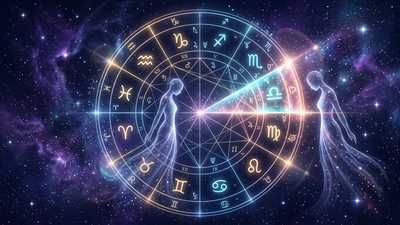
Astrological chart wheel with the seventh house and Descendant axis highlighted in glowing cyan light
How and Where You'll Meet Your Future Spouse
Where you'll meet your future spouse is read from the house placement of your 7th lord (Vedic) or the house position of Venus and your Descendant ruler (Western). The house rules a specific area of life - work, travel, friends, study - and that's usually the setting for the meeting. It's one of the more testable claims in astrology, and it lands more often than skeptics expect.
The logic mirrors the 7th-lord placements above. Venus or the 7th lord in the 6th points to a colleague or someone met through daily routine; in the 9th, a partner met while travelling or studying; in the 11th, through friends, a group, or online networks; in the 3rd, someone geographically close met through siblings or short trips. Strong 5th house involvement leans toward a romance-first love marriage.
Timing overlays the "where." In Vedic astrology the Venus and Jupiter dashas are the classical marriage periods. In Western astrology, Jupiter through your 7th house - about once every 12 years - and your first Saturn return near ages 28 to 30 are when partnership tends to consolidate. For the full timing picture, see our pillar guide on when will I get married in astrology and the companion piece on when will I get married.
Among relationship questions asked on MyNitya, "who will I marry" is one of the most common first questions - and the follow-up is almost never about a name. It's whether the person the chart describes is someone already on the edge of their life. More often than not, it is.
Can Astrology Tell Me My Future Spouse's Name?
No - astrology cannot tell you your future spouse's name, first letter, or face. Any tool promising "who am I going to marry name" results is guessing. The chart describes character, temperament, timing, and the circumstances of meeting. It works at the level of pattern and recognition, not identity.
This matters because the "name" question is where a lot of people get misled. Some traditional methods claim the 7th lord's nakshatra or a specific planet hints at an initial. Treat those as folklore, not prediction. What the chart genuinely offers is a portrait detailed enough that you recognize the person when they arrive - the temperament, the values, the way they carry themselves, and often the setting you'll meet them in.
That's more useful than a name anyway. A name tells you nothing about whether the relationship will work. A temperament match, read against your own chart, tells you a great deal.
What a Real Chart Reading Gives You That a Quiz Never Will
A real chart reading gives you a personalized description of your future spouse built from your exact birth data - something a "who will I marry" quiz or test structurally cannot do, because it never asks for your birth time or place. The quiz gives everyone with your Sun sign the same answer. Your chart gives you yours.
This is where an AI astrologer helps. On MyNitya, you enter your birth details and chat with Nitya, who reads your full chart and explains, in plain language, who it's pointing to - the 7th house sign, the Darakaraka, your Descendant, your Venus, and how they fit together. You can ask follow-ups and push back. A quiz can't do any of that.
MyNitya is an AI astrology platform where Nitya reads your full Vedic or Western birth chart. Ask her anything in chat, compare your chart with someone else's for a compatibility reading, and get personalized daily guidance each morning. Premium unlocks all three; your first question is free. Vedic shines for marriage timing through the dashas, Western for the psychology of who you're drawn to - use whichever speaks to you.
Curious who your chart is describing? Ask your first question free on MyNitya. Once you've met someone, you can compare your chart with theirs - ask Nitya on MyNitya. For the wider soulmate picture, our guide on who is my soulmate by birthdate pairs naturally with this one.
Frequently Asked Questions
Can astrology really tell me who I will marry?
Astrology describes your future spouse's temperament, the qualities you're drawn to, and often how and where you'll meet - through the 7th house, Venus, the Darakaraka (Vedic), and the Descendant and Juno (Western). It doesn't produce a name or a guaranteed outcome. It gives you a recognizable portrait, not a prediction of identity.
Is a "who will I marry" quiz accurate?
A "who will I marry" quiz is entertainment, not analysis. Most quizzes use only your Sun sign plus a few preference questions, so everyone with the same sign gets the same generic result. A real reading needs your exact birth date, time, and place to calculate the 7th house, Descendant, and Venus - the placements that actually describe a partner.
What is the Darakaraka and how does it show my spouse?
The Darakaraka is the planet with the lowest degree in your Vedic birth chart, and it's the Jaimini system's main spouse significator. Its nature colors your partner's character and presence - Venus suggests a graceful, artistic spouse; Saturn a mature, patient one; Jupiter a wise, generous one. It's read alongside the 7th house for a fuller picture.
Which house shows my future husband or wife?
The 7th house shows your future spouse in both Vedic and Western astrology. The sign on the cusp describes their temperament, planets inside it modify the partnership, and the house where the 7th lord sits often reveals how and where you'll meet - through work, travel, friends, study, or family.
Can my birth chart tell me my future spouse's name?
No. No legitimate astrological method can reliably produce a name, initial, or face. The chart works at the level of character, timing, and circumstance. Tools claiming to reveal "who am I going to marry name" are guessing. What you get instead is a detailed enough portrait to recognize the right person when they appear.
Vedic or Western - which is better for marriage questions?
Both help, and they answer different halves of the question. Vedic astrology is stronger on timing, using the Venus and Jupiter dashas to pinpoint marriage windows. Western astrology is stronger on the psychology of attraction - why you're drawn to a certain type. On MyNitya you can switch between them mid-conversation.
The honest answer to "who will I marry" isn't a name - it's a recognition. Your chart sketches the temperament you're wired to fall for, the values that make a marriage hold, and the setting where you're most likely to meet. The 7th house gives the frame, Venus and Jupiter add the warmth, the Darakaraka and Descendant fill in the face, and timing tells you roughly when the door opens.
Most people who read their chart carefully come away startled - the description usually fits someone already half-known, or a type they'd been stepping past because a quiz told them to want something else. If you want the specific read on your own chart, chat with Nitya about your birth chart, try free. You give your birth details, Nitya describes who your chart is pointing to, and what you do next is up to you.